From Turin to Novara via Valsesia in the sign of Alessandro Antonelli
The Antonelliana Network is a cycle of 30 appointments including visits, dedicated podcasts and programmes to learn more about the work of the Mole's famous designer

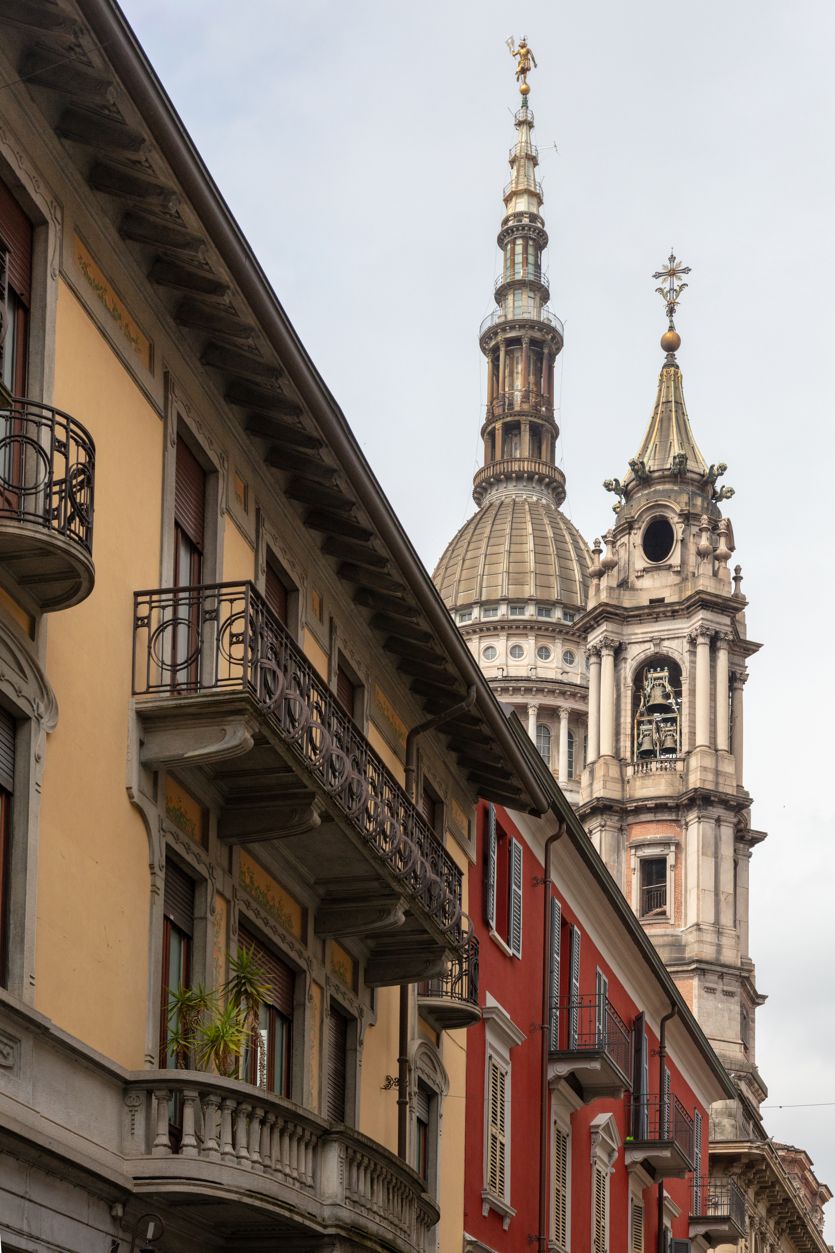
Challenging the limits of heights, in an extreme design vision that would make him an archistar today. Alessandro Antonelli's genius is a challenge of weight, obsessive calculation and bricks taken beyond the limits of physics. An architect-engineer of prodigious longevity (1798-1888), Antonelli was no mere builder, but a visionary of verticality who transformed the solidity of Piedmontese stone into a structural vertigo. While more industrialised Europe fell in love with steel, he responded with the audacity of masonry, convinced that brick could 'touch the sky' without breaking. Today, that dream of architectural omnipotence that links Turin to the wine hills becomes an organic tourist experience.
L’iniziativa
It has been called 'Rete Antonelliana. Cultura che unisce' (Antonelliana Network. Culture that unites) is the Piedmont Region's project that, in collaboration with Abbonamento Musei Piemonte Valle d'Aosta, brings together twenty sites to tell the story of the legacy of a man who redesigned the profile of a region. The project envisages more than 30 seasonal appointments, including guided tours, dedicated podcasts and loyalty programmes for the most assiduous visitors. And between one architectural work and another, one can indulge in a wine tasting in the ricetto di Ghemme, have lunch at the agriturismo in Boca 'L'antico sapore', sample typical Novara biscuits at the Camporelli biscuit factory or dine at the Osteria Cravero di Caltignaga on Novara's paniscia, while in Turin, it is advisable to dine at the Circolo dei Lettori restaurant, where in the past illustrious guests have included painters, sculptors, musicians and actors on stage in Turin's theatres.
The National Cinema Museum
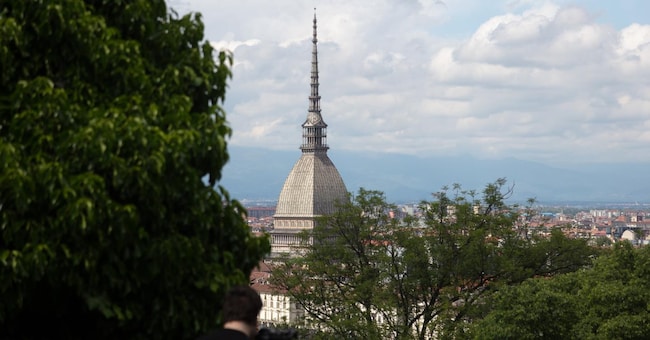
The journey begins in the Temple Hall, the beating heart of the National Cinema Museum. It is strange to think that the Mole Antonelliana, a 167.5 metre giant and undisputed symbol of Turin, should 'only' be a 47 metre synagogue. Upon entering, one immediately feels the tension between the ancient and the modern. Antonelli began the work at the age of 64, an age at which many think of retirement. While in Paris Gustave Eiffel played with the strength of metal, the 'old' Alessandro remained faithful to the materials of tradition, while hiding in the bowels of the Mole a secret soul of iron rods to tame a dome with a square base, an almost impossible technical challenge that would tend to give way at the corners.
The ascent on foot
Climbing the staircase of over 500 steps to reach the terrace is a sensory experience: the walls slope down following the curve of the dome while the floor remains straight, giving, as the guides say, that 'second glass of wine' effect. Up there, at 85 metres, one dominates the city, but one's gaze first turns back to 1904, when a cloudburst caused the winged genie to fall, later replaced by a five-pointed star, which in turn fell in 1953 in the RAI gardens under the incredulous eyes of a young Piero Angela. Today, in its place stands a twelve-pointed star, the city's perennial beacon.
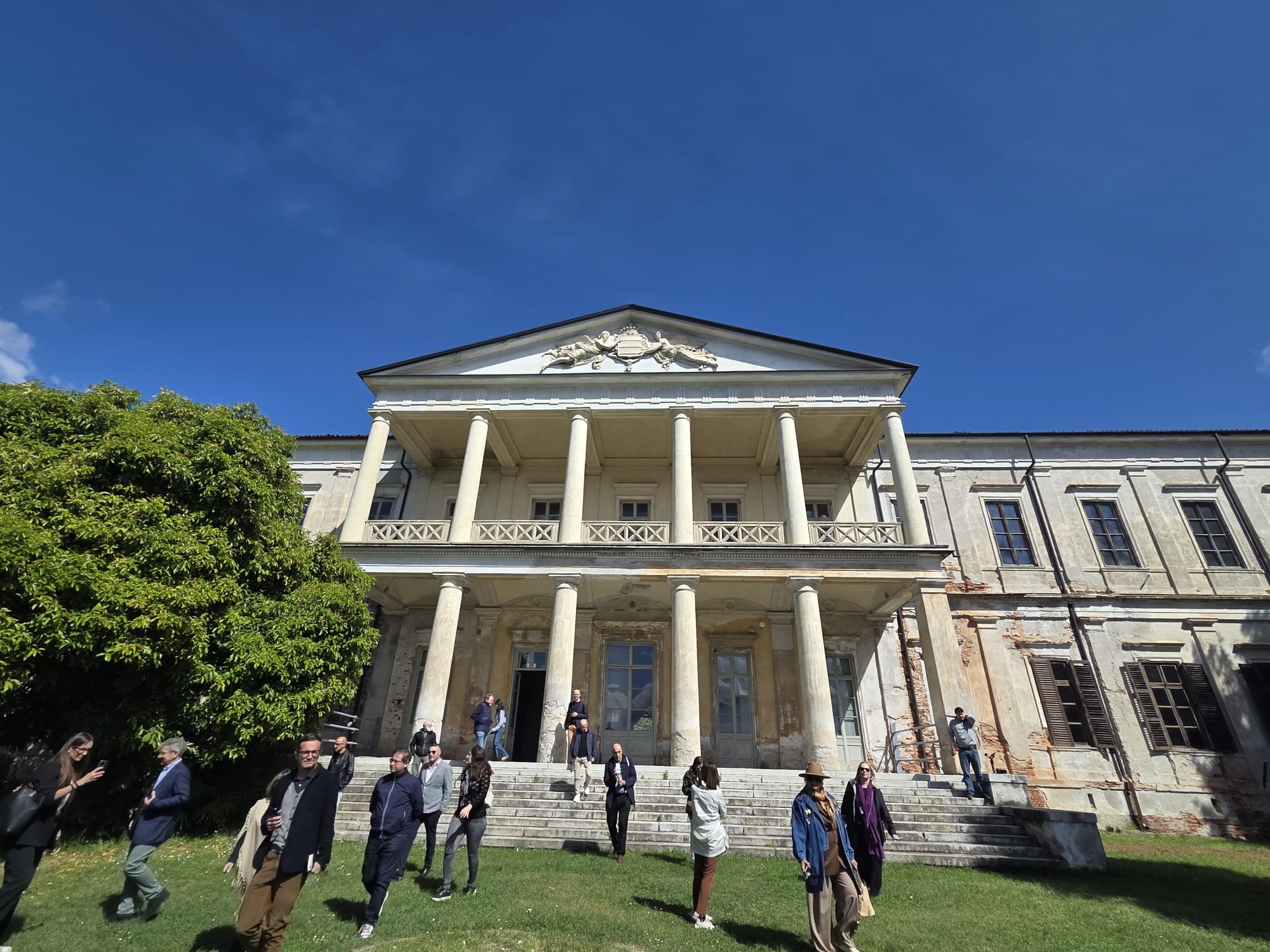
Romagnano Sesia: the elegance of Villa Caccia
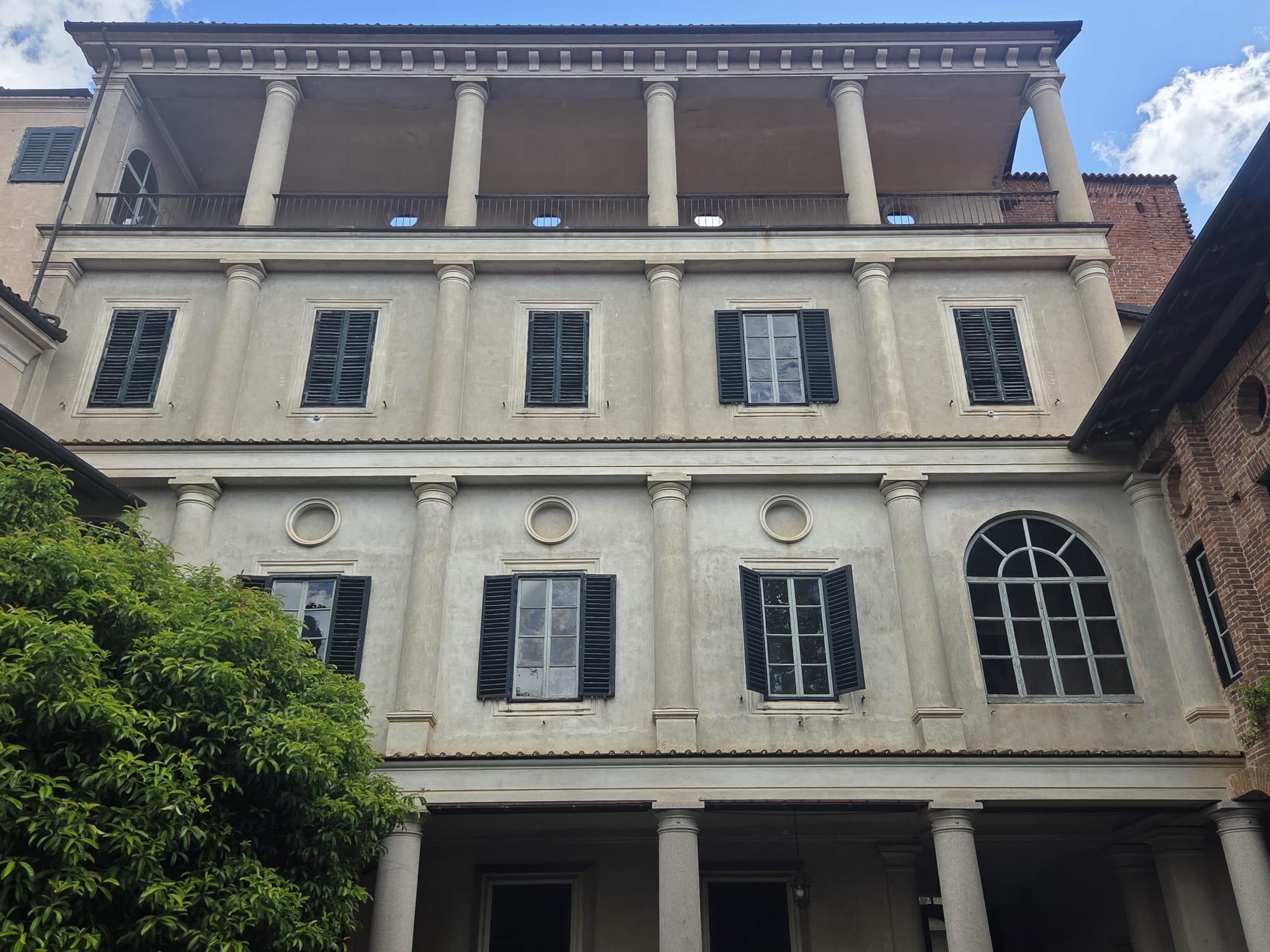
Leaving Turin to reach Valsesia, one stops at Villa Caccia, in Romagnano Sesia, where Antonelli's neoclassicism becomes a majestic landscape. The villa, one of the largest 19th-century residences in Piedmont, dominates the town with its colonnades and almost maniacal symmetry. Crossing the threshold, among other things, the visitor has the unique opportunity to explore the Mev, Museo storico etnografico della Bassa Valsesia, housed here. It is an evocative encounter between architectural elegance and the memory of rural life: a monumental 13-metre-long walnut press stands out among the rooms of the museum, a symbol of the toil and ingenuity of the peasantry. The visit allows visitors to immerse themselves in the history of local traditions and the sacred representations of Romagnano, creating a fascinating dialogue between the high Antonellian style and the concreteness of everyday life in the past. The destinies of two greats of Piedmontese culture intertwine here: Alessandro Antonelli, who designed the villa, infusing it with his neoclassical rigour, and Maria Adriana Prolo, the visionary founder of the Cinema Museum in Turin. Born in Romagnano, Prolo was among the founders of this same ethnographic museum, creating an ideal bridge between the Mole and Villa Caccia: two masterpieces of architecture that she, at different times, helped transform into temples of memory and culture.