
From TV to mini formats: Turkish dramas now focus on TikTok and YouTube
Iki Dakika Creative House lands in Italia with two-minute vertical series distributed for free on social media and financed by brands. Founder Ilkin Kavukcu: 'Traditional advertising loses weight, storytelling shifts to mobile'

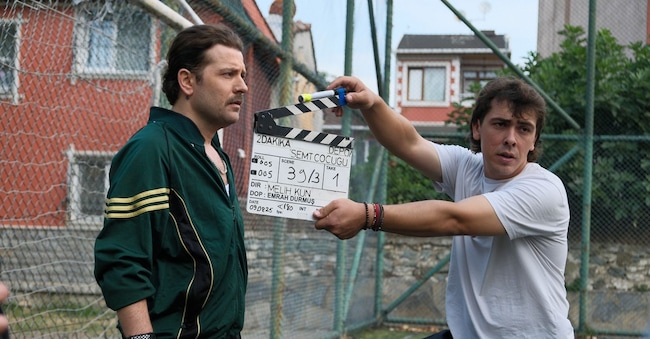
The Turkish living room, the one of long melodramas, stern mothers, impossible loves and close-ups held back to the extreme, has changed frame. No longer just the television set at home, but the 'small' screen of the smartphone. No longer 90-minute episodes, but episodes of two. The act is no longer sitting on the sofa: it is scrolling. And within this scroll, which seemed to condemn everything to distraction, founder İlkin Kavukcu saw instead a new factory of storytelling.
His İki Dakika Creative House now arrives in Italia with a simple and unsettling idea: to produce high quality vertical series, with well-known faces, designed from the start for TikTok, Instagram and YouTube, without locking them into proprietary apps or paid platforms. "When we started this business, everyone was like, 'Are you crazy? Why?" says Kavukcu. The answer became the industry model: 'We are different. We can publish our vertical dramas directly on Instagram, TikTok and YouTube."
The difference lies here. While microdrama exploded in China and then in the US through micro-pay apps, İki Dakika tries the opposite route: free content, social distribution, revenue from brands. Seriality remains, but is rewritten according to the algorithm: lean production, data visible in real time. "The advantage for brands is that they can see all the data directly," explains Kavukcu. Not an advertisement squeezed in, but a product, a service, an everyday gesture within the story.
The numbers explain why the phenomenon can no longer be dismissed as a teenage fad. The company's three main series have exceeded 600 million views and 100 million minutes watched. "We decided to make these vertical dramas with well-known actors and actresses and in a different way from the others," says Kavukcu. The budget, in fact, is not amateurish: "We spend almost between 500 thousand and 700 thousand dollars for a vertical drama".
The economic bet is in the relationship with advertising. For each series, the company claims to cover about 70% of the costs with branded content and product integration agreements. It is the point of contact between two crises: that of traditional television, which struggles to retain young people, and that of classic advertising, which is less and less tolerated by viewers. "Advertising budgets are changing," observes Kavukcu. "Brands around the world want to spend more on digital. The game has changed: they don't want to spend as much on Ott or TV platforms."


