The contents of the measure

From underwater tourism to Cig for fishing seafarers, the Law on the Sea in port

House final approval of the 37-article text

by Manuela Perrone

6' min read

Translated by AI
Versione italiana

6' min read

Translated by AI
Versione italiana

Strengthening the governance and coordination of public policies for the sea, enhancing the underwater dimension from a tourism perspective, establishing 'contiguous zones', supporting the development of pleasure boating, simplifying and digitalising on-board documents, and marking the debut of the redundancy fund for fishing workers, after a wait that has lasted for years. These are the main objectives of the law for the enhancement of the sea resource, which bears the signature of the Minister for Civil Protection and Sea Policies, Nello Musumeci, and which today was definitively approved by the Chamber of Deputies on third reading. There were 149 votes in favour, 32 against and 63 abstentions.

The role of the Interministerial Committee

In 37 articles, the measure comes after a double passage through the Council of Ministers (in November 2024 and then in August 2025). First of all, it strengthens the role of Cipom (the Interministerial Committee for Sea Policies), integrating the participation of the Minister for Universities and Research in the body set up at the Presidency of the Council, and specifying that the strategic directions of the Plan for the Sea (four-yearly and not three-yearly, with a two-year update and no longer annual, as established by an amendment approved in the Senate), must also concern the enhancement of commercial navigation and nautical pleasure boating.

Loading...
Turismo subacqueo, approvato il primo ddl

The birth of the 'contiguous zone'

The law authorises the establishment, by a Decree of the President of the Republic, of the 'contiguous zone' outside the strip of Italy's territorial sea, between 12 and 24 nautical miles from the baseline (the subsequent Article 7 defines the very criteria for determining the coastlines by which the extension of the territorial sea is to be measured). The intention, in application of the UN Montego Bay Convention on the Law of the Sea, is to extend the exercise of jurisdiction for the countering of illegal activities at sea, including immigration. The areas thus identified will have to be notified to States whose territory is adjacent to or faces Italy.

The discipline of underwater tourism

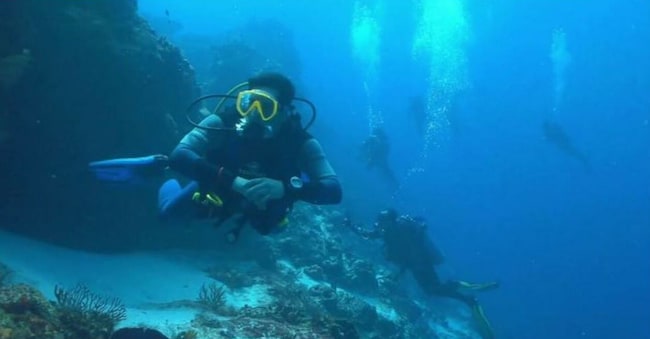
The heart of the text, however, is in the third chapter, which sets out the requirements and fundamental principles concerning underwater tourism in order to recompose a regulatory framework that has so far been fragmented across the country, to establish homogeneous rules and, above all, to allow Italy's underwater heritage and its many submerged treasures the enhancement they deserve through itineraries and twinning with other countries. The decree entrusts the Minister of Tourism, in agreement with the others involved and subject to the agreement of the State-Regions Conference, with the task of identifying by decree the "areas of underwater tourist interest", taking into account safety and landscape, fauna, archaeological and cultural relevance, and entrusts the Regions with the task of regulating the related professions.

Requirements for recreational diving

Ample space is devoted to identifying the requirements and fundamental principles for the exercise of the activity of diving and diving training centres that provide services related to recreational diving (excluding competitive sports activities, civil protection activities and scientific and professional diving carried out by research bodies, universities and other public and private institutions).

Instructors and guides must have insurance cover

The law, as well as being concerned with protecting natural habitats and protected species, distinguishes between instructors, guides, educational organisations and dive centres by setting the requirements for exercising their activity and entrusting them with the task of guaranteeing the safety of users and informing them about the fragility and conservation of the marine ecosystem. Instructors and guides, in addition to holding the relevant patents, will only have to operate with individual insurance cover. For each, the maximum number of simultaneous divers is set at six. A first-aid kit, complying with the requirements of Table D of the Ministerial Decree of 10 March 2022, must be carried on board each boat.

For One-Stop Communication Centres

The centres will have to register in the business registry at the Chamber of Commerce competent for the territory by submitting the single business communication, open a VAT number and location to carry out theoretical activities, equip themselves with equipment that complies with EU standards, and have an insurance policy for risks to employees or collaborators including instructors and guides. In a register, to be kept for at least six months, the person in charge of the centre will have to note down the data on those taking part in diving.

Sanctions up to EUR 12,000

Violations of the rules on the exercise of the activity of diving instructor or guide will cost a fine of between five thousand and twelve thousand euros, equal to the fine that centres without the requirements risk. On the other hand, failure by the centre manager to fill in the register will be worth an administrative fine of between one thousand and three thousand euros. Repeated infringements, for centres, can cost suspension for up to six months. A fine of between 500 and 1,500 euros shall be imposed in the event of breach of the obligation to provide on board, for the entire duration of the dive, personnel to drive the boat used as a support unit for the transfer to the diving site.

Boating, digital push

The fourth chapter of the law is reserved for pleasure boating, with a varied package of regulations. They range from the obligation for leasing and chartering companies to register vessels used for commercial purposes in the Central Telematic Archive to a series of amendments to the Recreational Boating Code for the development and digitalisation of the sector. Procedures for the publicity of deeds, the renewal of navigation licences, the authorisation for temporary navigation, and the conversion of nautical licences or equivalent foreign qualifications are simplified.

Certificates required from foreign-flagged units

For recreational craft up to 24 metres flying a foreign flag but owned by Italian citizens or legal persons resident in Italy, an ad hoc article has been introduced in the Code (26b): if they sail or are stationed in inland waters, in the territorial sea or in the Italian ecological protection zone, they must prove their seaworthiness by means of the certifications provided for by the flag State. If not, they must be inspected by a notified technical body that issues a five-year certificate on the absence of risks for the marine environment and the safety of navigation. The aim is to counteract the phenomenon of pleasure boats fleeing to foreign flags, in particular to those that do not provide for certification of the hull's seaworthiness.

Seafarers' Freshmen

In Chapter V, the law introduces amendments to the Code of Navigation to identify the subjects entitled to be enrolled in the seafarers' matriculation - at least 16-year-olds who are Italian, EU, European Economic Area, or Swiss citizens, or citizens of other countries provided they are resident in Italia - and to determine the cases that give rise to the cancellation of enrolment (the regulation of the activity of port chemistry consultant was instead suppressed in the Senate, as reported in the dossier of the Parliamentary Study Service).

Digitised logbook

The law also removes the obligation of strict accountability for charts, books and other on-board documents, while it allows for the formation and digital storage of nautical and engine logbooks, crew rosters, working time and accident logbooks, radiotelegraph logbooks, the World Maritime Distress and Safety System logbook, and the loading and unloading of medicines, ballast and biological fouling logbooks. Some payments are also digitised.

Requirements for vision also in inland navigation

With an article introduced in the Senate, the law extends the vision requirements for maritime workers to personnel working in inland navigation. The Electronic Communications Code was also amended with regard to testing, inspection of on-board radio stations and information requirements.

Regional shipbuilding subsidies

The Regions are granted the power to adopt, in line with the new Incentives Code ex Legislative Decree 184/2025, support measures for the modernisation and development of the shipbuilding industry: tax breaks on their own taxes, contributions for technological innovation, aid for specialised vocational training.

The Fisheries Seamen's Compensation Fund

Lastly, together with some provisions aimed at incentivising school and health personnel in service in the minor islands (the provision of additional points is delegated to a subsequent decree of the Minister of Education in agreement with his colleagues for Regional Affairs and Civil Protection) and strengthening the water supply services of the Sicilian islands, the aim is to fully implement the application of the Cisoa, the special fund for agricultural workers, to seafarers in the fishing sector: a decree on labour and agriculture, in agreement with the Economy, will have to define the application methods, conditions and terms. Mariners authorised to fish are also authorised to take command of vessels with a tonnage not exceeding 200 tonnes dedicated to fishing even beyond the 20th meridian.

Waste, the delegation on emissions and landfills

Also introduced in the Senate, there are finally Article 34 of the law, which contains the delegation to the Government to transpose EU Directive 2024/1785 that amended the directives on industrial emissions and waste landfills, and Article 36, which supplements the regulations on the exercise of rights in the exclusive economic zone established beyond the limit of the outer territorial sea by Law 91/2021.

Copyright reserved ©
Loading...

Brand connect

Loading...

Newsletter

Notizie e approfondimenti sugli avvenimenti politici, economici e finanziari.

Iscriviti