
From Wall Street to the City, stock exchanges are turning to night-time trading
In the first half of 2027, the London Stock Exchange will launch a night-time trading platform, LSE 24.

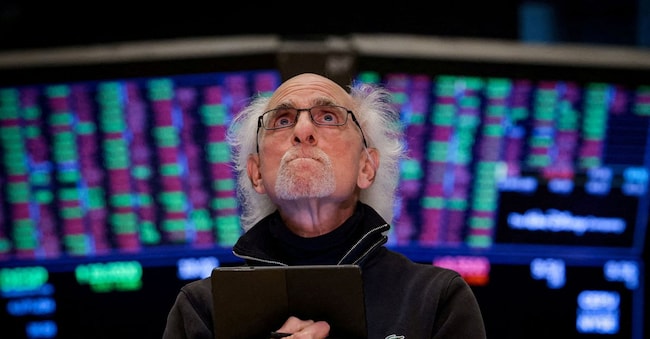
In the first half of 2027, the London Stock Exchange will launch a night-time trading platform, LSE 24. Initially, the new platform – which will operate separately from the London Stock Exchange’s main market – will offer access limited to index-tracking products such as ETPs. However, LSE CEO Julia Hoggett has stated that, over time, other securities are also expected to be traded on LSE 24, and that it is “conceivable” that, in the long term, the same securities as those on the “main market” could be traded there.
A similar move was announced last October by the New York Stock Exchange (and approved by the SEC in February this year), and so the Nasdaq has announced its intention to extend trading hours to 23 hours on weekdays.
A turning point
“We are witnessing a strategic response to the competitive pressure from crypto platforms and digital brokers, which for years have been offering continuous access to the markets and an ever-increasing range of tokenised shares and ETFs, eroding the traditional scope of stock exchanges and creating a risk of disintermediation of retail flows towards 24-hour, seven days a week,” explains Giovanni Andrea Incarnato, Global Financial Services Business Consulting Leader at EY. “By enabling algorithmic and agent-based trading, and positioning oneself in a market niche that has so far remained unexplored and which could form the basis for future disruptive models, a truly structural innovation is being built.” This involves several strategic objectives. Incarnato continues: ‘Among the potential user base, there is a retail and generational component: younger investors accustomed to apps, continuous access and “crypto-native” approaches – who expect to be able to trade at any time and whom stock exchanges risk losing if they remain tied to 8-hour trading windows’. But there are also institutional and cross-border clients – that is, global investors who want to ‘react promptly to market events, access liquidity across different time zones and manage risk outside traditional trading hours’. Added to this is the most innovative aspect: agent-based trading. Here, “the aim is not so much to attract a new type of investor as a new type of market participant: AI systems that operate without continuous supervision and require always-on trading venues”.
The impact on the markets
Looking at the impact on trading volumes and markets, the expected effect is twofold. “On the one hand, the extended trading hours broaden the trading scope and capture flows that are currently scattered across alternative venues,” emphasises Giovanni Incarnato. “On the other hand, the structural risk is the fragmentation of liquidity and the resulting increase in volatility. This raises a number of considerations, such as the need to manage corporate actions and settlement within a continuous cycle, and the investment habits that may emerge among less-structured retail investors, who are exposed to the risk of making impulsive decisions in response to overnight news and are therefore less protected.” If this phenomenon becomes widespread, the medium-term scenario could be one of gradual convergence between traditional finance and crypto-native infrastructure, with markets that are increasingly global, continuous, automated and ever faster. And with AI agents playing a leading role.

