Cars and corporate mobility

Companies at the forefront of the transition to zero-emission cars

The new regulation

by Alberto De Pasquale

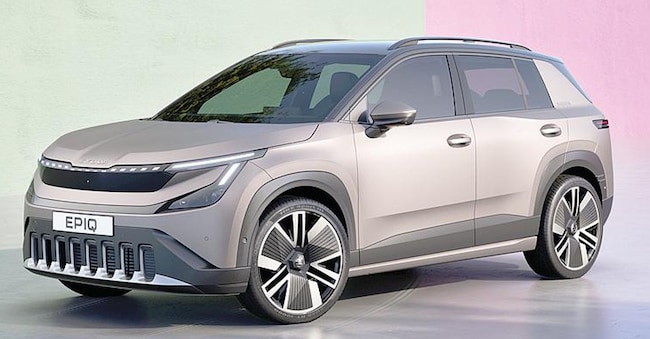
Skoda. La nuova Epiq è un suv elettrico compatto con oltre 400 km di autonomia

3' min read

Translated by AI
Versione italiana

3' min read

Translated by AI
Versione italiana

From market fulcrum to industry lever. There is an additional burden of responsibility for company fleets, which are at the forefront of the transition process. They account for 60 per cent of the annual car registrations in Europe, some eight million units if one looks at the numbers for 2025.

As envisaged in the European Commission's proposal for a regulation on clean company vehicles, binding national targets, specific to each member state, have been introduced for the first time. They concern what Brussels defines as large companies, i.e. companies with at least two of these three conditions: a balance sheet of more than EUR 20 million, a net turnover of more than EUR 40 million and an average of 250 employees in one year.

Loading...

In the case of Italia, at least 45% of new company cars will have to be zero-emission by 2030, while considering also low emissions (up to 50 g/km CO₂), the share will have to be 69%.

From 2035 the requirements are expected to become even more stringent, with the percentages rising to 80 per cent for zero-emission vehicles and 95 per cent for the combined zero- and low-emission quota, respectively.

Ambitious goals, but still intermediate when looking at other major markets. Companies will be called upon to rethink their vehicle acquisition and renewal strategies, with non-trivial organisational and financial upheavals. Fleet cars travel more kilometres on average than those used by private individuals: this is why they are considered a vector for electrification, as they reach the second-hand market and can reduce emissions and the average age of the fleet.
In March, the Commission relaunched a proposal called the Industrial Accelerator Act, which was designed to boost the capabilities of the European manufacturing sector, with a direct impact on fleets as well: a minimum quota of European components is envisaged in order to access public tenders and obtain state incentives.

While targeting the entire sector, the legislation wants to use fleets as a strategic lever to transform the market, probably providing tax benefits and incentives as early as 2028 only for vehicles at least 70 per cent of which are produced in Europe (excluding batteries) and with a minimum of 50 per cent of the value of major electronic systems of European origin.

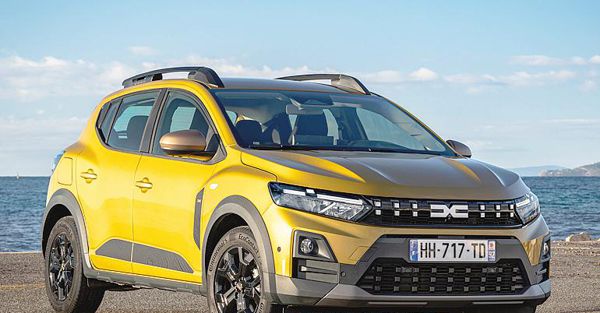
In Brussels' plans, European fleets will therefore have to acquire 'small, affordable electric vehicles made in the EU' in order to qualify for financial support programmes.

According to research by Transport & Environment, up to two million more electric cars could be registered if the Commission raises the average electrification target for company fleets in large companies from the current 45 per cent to 69 per cent.

The state of progress of electrification in Europe was one of the main topics at the latest Global Fleet Summit, an international benchmark event for managers of the largest multinational corporate fleets.

In the course of the debate, the transition to electric power was framed as an issue not only related to the environment, but also to geopolitics and economics.

Confidence in batteries and residual values is growing, while electric vehicles are starting to be appreciated for their costs becoming more competitive and for the lower exposure of energy to price shocks, compared to petrol.

Looking a little further afield from the Union's borders, there is curiosity about what might happen in developed countries but with wide margins for growth. This is the case in Turkey, an important car market which, with a fleet of over 30 million vehicles, has no more than 10% representation of company vehicles. In the continent's main markets, however, things are proceeding at very different speeds.

In 2025 in the fleet segment Belgium had 62% Bev registrations, the Netherlands 55%, France and Germany both around 24%, while Spain stopped at 9% and Italia 7%. While in Belgium, the Netherlands and the United Kingdom electric vehicles are already top motorisation, Spain and especially Italia are lagging far behind.

Copyright reserved ©
Loading...

Brand connect

Loading...

Newsletter

Notizie e approfondimenti sugli avvenimenti politici, economici e finanziari.

Iscriviti