
Fruit and vegetables: exports up to 6 billion, but risk chaos due to EU crackdown on anti-bug drug
The new limits on the use of an active substance against pests will only be in force from September, but already there are the first effects on sales. Trade balance worsens

2' min read
Key points
2' min read
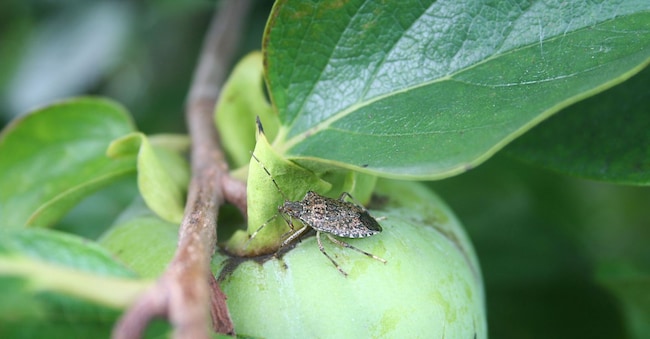
The new limits set by the EU Commission on Acetamiprid, an active substance particularly effective in the fight against the Asian bedbug, will not come into force until next September, yet they are already slowing down sales abroad.
The tightening decided in Brussels following a re-evaluation by Efsa on the molecule is accompanied - as is the practice - by a transitional phase, to allow the disposal of products already legally collected and treated, but some large-scale retail chains - especially foreign ones - have immediately demanded compliance with the new maximum residue limits, putting the entire sector in crisis.
Associations Against Efsa
Fruitimprese - which together with Alleanza delle Cooperative, Assomela and Cso has taken action at European and Italian level - denounces 'unfair practices'. "This is unacceptable behaviour on the part of the large-scale retail trade, as it imposes a completely arbitrary obligation on its supplier," he comments.
The Food Safety Authority's decision was triggered by an NGO's report on traces of residues found on some batches of spinach in France (where the substance is banned).
'Quite irresponsibly,' comments director Pietro Mauro, 'instead of carrying out its own research, Efsa took what the NGO reported and established a new Dar (acute reference dose, ed.) five times lower than the one in force: as a result, Brussels established the new limits, which, incidentally, have not yet taken the form of a regulation valid for legal purposes, but for some it is as if this had happened'.
The case actually opens up a much deeper reflection on the - blunt - weapons with which the sector finds itself combating ever-increasing phytosanitary and climatic emergencies.
"The molecule in question is essential to defend us against alien insects and already by next year we do not know how to protect the quality of our fruit," adds Davide Vernocchi, head of fruit and vegetables at the Alliance of Italian Cooperatives and president of Apo-Conerpo.

