
Fuel: prices still rising, focus on car tax cuts
A progressive discount – higher for small cars – is on the agenda for the next Cabinet meeting, although its effects would not be felt until next year

Key points
The outlook for what is supposed to be the week marking the transition to the new phase of support measures against high fuel prices continues to be full of speculation. But there is little in the way of funding.
A Cabinet meeting is expected in the coming days to launch the targeted measures, thereby putting an end to the blanket cuts in excise duties, which have been criticised for handing out precious public resources to those who do not need them. The transition has been announced on several occasions by Prime Minister Giorgia Meloni. Barring any surprises, it will take place shortly, following last week’s postponement: although the technical and political decisions on how to proceed have yet to be finalised, in high-level meetings that could be convened very soon.
The price list craze
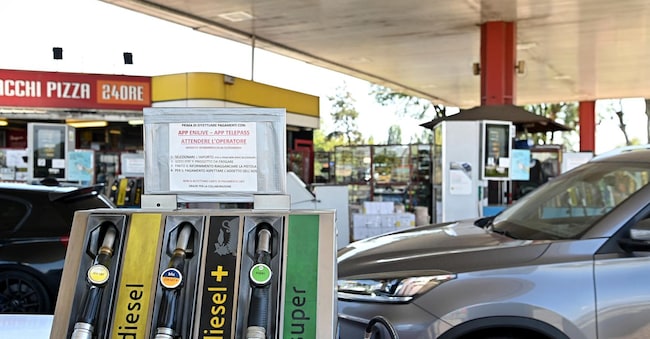
Certainly, at the moment, the first thing to note is yet another price alert. On Monday, the Ministry of Enterprise’s daily price surveys showed a further slight increase, bringing the average price of petrol to 2.107 euros per litre and diesel to 2.216. But with Brent crude having come close to $110 per barrel and, according to the president of FederPetroli Italia, Michele Marsiglia, potentially reaching $120 ‘in the event of a prolonged conflict, a significant reduction in Gulf exports and an insufficient response from OPEC’, concerns are centred on the immediate future. And consequently on the sustainability – including the political sustainability – of possible countermeasures without putting too much strain on the public purse.
The costs of the petrol voucher
Amidst the flurry of scenarios, the petrol voucher for the final three months of the year appears to be losing ground. The initial idea was for a €150 bonus (€50 per month, regardless of when it is paid) for employees with an ISEE below €35,000 who need to use a car to get to work, identified on a case-by-case basis by their employers. First, the exclusion of self-employed individuals was challenged, then the use of the ISEE: but broadening the scope of beneficiaries would require reducing the aid by at least a third and lowering the income threshold to around 28,000–30,000 euros – figures that still prove difficult to reconcile.
Progressive discounts on road tax
The spotlight therefore turns to the alternative measure, namely the vehicle licence tax: a discount reserved for owners who are up to date with their payments, calculated as a percentage and particularly significant for small-engined cars, which would decrease as engine size increases, eventually being phased out entirely for flagship models, SUVs and so on. Such a structure has the advantage of being progressive, a feature lacking in across-the-board excise duty cuts. However, it also has a serious drawback: even if decided upon immediately, its effects would only be felt next year, as almost everyone has already paid their road tax for 2026. And it remains to be seen whether an announcement of future aid, however backed by legislation, would prove sufficient whilst diesel, subject to excise duties at the full rate, is set to reach a historic peak of an average of 2.4 euros per litre, thereby increasing the pressure on Palazzo Chigi to impose further caps on excise duties.
And then there’s the extra deficit
The fiscal leeway is set to increase in the budget, to make room for structural measures that can be implemented thanks to the extra deficit (around 7 billion for energy, and the same amount for defence) permitted under the EU Pact’s national safeguard clause. “It is, however, additional expenditure, and for this reason we will scrutinise every euro carefully,” warned Economy Minister Giancarlo Giorgetti, speaking via video link at the conference on ‘Energy and Nuclear Sovereignty’ at Palazzo Lombardia in Milan. The scope of the measures, outlined in the letter sent by the Government to the EU, is broad, and in the Finance Minister’s summary it covers “households, businesses, the public sector, transport, production, storage and transmission”, with the aim of “guaranteeing not only our energy sovereignty but also our technological sovereignty, and reducing our dependence on foreign sources”. However, none of this may call into question ‘the path towards fiscal consolidation’. Above all, it must not result in immediate and direct aid: a matter that tops the political agenda, all the more so in a scenario now dominated by electoral pressures.


