
Fuel: Senate gives the green light to the decree. Powers extended to the drilling commissioner
The bill now goes to the House of Commons, which must pass it into law by 9 November

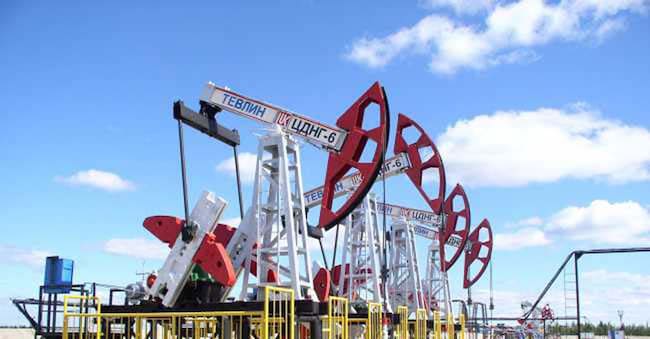
Thirty-eight applications to explore for and extract hydrocarbons onshore are awaiting the go-ahead from the regional authorities. In the worst-case scenarios, the wait can be as long as nine years from the date the application was submitted. The aim of the decree-law, which was issued on 10 September 2026 and has just been approved by the Senate, is to unblock these applications: the bill now passes to the Chamber of Deputies, which must pass it into law by 9 November.
The Drilling Commissioner
At the heart of the measure is Article 2, drafted by the Ministry of the Environment and Energy Security. It works as follows: if the Region does not give its approval within 45 days of the application, Palazzo Chigi sets a strict deadline, on the proposal of Minister Gilberto Pichetto Fratin. The deadline is a maximum of 60 days, falling to 30 days for projects linked to ‘gas release’ – the mechanism designed to supply gas at a capped price to energy-intensive industries, which has never got off the ground. In the meantime, the Government checks with the Region to ascertain the reasons for the delay, but the deadlines continue to run. If the Region fails to act, the Council of Ministers will hear its case and then exercise its powers of substitution. It will then appoint an ad acta commissioner – possibly assisted by a deputy commissioner – who will grant the authorisation in place of the regional administration. Both will work without remuneration or reimbursement.
In the Environment Committee, an amendment tabled by Claudio Fazzone (Fi) granted the commissioner greater powers. He will also be able to adopt interim measures and issue authorisations falling within the remit of the Region or local authorities that are necessary to bring the proceedings to a close.
Pending applications
As reported in *Il Sole 24 Ore* on 12 September, 10 permits and 28 concessions are currently on hold. The permits comprise 8 new grants and 2 extensions. The concessions comprise 27 extensions and one amendment to the work programmes. Domestic production is far below past levels. In the first four months of the year, according to Mase, Italia extracted 926 million cubic metres of gas and 1.2 million tonnes of crude oil. In the 1990s, production reached 20 billion cubic metres of gas and 4–5 million tonnes of crude oil per year. For Prime Minister Giorgia Meloni, increasing domestic production means ‘reducing dependence on foreign supplies’.
The other amendments
The committee approved a few other amendments. The most significant concerns ARERA, which, by revising the conditions for connections to the electricity grid, will have to reduce the contributions payable as a capacity charge. The other charges, including the distance-based charge, will be adjusted accordingly, without altering the total revenue for distributors and ‘without increasing the system charges borne by end users’. The stated aim is to promote the electrification of consumption as set out in the Pniec. The majority’s proposal was passed in its revised form following the Budget Committee’s conditional opinion.

