
Fujifilm increases its magnetic tape production fivefold
The Japanese company will invest around 10 billion yen – equivalent to approximately 58 million euros – in its Odawara plant, south of Tokyo, to manufacture state-of-the-art products with capacities of up to 100 terabytes for artificial intelligence data centres

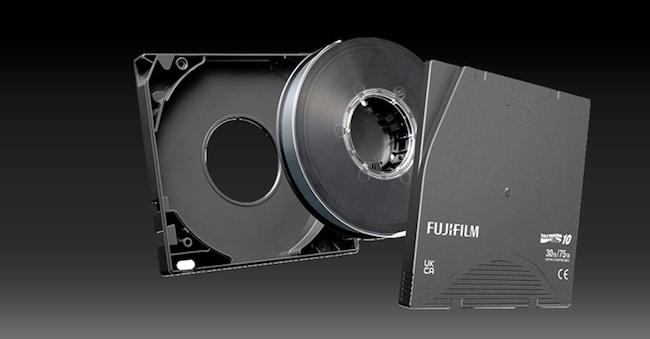
Fujifilm is set to increase its magnetic tape production capacity fivefold by 2028 compared with last year’s levels, in response to growing demand for offline storage. Analysts note that this is a prime example of a technology that appeared to have had its day but is now making a comeback.
The Japanese company will invest around 10 billion yen – equivalent to approximately 58 million euros – in its Odawara plant, south of Tokyo, to manufacture state-of-the-art products with capacities of up to 100 terabytes for use in artificial intelligence data centres and other applications.
Once widely used in audio and video cassettes, magnetic tape had gradually been sidelined by the rise of flash memory and external hard drives. Fujifilm, however, has continued to develop the technology, focusing on increasing capacity and on a key advantage today: the ability to store data offline, physically isolating it from networks and protecting it from ransomware and cyber-attacks – a threat that is constantly growing with the spread of AI-based tools. From an industrial perspective, this move reflects a resurgent demand for cold, high-density storage – a segment in which tape remains cost-competitive per terabyte compared to hard discs and memory. In Japan, the only other major manufacturer is Sony Storage Media, based in Miyagi Prefecture; a niche market which is therefore once again becoming strategic for data infrastructure.

