Third factor

Fundraising, bequests double

The Testamento Solidale Committee confirms a growing phenomenon, supported by community foundations, set up at the instigation of Fondazione Cariplo

by Letizia Lochi

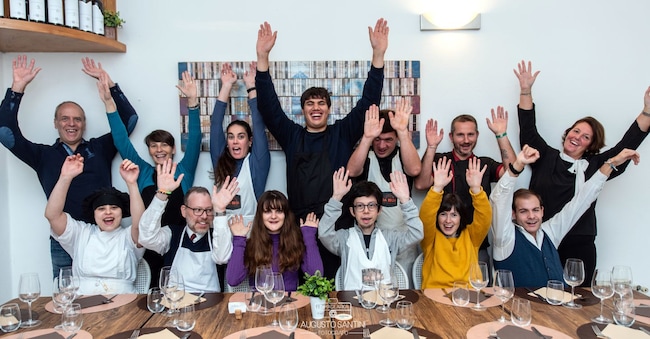
Le persone del ristorante “Da noi” che in via Lambertenghi a Como

5' min read

Translated by AI
Versione italiana

5' min read

Translated by AI
Versione italiana

A treasure of more than 35 billion - the equivalent of a finance bill - that risks being dispersed. According to the Cariplo Foundation Observatory, this will be the sum of assets without heirs by 2040. And the survey by the Testamento Solidale Committee estimates that this year the value of legacies collected will be around 150 million euro.

This phenomenon is growing because of the demographic change that is reshaping the Italian social fabric: well over a quarter of the population is over 65 and half of this percentage is alone. The third sector looks to this capital as an important source to support the activities of its organisations.

Loading...

What is a solidarity will?

A will, whether written in our own hand, or drafted by a notary, is a way for our ideas and values to survive. By means of a solidarity will, we allocate our heritage, in part or in full, to that to which we are most attached. Among the ties we forge in life, that with our territory can never be taken away from us. There we grew up, there are those we love, there is our community. If what we are is the fruit of those who have cared for us, we also owe our history to it.

Today, unfortunately, precisely communities, understood as networks of proximity, whether neighbourhood or city, are increasingly fragmented: according to ISTAT, Italian one-person households now account for more than a third of the total population.

Everything is weighed down by the latest Censis report that shows how public policies have only a residual impact on the phenomenon. It is social cohesion that has been disrupted over the last thirty years by an economic, labour and technological system that has favoured an individualist model where people often find themselves as alien satellites in their own neighbourhood or city.

Community Foundations

It was from observing this phenomenon that, in an almost visionary way, Fondazione Cariplo, 25 years ago, created a new way of philanthropy by investing in proximity and giving life to one of its projects with the greatest social impact: the Community Foundations, a particular entity with mixed participation (private individuals, organisations, associations), borrowed from the American system, whose objective is to collect funds from several donors to give rise to a lasting legacy that over time finances socially useful projects in the area, where the indirect beneficiaries coincide with the investors. In 1999, the first to be set up in Italy was the Community of Lecco, to which, shortly afterwards, 13 others were added in the other Lombardy provinces, in addition to the two in the provinces of Novara and Verbania, which, although they are part of the Piedmontese territory, are historically closely linked to Lombardy.

A local welfare circuit

The 16 Lombardy-based organisations, out of 35 established throughout Italy, now represent a full-cycle circuit of local welfare: sentinels of hardship in the territories, capable of planning complex interventions made possible thanks to local supporters. Each is supported by the initial investment of Fondazione Cariplo, which doubles the capital raised from donors. In the case of the Fondazione Provinciale della Comunità Comasca, for example, the capital raised of one million euro was then doubled to two million by the via Manin organisation. Thanks to this mechanism, citizens can re-appropriate the places where they live and contribute to positive change. Yet, over the years, as the needs of the territories and thus the projects implemented increase, the capital tends to decrease.

To remedy this, without affecting the social impact, many communities are increasingly turning to solidarity wills. A segment that the latest survey by the Testamento Solidale Committee of a sample of one thousand citizens records a 16-point growth between 2020 and 2024: from 61% to 77%. As a result, the percentage weight of bequests in total fundraising almost doubles, growing from 8% in 2020 to 14% in 2024.

The same research attests to great confidence in what the third sector can do with such resources. It is precisely to the third sector, in fact, that half of Italians, 48%, recognise the greatest commitment to improving the country's social and economic conditions. A recognition of the policies of hope rather than those of fear, witnessed by donations: almost seven out of 10 Italians say they have donated at least once.

Como: "Da Noi" everything is a resource

'Our task is to ensure that the wishes expressed in the bequest,' explains Francesco Pizzigalli, President of the Fondazione Provinciale della Comunità Comasca, 'are realised to the best of our ability. This is what we do every day'. This is the case of the 'Da noi' restaurant in Via Lambertenghi, which has been providing work for eight people with disabilities for two years.

"When I realised that today's working environment offers very few genuine job opportunities for young people with disabilities, I felt it my duty to create a concrete opportunity for these young people to become independent and grow". These are the words of Guido Grilli, teacher and father of a boy with disabilities. "Working with a valid contract, putting one's talents to good use, redeeming one's dignity," Grilli continues, "I wanted to create a reality that promised all this to young people like my son. The Franco Songia testamentary fund of more than one million euro enabled the project to be realised.

North Milan: the Francesco Dapoto Fund and the fight against Parkinson's disease

And if work is a central theme, scientific research is no less so, as in the case of Francesco Dapoto who, after the loss of his wife to Parkinson's disease, chose to dedicate his bequest to fighting the disease. With the bequest earmarked for the creation of scholarships for Parkinson's research, Francesco's grief has become hope and confidence for a future in which this disease will certainly be less scary. "Affection and memory, which are all we have," emphasises Massimo Minelli, president of Fondazione Comunitaria Nord Milano, "do not die with us but can be transformed into concrete actions for the community.

Mantova: the political legacy of Ghizzi Ghidorzi

Opportunities that also invest the world of culture: 'Our foundation is proud to renew,' says Carlo Zanetti, president of the Mantuan Community Foundation, 'the political commitment of Professor Dacirio Ghizzi Ghidorzi, provincial secretary of one of the movements that most believed in federal Europe. We do this by continuing the work of raising awareness among the younger generations on the importance of the EU'. It is precisely with Ghidorzi's 60,000 euro bequest, in fact, that since 2006 the Mantua for Europe award has involved hundreds of students from upper secondary schools. 'An ideal legacy, that of Ghizzi Ghidorzi,' Zanetti concludes, 'capable of contributing, like a concrete legacy, to the wellbeing of the community, translating into a cultural investment for the territory.

Letizia Lochi participates in 'Terzo Fattore', a partnership between Il Sole 24 Ore and the Catholic University with the support of TechSoup. The initiative aims to promote knowledge of the third sector. Students carry out internships in non-profit organisations and talk about the most significant aspects of their experiences.

Copyright reserved ©
Loading...

Brand connect

Loading...

Newsletter

Notizie e approfondimenti sugli avvenimenti politici, economici e finanziari.

Iscriviti