
Fur at the end of the line: EU considers stopping a cruel and unsustainable practice
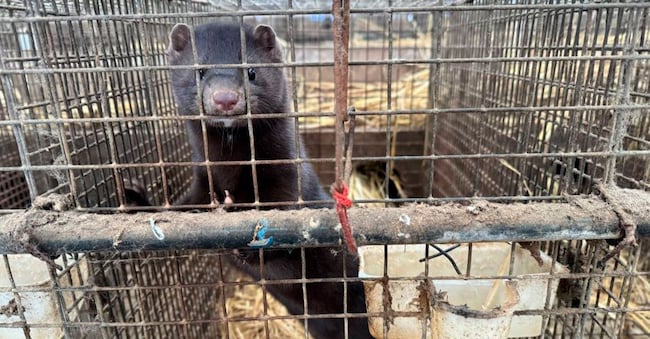
The future of fur farming in Europe hangs in the balance. The European Commission is being called upon to respond to the European Citizens' Initiative 'Fur Free Europe' and will have to decide by March 2026 whether to propose a ban on the breeding of animals for fur production - as demanded by more than 1.5 million signatories - or to introduce 'minimum animal welfare standards'.
"There is no way to ensure adequate welfare conditions for wild species locked up in cages, and to continue to exploit them only for commercial purposes is ethically unjustifiable," says MEP Cristina Guarda (I Verdi/Alleanza Libera Europea). "It is time for the EU to put an end to it, thus protecting animals, public health and the coherence of the European internal market. A comprehensive reform of animal welfare legislation, as promised by the Commission, which also takes these aspects into account is increasingly urgent."
In 2015, 45 million hides were still being produced in the EU, but the sector had been in crisis for some time: since the 1980s, animal welfare awareness has grown, fashion maisons have gradually stopped using animal fur and the first European countries imposed bans on the breeding of animals for this purpose.
Today, in the EU, bans are in force in Austria, Belgium, Bulgaria, Croatia, the Czech Republic, Estonia, France, Ireland, Italy, Latvia, Lithuania, Luxembourg, Malta, the Netherlands, Romania, Slovenia and Slovakia. It was in early December that the latest ban was enacted in Poland. In Germany, regulations are so stringent as to make the business economically unsustainable, while Denmark, Sweden and Hungary have imposed bans on certain species; in Spain, mink breeding is no longer allowed.
In the last decade, the number of farms in Europe has fallen by 73% and the production of skins has plummeted by 86%. The value of sales has fallen by 92%. A detailed economic assessment, published in 2025 by economist Griffin Carpenter, presents an even more dramatic picture. The European fur sector - which in 2024 produced 6.3 million skins with sales of EUR 183 million - actually generates a negative gross value added of EUR -9.2 million: a value comparable to that of video cassette rental - a sector that is just as obsolete and destined to disappear.
This is not just a declining business model: the sector also imposes a significant cost on society. Carpenter argues that, taking into account the environmental and health impacts of raising animals for fur production, such as sewage pollution, eutrophication, carbon emissions, the input of veterinary drugs into ecosystems, the impact of invasive alien species on biodiversity, and the high risk of viral spillover, the annual cost to the community reaches 446 million euros. These are real costs borne by European taxpayers, rural communities, health systems and ecosystems - none of which achieve a significant economic return.
"In recent years, a new ethical awareness has grown: more and more citizens recognise animal welfare as a principle that must also guide economic activity. For this reason, it is essential to fully and effectively implement the rules already approved in Italy and to take the next step at European level, with a definitive ban on animal breeding for fur production", says MEP Brando Benifei (S&D).
Because of its small economic significance, animal breeding for fur production has been banned in Italy since January 2022. With an amendment to the Budget Law 2022, not only was the ban introduced, but also 6 million was allocated to compensate the few remaining breeders over two years. An implementing decree was to be issued within a month on the fate of the animals, and the decommissioning of the facilities was scheduled for 30 June of the same year.
To date, however, the situation is a legal and sanitary anomaly. The animals from the cages have never been released, if at all, following the sanitary culls that affected some of the farms affected by SARS-CoV-2. The decree to allow their hypothetical transfer is missing for reasons that the competent ministries do not report, even when questioned by parliamentary questions, and the only exit strategy seems to be that of contagion and culling.
It is not clear whether in the two-year period 2024-2025 the farmers received further compensation or how they kept the animals. The only certainty is that it would have been more useful and sensible to endorse the first version of the amendment, which also allocated funds for the ecological reconversion of facilities, instead of leaving farmers and animals in the current implementation limbo - a short-sighted choice of reactionary political forces, historically 'friends' of the sector.
"The business of breeding animals for fur production is an economic dead end and involves health risks that Europe can no longer ignore. The only truly ethical choice is to end it once and for all. We need an EU-wide ban accompanied by a well-structured phase-out phase, which guarantees a fair transition for those few European breeders still involved in this outdated practice", concludes MEP Carolina Morace (The Left).
Thousands of people have already signed a open letter from the organisation Humane World for Animals to European Commissioner Várhelyi, calling for such a ban.

