
Fusion energy: the challenge enters the industrial phase

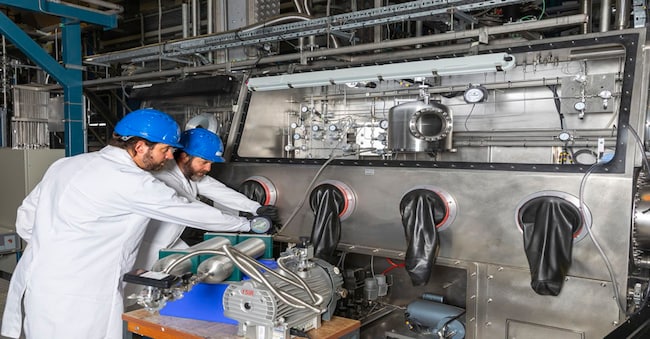
For over seventy years, nuclear fusion has been regarded as one of the greatest challenges facing scientific research. Today, however, the sector is entering a new phase. Advances in plasma physics are being complemented by progress in the fields of high-temperature superconducting magnets and advanced materials, in control electronics and in the computing power required to simulate plasma behaviour. Furthermore, the involvement of governments and private investors is growing, with both increasing the resources allocated to the development of future power stations. This signals a significant transformation: fusion is no longer merely a scientific programme, but is beginning to build its own industrial development base.
The aim remains to replicate on Earth the process that powers the Sun, namely fusing light nuclei of deuterium and tritium to produce helium and release enormous quantities of energy. Unlike nuclear fission, the fusion process does not produce direct CO₂ emissions during electricity generation. Fusion also generates far smaller quantities of radioactive waste than conventional power stations and does not involve the risks associated with chain reactions. Fusion energy uses small quantities of fuel, consisting of deuterium – which is widely available and can be extracted from seawater – and tritium, which can be produced directly within future plants using specific components of the machine containing lithium, an element capable of regenerating the tritium required for the reactor to operate.
It is worth noting that the potential of fusion is considerable. According to the International Atomic Energy Agency (IAEA), one kilogram of fusion fuel can release four million times more energy than one kilogram of coal. A future power station could therefore provide continuous and programmable electricity, independent of weather conditions, helping to integrate renewable sources and strengthen energy security. In this sense, fusion stands out as one of the technologies with the greatest potential for the decarbonisation of energy systems, although it faces significant challenges to overcome. In addition to maintaining a stable plasma at temperatures exceeding 100 million degrees, it is necessary, for example, to develop materials resistant to such temperatures and reliable systems for producing and recovering tritium, all of which must be incorporated into standardised industrial processes. According to the IAEA, the IEA and the Fusion Industry Association, the success of fusion will depend as much on technological progress as on the emergence of an industrial supply chain capable of designing, building and managing all the infrastructure necessary for the operation of future power stations.
The state of fusion research
The results achieved in recent years are encouraging signs in this regard. In December 2022, the National Ignition Facility at Lawrence Livermore National Laboratory achieved ignition for the first time in an inertial confinement experiment, a fusion technology on which research is proceeding in parallel with magnetic confinement fusion: for the first time, more energy was produced by the reaction than was used in the process. At the same time, magnetic confinement fusion – now regarded as the most promising route to continuous electricity generation – has made significant progress thanks to the development of high-temperature superconducting magnets and the advancement of major international programmes. The ITER project, currently underway in France, remains the world’s largest fusion experiment and aims to demonstrate the possibility of producing ten times the energy input into the plasma, paving the way for subsequent demonstration reactors.
Alongside major public programmes, the industrial ecosystem has also grown rapidly. According to the Fusion Industry Association, there are now dozens of companies worldwide specialising in the development of fusion technologies. The International Energy Agency, for its part, highlights how the sector is entering a phase of progressive industrialisation, in which engineering expertise and the establishment of a dedicated supply chain are becoming increasingly important alongside research.
Building a global supply chain
Eni was among the first energy companies to invest consistently in fusion. Over the years, the Italian group has built up a network of collaborations involving research centres, universities and industrial partners in Italia, the United Kingdom and the United States (where it is a strategic shareholder in Commonwealth Fusion Systems, a spin-off from the Massachusetts Institute of Technology committed to accelerating the industrialisation of magnetic confinement fusion) with the aim of contributing to the development of the expertise needed to bring fusion to the commercial stage. In Italia, the company holds a 25 per cent stake in the DTT (Divertor Tokamak Test Facility) project, promoted by ENEA and dedicated to the development of key components for heat management within future fusion reactors. In addition to these initiatives, there are collaborations with universities and research centres, as well as advanced training programmes aimed at new professionals in the sector, with a clearly defined objective: to complement scientific research with the development of engineering capabilities, industrial expertise and specialised services – all elements set to become central to the future fusion value chain.
RH3OVA: a new services industry emerges for fusion
The transition from research to industrialisation has found concrete expression in the creation of RH3OVA, the joint venture established by Eni and the United Kingdom Atomic Energy Authority (UKAEA) in the UK. RH3OVA represents a key component of the future industrial infrastructure for fusion, as its aim is to provide the entire sector with specialist consultancy and operational solutions in one of the most critical areas for the commercial development of this technology: the fuel cycle.
Future fusion power stations will, in fact, use deuterium and tritium. Whilst the former is readily available, the latter is extremely rare and will need to be managed throughout its entire life cycle: production, use in the reactor, recovery from exhaust gases, purification and reuse. The availability of reliable and efficient processes is one of the key enablers for the commercial deployment of fusion, as also highlighted in the Fusion Industry Association’s Fusion Industry Supply Chain Report 2026, which identifies fuel cycle technologies as one of the emerging priorities for the future supply chain. RH3OVA meets this need with its end-to-end services-to-end services, ranging from feasibility studies and design through to plant implementation and operational support, pooling the experience gained by UKAEA in tritium management and the industrial expertise developed by Eni in the construction of complex infrastructure and within the field of fusion. The aim is to support companies and organisations active in both magnetic confinement and inertial confinement fusion, contributing to the standardisation of processes set to become essential when the first plants come on stream.
The new company also forms part of the path already embarked upon by the two partners with the construction of the UKAEA-Eni H3AT Tritium Loop Facility in Culham, which is set to become one of the world’s leading centres for researching the recovery and recycling of tritium. Whilst H3AT aims to develop knowledge and technologies, RH3OVA’s mission is to bring them to market, supporting the transition of fusion from a scientific programme to a future energy industry.

