
The future of payments is digital: Worldpay reveals global trends in the 10th edition of the Global Payments Report 2025
3' min read
3' min read
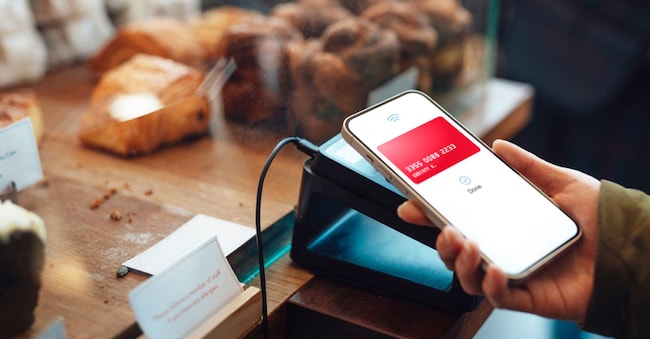
It used to be the jingle of coins, today it is a tap on the screen. As the act of payment becomes silent and digital, it is not only the technology that is changing, but our very relationship with money. In Italy, as in the rest of the world, we no longer pay only with paper or cash, but with digital identity, trust in apps and a growing need for immediacy. The new Global Payments Report 2025 by Worldpay recounts this momentous transformation with data, forecasts and - above all - insights into the future.
There was a time when cash dominated our days. Today, however, in the space of a decade, the act of payment has become dematerialised: from hands, it has moved to smartphones, then to digital wallets, and finally to biometric and wearable technologies. The tenth edition of the Global Payments Report by Worldpay photographs this change with the precision of a seismograph and projects it up to 2030, showing how even Italy, often cautious on digital issues, is embracing a new paradigm in consumption.
In our country, the change is most evident in online commerce: in 2024 digital payments reached 52% of the value of e-commerce and is estimated to reach 70% by 2030. Even at physical points of sale, although cards remain the dominant instrument, the share of digital wallets is rising strongly, with one of the highest growth rates in Europe. Cash, which accounted for 42% of POS transactions in Italy in 2014, has plummeted to 21% by 2024 and is projected to fall to 16% by 2030.
The smartphone is one of the key players in this metamorphosis, as it is now the preferred e-commerce shopping channel for more than half of Italians. In 2014, only 16% of online purchases in Italy were made from mobile; today we are at 45%, with an estimated 60% within five years. Driving this trend are not only the younger generations, but also integration with fast payment systems and intuitive apps, such as Apple Pay, Satispay, Google Pay or Bancomat Pay.
Another element that is gaining ground, also among Italian consumers, is the Buy Now Pay Later. The BNPL in our country is already worth more than EUR 3 billion and is growing at double-digit rates, with significant penetration especially in the fashion, travel and technology sectors. Globally, the BNPL has grown from $2.3 billion in 2014 to $342 billion in 2024, and is expected to reach $580 billion by 2030.
The Global Payments Report highlights how the future of payments will be dominated by fluidity, security and personalisation. Traditional cards, while enduring, are migrating into digital wallets: 65% of global spending today is still done through cards, but often in an invisible form, 'behind the scenes' of a mobile app. In Italy, 58% of users of digital wallets recharge them via credit or debit cards, confirming the strong link between traditional tools and technological innovation.
And while many envisage a completely cashless society, cash shows cultural resilience. In Italy, it remains the preferred method for some segments of the population, particularly the over-60s, small merchants and rural areas. However, according to Worldpay, even here the trend is clear: the share of cash will continue to fall by around 2% annually until 2030, and no market among those analysed - including Italy - will see cash as the dominant tool.

What emerges from the report is a simple but powerful truth: it is no longer enough to accept payments, you have to accept the future. Consumers are changing, and with them expectations. They want to pay without friction, with confidence, wherever they are. The Global Payments Report 2025 is not just a collection of statistics: it is a manifesto on the direction the everyday economy is taking. An economy where technology is not an accessory, but the very infrastructure of the relationship between those who buy and those who sell.And those who know how to read these signals - from small entrepreneurs to large corporations - will not only be able to keep up, but anticipate the future.
Click here to download the full report.

