Israel

Gadi Eisenkot challenges Netanyahu with the Yashar party: the new centrist force in Israel

The new centrist party, Yashar (“Straight”), founded last year following a split with Benny Gantz, holds a slight lead over Likud: 24 seats to 23 in the Knesset

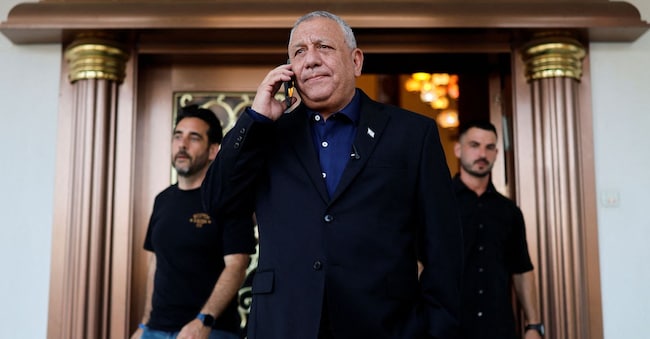
Il leader dell'opposizione israeliana ed ex capo delle forze armate israeliane Gadi Eisenkot parla al telefono fuori da una conferenza organizzata per la sua campagna elettorale in vista delle elezioni israeliane, a Dimona, Israele, il 6 luglio 2026. REUTERS/Amir Cohen REUTERS

2' min read

Translated by AI
Versione italiana

2' min read

Translated by AI
Versione italiana

Gadi Eisenkot, former Chief of Staff of the Israeli Defence Forces and former minister, is the candidate challenging Israeli Prime Minister Benjamin Netanyahu and, according to some polls reviewed by the Financial Times, could even overtake him in the polls.

Eisenkot’s new centrist party, Yashar (“Straight”), founded last year following his split with Benny Gantz and his resignation from the Knesset, has outperformed Netanyahu’s Likud in recent polls, establishing itself as a potential leading party in the next parliamentary term.

Loading...

A poll by the public broadcaster Kan gives Yashar a slight lead over Likud: 24 seats to 23 in the Knesset, which has 120 members. Eisenkot himself also consistently leads Netanyahu when respondents are asked who would be the most suitable candidate for the post of prime minister.

As he has done with other political rivals, Netanyahu has sought to portray Eisenkot as a member of the radical left, accusing him of being prepared to form an alliance with Arab parties and of jeopardising Israel’s security.

Eisenkot rejected this portrayal, instead emphasising his credentials as a security expert. Born into a family of Moroccan immigrants in the southern city of Eilat, he grew up in an environment far removed from the elites of northern Tel Aviv and the Rehavia neighbourhood of Jerusalem, where the Netanyahu family resides.

His military career began in the Golani Brigade and culminated in his appointment as Chief of Staff of the Israel Defence Forces, a post he held from 2015 to 2019. During his tenure, he developed a controversial operational doctrine based on the use of overwhelming force against Israel’s enemies, including strikes against civilian infrastructure, according to the Financial Times.

His public image has been profoundly shaped by the loss of his son Gal, an army reservist, who was killed in December 2023 during fighting in the Gaza Strip, and by the subsequent death in battle of two of his grandsons. These events have helped to forge a strong bond between Eisenkot and a significant section of Israeli public opinion.

Dahlia Scheindlin, a pollster and political analyst, explained that Eisenkot’s personal grief and his military background – in a country where the army remains one of the institutions most respected by the Israeli Jewish population – have contributed to his growing popularity.

“It has paid the highest price for this war, and this stands in stark contrast to the current government,” said Scheindlin. Netanyahu has been trying for months to pass a law exempting ultra-Orthodox Jews from compulsory military service, a demand from his coalition allies that is deeply unpopular with a large section of the population. Critics of the Prime Minister also point out that his two sons were not called up for reserve duty during the conflicts that followed the attack on 7 October.

Copyright reserved ©
Loading...

Brand connect

Loading...

Newsletter

Notizie e approfondimenti sugli avvenimenti politici, economici e finanziari.

Iscriviti