Investigation

Galleries under pressure: the new model for contemporary art

Rising costs, more selective collectors, more expensive research

7' min read

Translated by AI
Versione italiana

7' min read

Translated by AI
Versione italiana

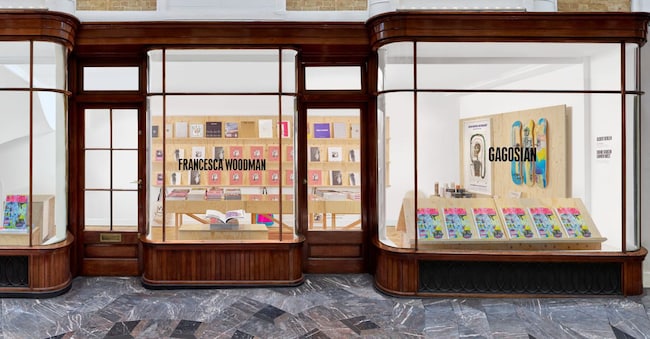
Amid rising costs, more cautious collectors and increasingly expensive art fairs, the gallery sector is rethinking its future. Following the redundancies announced by Pace Gallery and the decision to reduce the number of artists represented, it has recently been reported that Gagosian has also begun scaling back its physical presence, closing its Burlington Arcade space in London – which opened in October 2023 – and its Basel branch, which opened in 2019.
These are two further signs of a re-evaluation of the expansion model that had characterised the major international players over the last twenty years; today, they are increasingly focused on rationalising costs and space without sacrificing their presence in strategic markets. From Pace Gallery to Italian galleries, the issue is not a market crisis but the sustainability of a model built up over the last twenty years.

The role of the gallery owner is changing. Not because the market has ceased to function, but because economic conditions, collectors’ behaviour and the very role of the gallery have changed. This transformation affects both major international players and small-to-medium-sized galleries, which are now called upon to balance cultural research, the development of artists’ careers and economic sustainability.

Loading...

This is the picture that emerges from the survey carried out by Arteconomy24, which involved some of Italy’s leading galleries, who were asked to reflect on the sector’s prospects: from the rising costs of supporting an artist to the changing role of the collector, from the importance of art fairs to the need to rethink the very structure of the gallery.

Gallerie in fiera

The galleries of the future: smaller, more flexible and more collaborative

Rather than a market crisis, the responses point to a transformation of the gallery model. Contemporary galleries are still expected to do what they have always done — discover artists, organise exhibitions, build careers and forge international relationships — but they must do so whilst facing much higher costs, more cautious collectors and ever-shrinking margins.

When asked how he envisages his gallery in five years’ time, Massimo De Carlo replies with a single word: “different”. It is an answer that recurs, with different nuances, in many of the accounts. No one envisages larger premises; instead, almost everyone speaks of more sustainable, selective and collaborative models.

For Raffaella Cortese, the future lies in “continuing to focus on bespoke design”, whilst for Massimo Minin, “we will need to restructure the organisation to keep pace with the times and with galleries around the world”. Luca Castiglioni envisages a gallery increasingly based on international exchanges and collaborations: “we’ll need to avoid the strain of art fairs, creating connections and links that bring mutual benefits”. Paola Capata, founder of Monitor, summarises the desire for continuity: “I’ll be happy if, in five years’ time, I can still talk about Monitor as an active gallery that has maintained its identity despite these difficult times”.

The central theme is sustainability

“In five years’ time, I envisage a gallery capable of operating in a hybrid way,” says Gian Marco Casini of the gallery of the same name, “based in Livorno as a centre for production, reflection and hospitality for artists, but increasingly agile in reaching out through projects in other cities and partnerships.”

“Different, not necessarily bigger, probably with a more structured international presence, but through temporary exhibitions rather than permanent physical spaces” is the view of the young gallery owner Matthew Noble. The expansion in scale that has characterised many large galleries over the last two decades no longer seems to represent a model that can be replicated by everyone. The trend appears to be towards more agile structures, capable of collaborating and sharing certain functions without losing their cultural identity.

An economic model under pressure

The main problem today is not simply selling, but bearing the cost of creating value. The costs involved in supporting an artist have risen much more rapidly than revenues. “You cannot simply raise the prices of artworks as a direct result of higher costs,” observes Umberto Di Martino. Sara Zanin draws attention to the rise in operating costs and the proliferation of sales channels, whilst demand is growing much more slowly. Transport, insurance, production, communication and ever-increasing administrative complexity are also taking their toll.

On this point, Pietro Vallon, president of Angamc, the National Association of Modern and Contemporary Art Galleries, who has been at the helm of the association since last May, has this to say. “There is no single threat facing galleries. Rising costs and greater selectivity on the part of collectors affect all markets. The specific issue in Italia is the competitiveness of the country as a whole.” According to Vallone, the reduction in VAT “is an important step”, but not enough: “If we want galleries to continue investing in artistic production, research and artists’ careers, we must ensure competitive conditions compared with other international markets”. Among the cost items that have risen most in recent years are not only the traditional ones: “Transport, certainly, but even more significant are operational costs: compliance, privacy, anti-money laundering, cyber security, contracts and IT systems. Today, running a gallery is far more complex than it was five years ago, whilst profit margins have not grown at the same rate.” Finally, according to Vallone, the future will be characterised by greater collaboration: “We will see more and more collaborations between galleries, with the sharing of services and the pursuit of economies of scale, without compromising each gallery’s cultural identity.”

Loading...

Economic pressure and relationships with artists

All galleries emphasise their cultural role: helping artists build their careers, organising exhibitions and supporting artistic research. But today, this work requires ever-increasing investment. “A gallery owner always takes a huge risk in the name of supporting culture,” says Massimo De Carlo, “and I believe this role is never recognised for its true value.”
Matthew Noble highlights the disparity between the time needed to build an artistic career and the time required by the market to recognise its economic value.
Federica Schiavo points out that it is primarily small and medium-sized galleries that act as laboratories for research and the development of new generations of artists, albeit with increasingly limited resources.

Collectors have changed too

Galleries report a more selective audience, with longer decision-making processes and fewer impulse purchases. Against a backdrop of greater economic caution, requests for greater flexibility in payment terms are becoming more frequent, which has an impact on cash flow management. For Francesca Simondi , the main issue concerns the generational shift among collectors, whilst Pinksummer highlights the gap between the primary and secondary markets: too great a price difference can deter new buyers. Sara Zanin, whilst agreeing that “collectors are certainly more cautious and selective”, notes that when they find quality, consistency and fair prices, they continue to buy.

According to the majority of the galleries surveyed, the most dynamic price range today is below 30,000 euros, with a frequent reference point of around 15,000 euros. Only Massimo Minini and Consonni/Radziszewski identify the range between 25,000 and 50,000 euros as the most active.

Trade fairs are essential, but the model needs to change

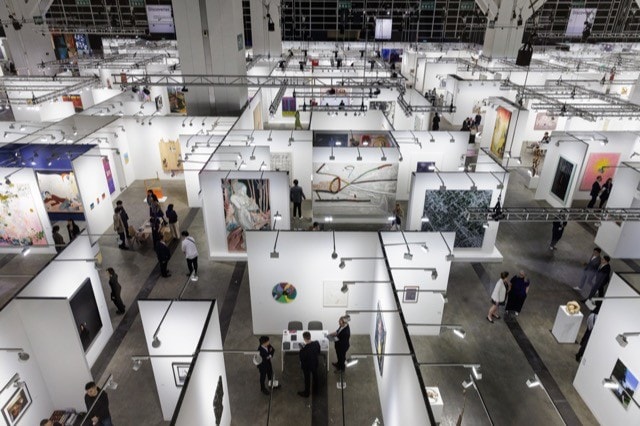
Art fairs continue to be one of the key events in the contemporary art market, but no gallery regards them as a sure-fire investment any more. Participation costs have risen, along with transport, installation and logistics expenses, whilst the financial return has become harder to predict. Yet almost no one is considering giving them up.
Art fairs remain essential not only for making sales, but also for consolidating a gallery’s international standing and for meeting collectors, curators and institutions. For galleries that have provided figures, the proportion of sales generated through art fairs ranges from 40 to 70 per cent of annual turnover, with an average of around 60 per cent.
The change mainly concerns selection: fewer events, chosen with greater care. The common trend is to take part in fewer fairs, selecting them more carefully. Whilst Luca Castiglioni (Milan) believes that art fairs ‘are no longer worthwhile’, for Dario Bonetta of A+B (Brescia) some continue to work, whilst others have gradually lost their effectiveness. RIBOT (Milan) has reduced its participation from seven fairs a year to three because, for a gallery working with young artists, the cost-benefit ratio is no longer favourable. Matèria (Rome), which takes part in an average of four fairs, emphasises that selection is now an essential condition for ensuring financial sustainability, whilst Monitor, whilst considering them necessary, believes it is strategic to reduce their number, at least in the short term.
For P420, however, fairs remain indispensable: the gallery takes part in 12 international events a year, but the selection process is increasingly rigorous and also depends on the quality of the event’s organisation, whose ability to attract collectors, curators and qualified professionals has a direct impact on the return on investment.
Martina Simeti also considers art fairs to be fundamental, but questions their current economic model. Galleries working with emerging artists incur costs similar to those of major international players, despite operating at much lower price points. The risk, she observes, is that the system will end up favouring more commercial programmes at the expense of artistic research. Hence the interest in new formats, such as Paris Internationale and Basel Social Club, which are experimenting with more sustainable models.
This view is shared by Federica Schiavo, who believes that the art fair system seems increasingly geared towards meeting the needs of large galleries, whilst small and medium-sized galleries – which play a leading role in supporting and nurturing young artists – are struggling to cope with ever-rising costs. An art fair, she observes, can no longer be automatically considered profitable, but must be assessed on the basis of overall costs, the quality of the audience, its alignment with the gallery’s programme, and its ability to generate opportunities in the medium term.
Raffaella Cortese adds a further point: today, the relationship between galleries and art fairs is increasingly integrated. Negotiations may begin in the gallery and be finalised at the art fair, or follow the reverse path, as collectors’ decision-making times have lengthened. This is also why the constant rise in costs makes it essential to exercise ever greater care in selecting the markets and events in which to invest.

More than just a venue for sales, the trade fair is becoming a tool for positioning, relationship-building and international development. Its effectiveness is no longer measured solely by the volume of sales generated during the event, but by its ability to build new commercial, institutional and cultural opportunities over time.

Copyright reserved ©
Loading...

Brand connect

Loading...

Newsletter

Notizie e approfondimenti sugli avvenimenti politici, economici e finanziari.

Iscriviti