
Gallery Weekend Berlin features emerging and established art
The appointment confirms the success of the format. Many collectors queued up to discover the proposals. Sales but the market slows down

5' min read
5' min read
Ongoing in Berlin is the Gallery Weekend (2-4 May), the most important moment for the art market in the German capital along with the Berlin Art Week, organised by the city's institutions, which takes place in September. The mood is buoyant, despite the recent 12 per cent cut in the city of Berlin's culture budget of EUR 130 million, and nationwide debate after the election of the new, controversial culture minister, the conservative Wolfram Weimer.
The format
.Now in its 21st year, Gallery Weekend brings together this year 52 galleries with more than 80 artists from more than 20 countries. Over the years it has established itself as the most suitable format for the local art system, undermining the various exhibitions that have followed one another over time, and attracting international visitors, including many Italian collectors, as well as the large art public in Berlin. The success of the event is evident from the queues that form to enter the galleries, especially the most famous ones that have created museum installations for the occasion, such as Esther Schipper, who presented "Romantic Room" by Chinese artist Sun Yitian (class of 1991), who for his paintings took inspiration from the history of art, from objects of mass consumption and also from memories of his childhood (prices from 29,000 to 150,000 euros). Also abroad, the Gallery Weekend has become a model for many cities to network between contemporary art galleries. In order to participate, the fee for galleries has risen to 7-8 thousand euro, thanks to which they are included in the promotion and marketing circuit of the event and in VIP events, such as Saturday night's dinner at the Kraftwerk, the former power station, which was attended by around 800 people. At the market level, some galleries sold well, but according to the operators, the current market is totally different from previous crises, such as the one in 2008. Today's trend is a continuous moderate decline, but it is not known how long it will last, and this scares many collectors and also complicates the relationship with artists. It is mainly the mid-range prices that are affected, not the high ones.
The former petrol station
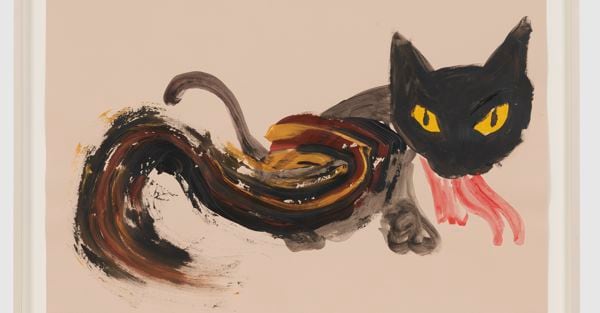
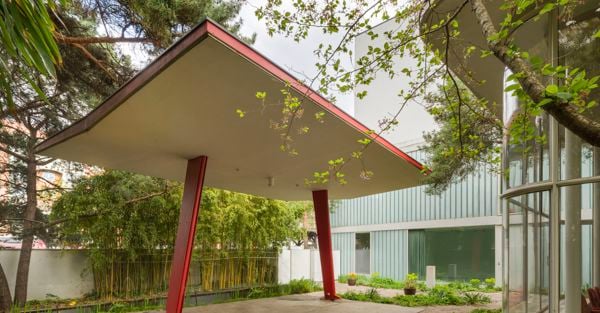
.To mark the occasion, the galleries bring out the best of their programming or unreleased novelties. Among the most eagerly awaited is the opening of the new gallery of Pace and Galerie Judin, in a former petrol station that was also the residence of Swiss gallerist Jürg Judin and the Kleine Grosz Museum. Now, in addition to the exhibition spaces in which the galleries will alternate, there is a new cafeteria and bookshop run by the Die Zeit publishing house, which aspires to make the place more open to the community. For the first opening, Pace is exhibiting works on paper by three generations of artists starting with Dubuffet and his influence on both Basquiat and Robert Nava. The gallery, which turns 65 this year, has worked with Dubuffet since 1967 (it was his gallery together with Beyeler, which the artist later left to stay with Pace). A former wine merchant, a self-taught artist, he had a very good hand, but forced himself to paint like a child. This search for the basic element, in its crudeness and primitiveness, far removed from official art and the pursuit of beauty, influenced Basquiat, who saw his work from Pace, as did Robert Nava, a Chicago artist born in the year Dubuffet died.
Art VS popular culture
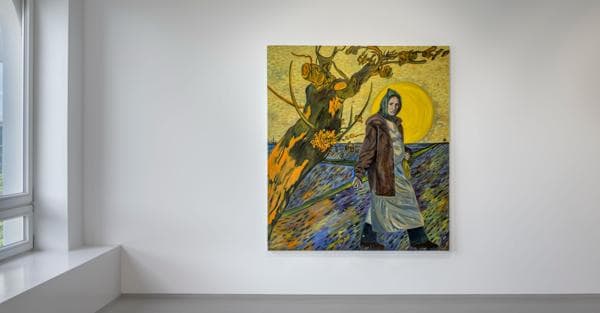
.Judin also tackles the relationship between art and popular culture with the third gallery exhibition of Tom of Finland, whose foundation Judin has represented for ten years, but this is the first time that the works are for sale - a way in which the foundation finances his work and the catalogue raisonné. "The works in the exhibition reveal the incredible visionary nature of the artist," says Pay Matthis Karstens, co-owner of the gallery, "who as early as the 1940s - working under a pseudonym because it was forbidden at the time - depicted erotic homosexual scenes, moving from pornography to art also thanks to German (from Hamburg, a port and liberal city) and Danish collectors. In the last ten years, prices for his works have doubled. In the gallery's other location, in the former building of the Tagesspiegel newspaper on the Potsdamer Strasse, Judin is showing a group show that starts with another self-taught artist,Camille Bombois, a former circus performer born in 1883, who moved to Paris in 1907 to become an artist. British artist Tom Anholt, born in 1987, curated the exhibition, inviting other contemporary artists to create a work inspired by Bombois. In the same complex, home to numerous galleries, Max Hetzler is showing the well-known German artist Thomas Struth, while presenting a newcomer at the Bleibtreustrasse venue, whereSergey Kononov, born in 1994, a Ukrainian artist living in Paris, is exhibiting for the first time. His first solo exhibition, 'Celso and the past', features ten paintings that offer a tribute to youth at a time of socio-political turbulence. Characterised by a golden glow, they are a mix of various pictorial influences, from Lucien Freud to Andrew Wyeth and Sandro Botticelli, with prices ranging from EUR 7,000 to EUR 40,000.
The Italians
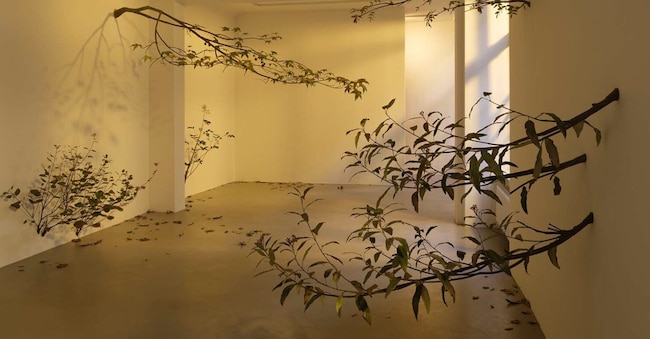
.In addition to Monica Bonvicini at Capitain Petzel, there is also the first solo exhibition in Berlin for the emerging Italian artist Lula Broglio, exhibited at Duve with paintings and reused objects created for the occasion that explore the dimensions of thought and emotion, merging memory and imagination, reality and hallucination, human and animal worlds (prices between EUR 1,900 and 10,000). Another Italian present in Berlin is Nicola Samorì at Galerie EIGEN +ART with the exhibition "La Bocca di Berlino", which takes its cue from the myth of Marsyas, flayed alive, to represent flesh and suffering in crude representations (from 15 thousand euros, but prices vary depending on the material). At Chert Lüdde's there is Patrizio Di Massimo with the exhibition 'Son of a Witch' (prices from EUR 6,000), next to Álvaro Urbano (1983, Madrid), who in the exhibition 'September and the Lions' has created an immersive installation in the gallery evoking a summer evening in Berlin's famous Tiergarten park (prices from EUR 15,000).

