
Madrid's Gallery-weekend turns the spotlight on a growing city
The 16th edition of Apertura Madrid with 57 galleries in the city presents the Madrid art scene driven by Latin American collecting and the support of institutions
by Nicola Zanella
 Aggiungi Il Sole 24 Ore
ai preferiti su Google

5' min read
Key points
5' min read
From 11 to 14 September, Opening Madrid, the 16th edition of the Gallery-weekend bringing together 57 of the city's most important galleries. An opportunity to deepen the artistic proposal in good health as well as the economic context appears to be in good health. The organising body is Arte Madrid, the local association of galleries, and the aim is to propitiate a collective growth of the sector by activating networking opportunities. There are many initiatives in this direction, including a group exhibition at the Lazaro Galdiano museum, to give an overview of the galleries' offerings, and a programme to host curators from Latin America in tandem with gallery-weekends in Barcelona and Valencia, thus offering them the chance to delve into the Spanish art scene for a month.
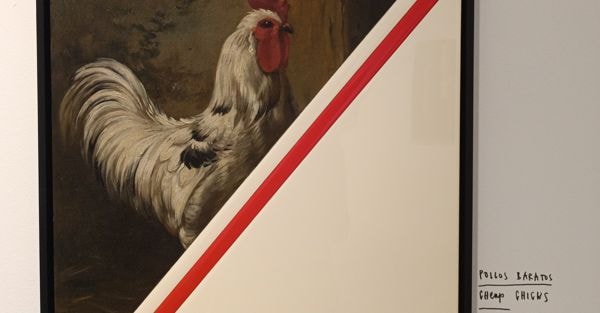
The strength of gallery owners
.Madrid has always been the home of the great women gallerists who marked Spain's artistic emancipation in the post-Franco era, but sadly Helga de Alvear passed away in March this year, bequeathing her splendid collection to the city of Caceres. The shutters were also lowered for the legendary Juana de Aizpuru, who closed her business well into her 90s, and like her, other historic gallery owners made the same choice. Prominent among these iconic figures of Madrilenian culture is the Traversia Cuatro gallery, led of course by two women, which in recent years has excelled in both artistic and public relations choices. During the opening days, it offered a single show by Donna Huanca, an acclaimed multidisciplinary artist whose paintings are often extensions of her performances. Canvases for sale fetched up to $90,000 and sculptures up to $25,000.
The rediscoveries
.The proposal of Madrid galleries is very heterogeneous and independent, but one strand that we can unearth is that of the re-valorisation of Spanish artists, active from the post-war period to the early 2000s and often disappeared prematurely. Some are less known than they deserve and perhaps victims of Spanish isolationism during Francoism, which limited their international dissemination. Luis Claramunt (1951-2000) was a Catalan painter known for his strongly expressionist landscapes created with few dense and saturated colours, very emotional and immediate. The Ehrhardt Florez gallery is devoting a single show to him from his Seville period, which marked a decisive change of style for the artist. The works are on sale from €4,500 to €55,000. The exhibition at the Maisterravalbuena gallery seems to be dedicated to some young American artist with an addiction to Instagram, but instead it is the solo show of Patricia Galdea (1960-2006) who already in the 1980s proposed a hypercoloured figurative painting inlaid with collage and comics, denouncing then ever topical themes such as Macism or the superficiality of mass media communication, with prices ranging from 10,000 to 35,000 euros. A completely different style, abstract and minimalist, for the works of Fernando Mignoni (1929-2011) on show at Elvira Gonzales, a seminal figure of the Hondo Group, a very influential current born in Spain in 1961: quotations up to €66,500.
The red thread that connects with South America
.The privileged relationship between Spain and South America has always influenced the Iberian country in many ways, not least the arts. In recent years Madrid has been nicknamed the little Miami for its ability to attract large Latin American heritages; it lacks the beaches of Florida but there is no comparison on educational and health services, and the city's security tout-court. Furthermore, the so-called Beckham law is very favourable for foreigners who choose to move to Spain, guaranteeing them a flat-tax of 24% for six years on income generated locally.
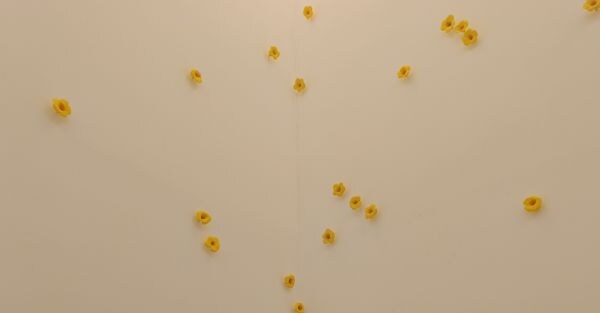
Many of these luxury migrants are obviously great collectors, the object of desire of all Madrid galleries and probably also influence their exhibition proposal. The gallery La Cometa, has Colombian owners and these days has two solo exhibitions, one by ColombianCarlos Castro, tapestries with an ancient technique but touching on topical themes, with prices around 5 thousand euros. Geopolitical themes with a minimalist aesthetic for the works of Puerto Rican Karlo Andrei Ibarra with prices from one thousand to nine thousand euro. A collective "(s)obrascompletas" almost entirely by Latin artists also for the Memoria gallery, which also offers a wide choice of prices ranging from 3 thousand to 75 thousand euros. Memoria is a gallery born at the turn of the covid in full expansion has, in fact, already two spaces, one in the centre and one in the Carabanchel district, a former working-class area and new artistic district where many galleries are taking refuge in search of larger spaces and lower rents. A rather painless gentrification given the quality of the connections between the centre and the suburbs. Mauro Piva, on the other hand, is a Brazilian conceptual artist whose solo exhibition at Espacio Minimo features his large installation "Alamandas", in which yellow porcelain flowers invade the space, a tribute to his homeland that can be purchased for 8,000 euros. El Apartamento Gallery also has a double location with an outpost in Cuba and for Apertura staged an exhibition by the duo Los Bravù..
Patrons and Museums
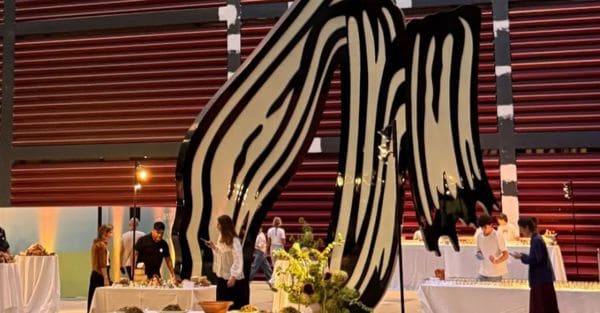
.Many of the Latin collectors who have chosen Madrid as their home appear on the list of supporters of the Reina Sofia and other major museums. Some are committed to publicising their collections with permanent spaces or temporary exhibitions in the city such as, for instance, Tania Capriles and Juan Carlos Maldonado. Another strong point for the Madrid scene is the positive and very active relationship between the galleries and public institutions, the Reina Sofia Museum for example never fails to give its support, whether with a lavish acquisitions fund that it spends during the Arco fair or simply by hosting an equally lavish dinner for hundreds of guests at the Gallery Weekend.
We have a lot to envy from contemporary Spain, from the energy to transform and grow to the attention to social and personal rights to the right ofCarlos Alcaraz who drowned Jannik Sinner, in the artistic field even the Iberian cousins have their problems such as the VAT that remains at 21%, not in line with many European countries including Italy where it has dropped to 5%. This burden weighs on the competitiveness of Spanish galleries and artists and is perceived as strongly discriminating against other creative industries such as books, which enjoy a 4% VAT rate. Madrid is a contemporary city because it has been able to fearlessly embrace the energy brought about by change; that which does not evolve, art in primis, ages and becomes irrelevant, but fortunately the price for remaining in the vanguard can be paid in South American pesos.

