Art Market

Gallleria Più closes its doors

Founder Veronica Veronesi speaks: the reasons for change

5' min read

5' min read

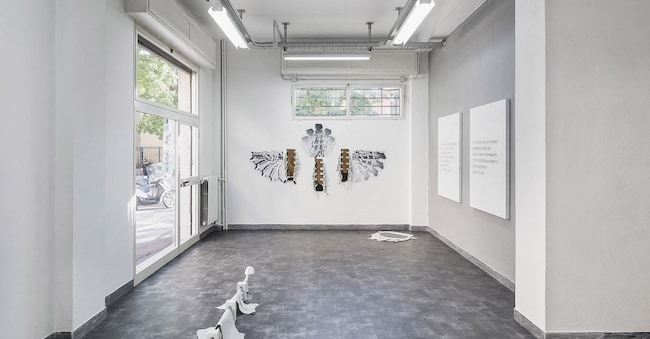
GALLLERIAPIÙ, a gallery devoted to research and the discovery of new talent, closes its doors after 10 years of activity. A research gallery that closes is, after all, a defeat for the system in general, which once again proves to be unsustainable for those who, in addition to a commercial function, also have a cultural function, with the burdens that this entails. We are told about this by Veronica Veronesi, founder of GALLLERIAPIÙ.

GALLLERIAPIÙ has closed its course, can you tell us why?

Loading...

GALLLERIAPIÙ's business model, which I can define as 'pure-play', is highly deficient; it has certainly allowed me to specialise in a specific area, that of experimentation and the search for new languages, and to consolidate the reputation of the gallery, which has distinguished itself over the years for this very characteristic. At the same time, it has limited the range of action and proposals. Those who resist do so thanks to the secondary market or because they now have a brand (as if it were a luxury brand). If you are a gallery doing gallery work, i.e. looking for talent with a curator/museum approach, the market does not reward you. There is a lot to be said for the word 'market', because art is far from being a free market. Conflicts of interest, power, fashions, little meritocracy: let's say we are not exactly talking about market and competition in the classical sense.

Any reflections related to this decision?

Does it still make sense to have an exhibition space when everything is digitised, infinitely expandable and algorithmically programmable? Art galleries are less and less traversed and experienced. Over the years, socio-economic transformations have weakened the middle class, urban changes and the processes of touristicisation of capital cities such as Bologna are radically altering the commercial fabric of cities. Small quality retail shops that cater to a middle class are suffering competition from fast and luxury markets. Art galleries are not exempt from these changes, which make competition difficult.

The business model of white cube galleries (a model we all refer to) was born in the 1970s to please a growing demand from a middle-class audience, to please their desires and confirm their rise, now perhaps this is an obsolete model. I don't think any other space has been so well codified. In those years, the idea of the art gallery born in the 19th century, a meeting place between culture and the market, lost its hybrid role to the detriment of the commercial aspect alone.

It is difficult for a gallery like mine to thrive in a system where, for example, the value of the work is not determined by its relevance in terms of meaning, but by the notoriety of the artist or his degree of exclusivity, even more so by who promotes it, in a vicious virtuous spiral that brings forward the best known and the economically strongest. This mechanism causes an osmotic appeal capable of instrumentalising communication and the buying public. Asymmetries and anomalies as obvious as they are difficult to explicate without feeling wrong.

Tell us a little about the evolution of the gallery's history and some data to better understand your reality? Fairs, turnover, etc.

I opened GALLLERIAPIÙ in 2013 and I certainly paid the price for improvising as a gallery owner in the first few years. The PIU at the end of the name and the three LLLs underline the desire to have a transversal view of contemporary practice, merging disciplines and immediately seeking a broadening of the target audience. The first two years of activity were used to define the artistic line of the gallery and to study and deepen the rules of a strongly hierarchical system with little permeability to non-insiders. I wanted to create new market possibilities and in fact make an operation that was as much cultural as commercial. The structure of GALLLERIAPIÙ has always been very lean: just one employee and all investments concentrated on production and promotion.

In 2016, I started participating in the 'incubator' sections of major Italian fairs such as Artissima, Miart and Arte Fiera. I remember my first edition of Miart in 2017, I made a turnover of 20,000€ which taking into account all the related costs: from VAT, to the artist's percentage, to public relations is barely enough to break even. In 2019 I start presenting myself in the main sections at foreign fairs like Arco Madrid or Art Rotterdam and I also get invited to several curated sections. Curated sections are a rather peculiar phenomenon: although there is already a fairly strict selection by critics or accredited curators, they often turn out to be unprofitable sections. This fact should already make us reflect on the fact that confirmed credits or an artist's CV are not always terms of reference for the market. In those years the gallery also reached its peak of €150,000 in active turnover, with which I came close to breaking even.

The confrontation with the 'official' market and stepping out of the comfort zone of the young galleries' sections proved impossible to keep up with the more solid and structured competition. The grow-or-go policy made itself felt and,. I stopped believing in the possibility that a structured business like GALLLERIAPIÙ could survive in an increasingly competitive and monopolised market.

What support would research galleries need at system level?

Speaking of support, I believe, but it is surely a utopia, that it should/could come from the big galleries. In a healthy system, the transfer of skills and generational comparison could be a driving force to stimulate the system itself. A bit like what happens in sports, where the big sports clubs activate and finance their 'nurseries' to nurture young talent. Knowing how to deal with young artists, follow their productions or deal with a certain artistic research is not for everyone; it is a very different activity from that carried out by the galleries that dominate the market. Therefore, finding useful compromises between these two registers could be successful.

Another possibility that could be explored would be to make all the support activity that galleries often receive from collectors more active and transparent by means of shareholding company operations. It is not enough to invest in the acquisition of works that have value and can even increase it over the years; this activity cannot be replaced or compared to a support operation in society. I am thinking, for example, of the DAO (Decentralised Autonomous Organisation), a management model suitable for organisations composed of people with common interests, shared ideals and objectives, which uses social participation as a key element in the distribution of decision-making power for the management of an activity.

About the system, what are the most serious stalls? Now somehow you can talk about them with a more detached view!

Admitting the anomalies of the system, the difficulties, the difficult sustainability of many sectors would already be a good starting point. Some topics are taboo. There is a false perception of the art world as a golden world. In particular, I think it is not very clear to gallery-goers the challenges we face on a daily basis. The gallery is in fact a retail business and I do not think that in other sectors, for example, very long payment terms or almost embarrassing discount requests are accepted. The problem is that as long as we are willing to do anything, not to answer and make explicit our profound needs and difficulties, change will be difficult.

What plans do you have for the future?

I have decided to retire, but I have no intention of stopping. I would like to put to use all the skills and competences I have developed during these wonderful years. The role I have held during this course has given me a great deal of practice-based experience that I would also like to transfer to cross-cutting areas. I will keep you updated!!!

Copyright reserved ©
Loading...

Brand connect

Loading...

Newsletter

Notizie e approfondimenti sugli avvenimenti politici, economici e finanziari.

Iscriviti