Transport

Milan Cortina, the logistics of the Games move half a million fans

The train will be the main means of transport for athletes, equipment and spectators. For sports staff and accredited 400 buses per day

by Marco Bellinazzo and Marco Morino

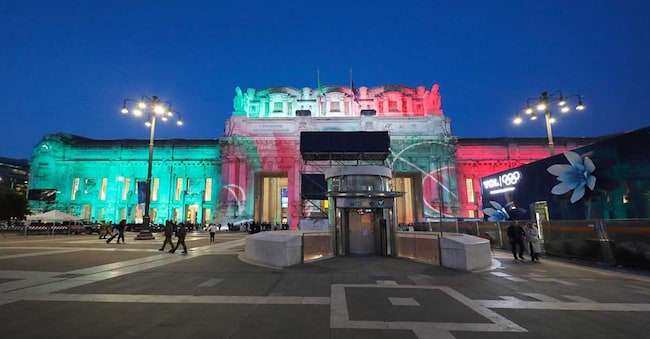
Olimpiadi Invernali Milano Cortina 2026 - Nella Foto:  Stazione Centrale Treni  (Foto IPP/Mickael Chavet/ZUMA Press Wire - Italy Photo Press - Olimpiadi Invernali Milano Cortina 2026)

4' min read

Translated by AI
Versione italiana

4' min read

Translated by AI
Versione italiana

At least 500,000 fans, including Italians and foreigners, will move along the major arteries of the Winter Games in Milan Cortina. They will travel between the various competition venues by train, bus or their own cars.

In addition, the Milano Cortina Foundation will manage the travel of what we can call the 'extended' Olympic family, which includes the 2,900 athletes involved in the competitions, 4,200 people including coaches and staff members, 18,000 volunteers and 21,000 accredited journalists, cameramen and media technicians.

Loading...

The numbers of Olympic tourists

Estimates of tourist arrivals during the Olympic weeks speak of 1.5 million people expected in Italia (not all of them will obviously travel between the competition venues from Lombardy to Veneto), while ticket sales to date have exceeded one million coupons (often those following the Games attend several events). This is, moreover, 90% of the available stock for the Olympic competitions.

From abroad, arrivals are expected at the airports of Malpensa, Linate, Orio, Venice and Verona, especially from the United States (many Americans, for example, will stay in Milan - where public transport will be stepped up with timetables until 2 a.m., while there will be no ad hoc parking) to follow hockey and ice skating, but also by car (especially from Switzerland, Austria and Germany).

However, in all Olympic resorts (in so-called clusters), from Valtellina to Anterselva, interchange parking areas (Park&Ride and Train&Ride) have been created from which shuttles to the mountain venues will depart. The main interchange car parks are located in Cortina d'Ampezzo (Dobbiaco, San Vito, Longarone, Son dei Prade) and in Valtellina (Aquilone/Valdisotto for Livigno). Therefore, those who choose private cars will not be able to arrive at the race venues (unless they have obtained specific passes), but will have to stop at the places set up by the organiser and use the buses of the 'MiCo Shuttle' system (the costs in the clusters are in fact included in the ticket for attending the event). In Cortina, 100 buses were prepared for spectators and 120 for other stakeholders (including sponsors' guests). To facilitate local travel Uber, which has signed an agreement as official sponsor of the ride-hailing service of the Olympic and Paralympic Games, will mobilise more than 5,000 drivers. VIP fans will not be able to use helicopter transfers for security reasons.

Inaugurati a Predazzo il Villaggio Olimpico e lo Stadio del Salto

Railway transport pillar

The logistics of the Games travel first and foremost by rail. The train will be the main means of transport for athletes, equipment and spectators at the forthcoming Olympic Games. The Ferrovie dello Stato (Italian State Railways) group expects to transport around 100,000 passengers, including trains and buses, connected to the sports event during the two weeks of the Olympic event. In particular, about 50 charter trains and more than 400 buses per day are planned for the athletes, sports staff and accredited persons to travel to the Olympic venues. More than 50 thousand seats reserved for the event will also be available on high-speed trains on the main routes involved, in particular Milan-Venice and Milan-Trento.

Trenitalia will also strengthen the regional transport offer towards the Belluno area, gateway to Cortina d'Ampezzo. More generally, road transport will be strengthened, linked to intermodality train+bus with a single ticket, to meet the needs of both spectators and athletes, guaranteeing easier and more capillary transfers throughout the territory.

Trenord, the company that manages regional transport in Lombardy, has also planned an increase in trains between Milan and Valtellina during the Games: 120 more runs every day, for a total of 2,500 daily runs, with the Milan-Lecco-Sondrio-Tirano route becoming the 'metro' of the Olympics. For travel to and from Malpensa Airport, the Malpensa Express will run from 4 a.m. to 3 a.m.

The choice of the railway as the logistic heart of the event responds to the need to guarantee continuity, order and capacity to absorb flows in fragile territorial contexts such as the Alpine ones, reducing pressure on the road network and improving the overall reliability of the access system to the competition venues. The heart of this commitment concerns the construction, by Rfi (Italian Railway Network), of the two Transport Malls in the Tirano (Sondrio) and Ponte nelle Alpi (Belluno) stations, essential nodes for the train+bus interchange that will allow spectators, accredited persons and delegations to reach the Olympic venues quickly and in an orderly manner.

In these hubs, flows will be routed to dedicated vehicles, guaranteeing efficient logistics fully integrated with the needs of the Alpine territories. During the days of the Olympics Closing Ceremonies and Paralympics Opening Ceremonies only, a third Transport Mall will be set up in the Verona Porta Nuova station. And thanks to the collaboration with Dolomitibus, the Cortina 2026 Link will be available, which will make it possible to reach Cortina with a combined 'train+bus' ticket, starting from the Ponte nelle Alpi station.

Busitalia, the Fs group's road transport company, is also in the field. Busitalia's Milan-Livigno connection is the only direct service between Milano Centrale and the main towns in Alta Valtellina-Bormio, Valdidentro and Livigno. The service is active from Monday to Friday with departure from Milan at 9.45 a.m. and return from Livigno at 3 p.m.; on weekends departures are scheduled at 10.15 a.m. from Milan and at 3.30 p.m. from Livigno. Furthermore, Busitalia has activated a plan that provides daily connections to Cortina d'Ampezzo and Livigno from the stations of Padua and Milan, with convenient connections also from the airports of Orio al Serio and Venice Marco Polo.

Poste Italiane's commitment

Poste Italiane is also at the forefront of the logistics of the Games, with the management of two strategic warehouses serving 32 Olympic sites: the central distribution warehouse (25,000 square metres of surface area), which is the nerve centre for the storage and distribution of materials; and the broadcasting warehouse: an 8,000 square metre space dedicated to materials for the production of the audiovisual content of the competitions. Poste's logistics also make use of local centres, such as the distribution centre in Bormio.

In addition, Poste will manage the transport of sports equipment during the arrival and departure phases by collecting the materials from the airports to the Olympic and Paralympic villages. At the end of the event, shipment of the equipment from the competition venues and villages to the departure airports. In total, Poste uses a fleet of 270 transport vehicles for the logistics of the Games.

Copyright reserved ©
Loading...

Brand connect

Loading...

Newsletter

Notizie e approfondimenti sugli avvenimenti politici, economici e finanziari.

Iscriviti

Tutto mercato WEB