Gamification and great classics: the pleasure of driving is back in the spotlight
Vehicles that turn on themselves, jump around, perform impossible manoeuvres, multiply wonder gadgets. Car culture is changing in an increasingly playful direction.

5' min read
5' min read
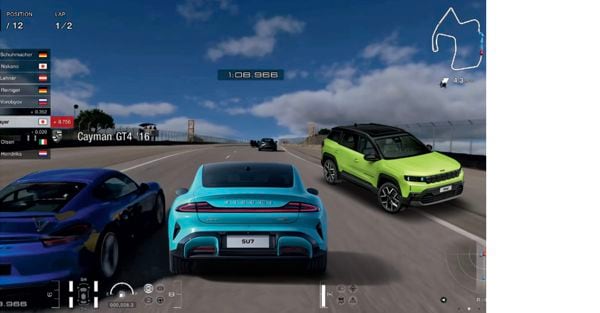
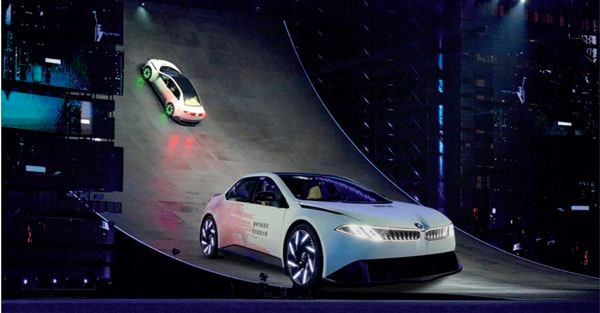
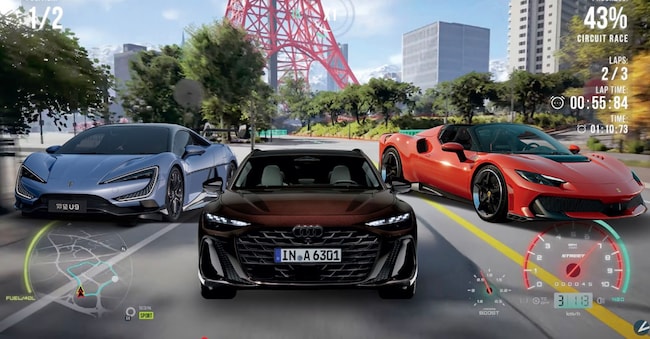
Far from being a mobility device, the car is recovering its original role as a sophisticated adult toy, a technological frontier, an exercise in style and a quest for innovation. Sure, it is used to get around, but getting around is not everything. That there is a recovery of the car and gamification equation was evident at the last Shanghai Show at the end of April. In China, now the land of the automotive avant-garde, there was a clear desire to amaze with cars, even sports cars and off-roaders, designed precisely to amaze. Perhaps with gadgets and functions of pure divertissement, as happened with the Denza (Z9GT around 70,000 euro), Byd's premium brand, which perform impossible manoeuvres, turning on itself. Or the YangWang U9 (207,000 euros), a supercar capable of hopping: guaranteed wow effect, low utility, but high level of gamification. After all, what is the roar of a V12 Ferrari, if not the acoustic manifestation of a game car? And what about an Omoda 7 (€35,000), whose central display moves electrically with a wave of the hand, from the centre of the dashboard to in front of the passenger, who can then watch a movie? It is a simple idea, perhaps not a fundamental one: the Chinese brand has thought of it, the European manufacturers have not. Perhaps the culture of the car is changing, after all, people, and in China it is evident, want and buy models that fascinate, objects that make people dream, regardless of the price, like the SU7 of Xiaomi (27,000 euros), the smartphone brand. Nobody wants a box on wheels any more.
If, on the one hand, there is gamification, on the other hand, there is a return to the roots and the classic, with a view to emphasising inalienable identity values. It is precisely on this terrain that European car manufacturers are challenging each other. As in the case of Jeep which, with the third generation of the Compass (from EUR 39,900), takes up and relaunches certain fundamental strands for the brand: dimensions are increased, on-board technology is state-of-the-art and the engine range includes multi-energy solutions. In pure Jeep style, the new generation rediscovers the seven grille slats and returns with the right equipment to tackle the most challenging terrain.
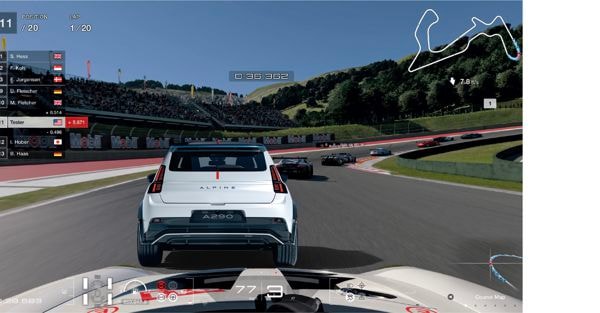
Even more evident is the return to the past, but with a modern style, by Renault which, a few months later, presented first Renault 5 and then Renault 4 (E-Tech from 28,900 euro). Two cars that take up the stylistic dictates of the iconic models of the Sixties and Seventies, proposing them in a contemporary variant, more cheerful and softer thanks to their rounded lines, but equipped with all the latest technology. Also part of the Renault group is Alpine, a brand that celebrates its 70th anniversary this year and has returned to the limelight first with the modern A110 and then with the A290 electric (from 38,700 euros), a 100 per cent electric model (a path marked by the brand's strategy), winner of the coveted Car of the Year 2025 award.
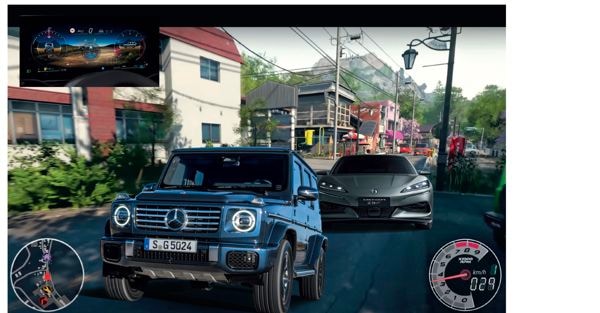
Still in the playful, classic style is Mercedes with the G-Class, an icon of off-road luxury that is also available in a more sprightly AMG version (G 63 from 208,471 euro). Always square, boxy lines contrast with the always rounded headlights at the front.
Driving to a set destination, to get from point A to point B, is not just a matter of powerful or sustainable engines, but of style. They know something about this in Ingolstadt, where Audi continues its quest for elegant yet essential designs. One example is the new Audi A6 Avant (from 69,350 euros), a concentrate of technology with refined forms and available in both electrified and 100 per cent electric versions. In terms of design, it is interesting to note how the German carmaker has the ability to change and adapt to different cultures: at the Shanghai Show, for example, the brand presented models without the iconic four rings, but with ad hoc lettering. The ability to innovate, without denying oneself, is the basis of ductility.