The interview

Gandini: 'For Flos B&B Group we put the industrial project back at the centre'

Piero Gandini, the group's new executive chairman, talks about his development strategy: starting with the product and a distribution more focused on B2B channels

by Giovanna Mancini

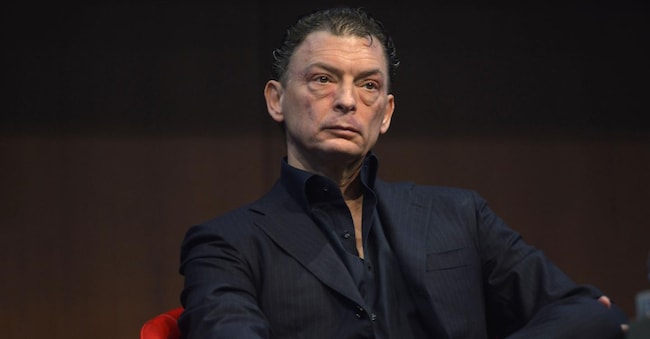
Piero Gandini, presidente esecutivo Flos. (Imagoeconomica)

3' min read

3' min read

As is often the case, big projects have a somewhat random genesis. "During a fortuitous meeting with Marco De Benedetti (chairman of Italy at Carlyle, ed), we started talking about the group's companies and joked that I could get back in". Then the joke became serious and in January Piero Gandini returned as executive chairman of the Flos B&B Italia Group, which includes Flos, B&B Italia, Louis Poulsen, Maxalto, Arclinea, Azucena, FENDI Casa, Audo Copenhagen and Lumens, and is jointly controlled by Carlyle and Investindustrial. A group that Gandini himself (for many years managing director of Flos) had helped found in 2014 and then left in 2019.

With which objective has he returned? 

Loading...

In these five years, the shareholders have sought a development very much linked to the objective of listing, which did not happen. Now that the IPO is no longer on the table, we need to return to a purely industrial management of the group's companies, with the timing and priorities typical of the activities of a design company. We must put back at the centre of attention the real reason why these companies exist and have grown over the years, linked to their editorial and industrial development capabilities.

In concrete terms, what will you do?

Many things have been done in these years for business development. These have been very complex years, characterised by Covid, the explosion of demand following the end of the crisis, wars and geopolitical instability. These are healthy and solid companies. The group ended 2024 slightly down on 2023 (LTM revenues for the year to September 2024 were EUR 761.8 million, ed), but with ebitda in line. What is needed now, however, is a cultural change, to address priorities according to an industrial logic, starting with the design and production of a certain number of winning products each year and the reorganisation of the sales network. These are actions that take time and, in agreement with the shareholders, we will take the necessary time.

What changes for individual group companies?

The idea is to make all companies, regardless of whether they are part of a single group, able to express their editorial, industrial, evolutionary identity, with all their know-how and with results that we want to be successful.

How will distribution change?

I do not believe that criteria and development dynamics that have worked in certain sectors can be applied to all industries. Today there is a tendency to lump together, under the label of luxury, any reality that has high-end products and always has fashion as its model. But furniture-design is not fashion, which has expressed itself and grown, moreover through concentration processes not seen in any other sector, through B2C distribution strategies largely based on directly operated shops, the Dos. Ours is a sector that, on the other hand, is much more based on multi-channel dynamics, maintaining in wholesale and contract the bases of its development. Moreover, ours are durable products. To believe that the fundamental tool for growth is to open Dos, directly operated shops, everywhere is a misunderstanding in my opinion. It can be useful to have one in Milan, in New York, in Shanghai, but not to have dozens.

What are the other priorities?  

Ours is not a complicated profession. It is a complex profession, however: you have to know how to make products that are beautiful and valid in terms of their cultural significance and their recognisability and saleability on the market. You have to have companies that know how to protect their brand values and disseminate them properly. And have a professional relationship with their customers.

Are you working on the new industrial plan?

Yes, but the issue now more than the numbers is the dynamics. We will have to review the holding company model, which tended to centralise many functions, sometimes multiplying them. I think a vertical organisation is more effective. Then any synergies will all be welcome.

Growth objectives?

This year above all, and partly next year, will be interim years, they will be used to reorganise the companies, and then we will be able to get going again: they all have great potential for development. I am thinking above all of an organic growth of the group: before looking at new acquisitions I would like to consolidate what we have'.

Go to dossier: Furniture Fair

Copyright reserved ©
Loading...

Brand connect

Loading...

Newsletter

Notizie e approfondimenti sugli avvenimenti politici, economici e finanziari.

Iscriviti