Justice

Garlasco, DNA on Chiara fingernails compatible with Sempio's. Defence: expert's findings not relevant

This was written by 'Il Corriere della Sera, La Repubblica' and 'Il Messaggero', according to which the pec sent by the expert Denise Albani arrived late yesterday morning to the e-mail boxes of the parties' advisors and to the prosecutor's office.

Aggiornato il 27 novembre 2025 ore 13:40

Aggiungi Il Sole 24 Ore
ai preferiti su Google
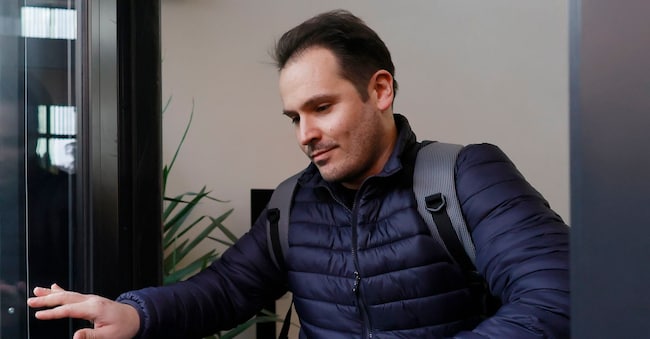
Andrea Sempio al laboratorio di genomica di Roma per l’analisi del Dna — Giovedì 20 novembre 2025 - Cronaca - (foto di Cecilia Fabiano/ LaPresse)

7' min read

Translated by AI
Versione italiana

7' min read

Translated by AI
Versione italiana

The biostatistical analysis conducted by the geneticist Denise Albani of the scientific police office, and expert appointed by the Pavia gip Daniela Garlaschelli in the evidentiary incident in the investigation in which Andrea Sempio is under investigation for the murder of Chiara Poggi, indicates that there is 'full concordance' between the Y haplotype detected in 2007 on two of Chiara Poggi's fingernails and the paternal line of the suspect's biological profile: a population of very few people that is reduced to relatives in the male line.

This was written by 'Il Corriere della Sera, La Repubblica' and 'Il Messaggero', according to which the pec sent by the expert Denise Albani arrived late yesterday morning to the e-mail boxes of the parties' advisors and to the prosecutor's office.

Loading...

A conclusion that, according to the newspapers, by investigative logic, leads directly to Sempio, a 38-year-old youth friend of Marco Poggi, the victim's brother. The anticipation will be crystallised in the final report that Albani will file in early December and that will be discussed in a hearing in Pavia on 18 December.

11 years ago opposing expertise

The result overturns what had been established by the geneticist Francesco De Stefano, an expert witness at the Court of Appeal bis that sentenced Stasi eleven years ago: the professor analysed and discarded the same DNA because it was 'not consolidated', providing the scientific prerequisites also for the first archiving of Andrea Sempio requested in 2017 by the then deputy prosecutor Mario Venditti, now under investigation for corruption in judicial acts.

The result of the Albani survey

Albani's findings established that De Stefano's laboratory tests were conducted with non-homogeneous samples, but 'in the 5-microlitre session, a mixed partial haplotype emerged for a total of twelve' markers. Albani emphasises that 'the haplotype is not in itself identifying, so it is aY chromosome, it is shared by all subjects related in the paternal line, so it cannot be univocally attributed to a single person', rather 'it is a family context of belonging'. Not only that, 'the profiles obtained are incomplete profiles'.

However, this was enough to establish the 'full concordance'. On 18 December, the parties will discuss for what reason that biological trace ended up on Chiara Poggi's hands. By direct contact, that is, in the moments of the crime of 13 August 2007, or by transfer from another object touched by Andrea Sempio at other times when he frequented the Poggi house.

Albani expertise: 'But little and degraded DNA'

A DNA 'compatible' with the male line of the Sempio family, but it is a 'mixed, degraded, low-intensity partial haplotype' whose result 'is not consolidated'.

These are the conclusions, unwritten, to which - according to Adnkronos - comes the expert Denise Albani in charge of indicating whether on the fingernails of Chiara Poggi, killed in Garlasco on 13 August 2007, there is the genetic trace of Andrea Sempio, investigated for the murder in complicity of the 26-year-old. To the parties, in a pec, he gave - as anticipated by some newspapers - an explanation of how he proceeded with the biostatistical analysis and provided tables on what could be the statistical percentage compared to the database. He provided the threshold used for the comparison and technical data to be read out to the parties for the hearing on 18 December. The report and conclusions will be filed in early December.

The first results confirm what the expert had already said in no uncertain terms at the hearing on 26 September. "I will never be able to say, and I would like to emphasise this, that that profile is Tízio's, because it is just conceptually wrong being a haplotype", so the only deduction "that can be pointed out is a family context of belonging, but surely not to identify a single person", Denise Albani's words in court. Even then, in her speech she repeated several times what is a concept that is the basis for the evidentiary incident: the material found on the victim's fingernails is a 'partial mixed haplotype not consolidated. This is an objective fact'. A partial match that if repeated does not give the same result, unlike the contamination on the gauze.

Defence Sempio: 'DNA data not worrying, does not frame Andrea'

"The indiscretions concern mere biostatistical data and not a complete expertise: even if they had been correctly interpreted, we would be neither surprised nor worried: it would only be confirmed what they claimed, that is, that it is not an individualising comparison and, above all, that the DNA is mixed: therefore, if it were confirmed that the author of the murder is one, it would not have probative value already for this". This was stated by Andrea Sempio's defence pool - thelawyers Liborio Cataliotti and Angela Taccia with consultants Marina Baldi and Armando Palmegiani - with respect to the first elements provided by the expert witness Denise Albani.

Loading...

The expert commissioned by the Pavia gip to carry out the evidentiary incident in the Garlasco case has provided the first tables from which it can be deduced that the DNA found on the nails of victim Chiara Poggi is 'compatible' with the Sempio family's male line, but it is a 'partial mixed, degraded and low-intensity haplotype' whose result 'is not consolidated'. For Sempio's defence, 'above all, the decisive data that make that DNA probative of the murder are missing: was it from direct contact between the two bodies or from contact with the same object? And when did the contact take place? Without these answers any assessment is hasty'.

Poggi family consultants: unconsolidated and null data

A result when it is 'in a critical condition and not consolidated' - because the expert Francesco De Stefano in the bis appeal against Alberto Stasi 'repeated it and did not have the same result' - is not a 'reliable scientific data'. If in 2014 that genetic material, found on Chiara's fingernails, after analysis was declared 'not consolidated' and not comparable, those partial documentary data cannot be used for a biostatistical assessment, as done by the expert in the probatory accident, because they have no 'scientific' validity and are 'null'. This is the assessment, as far as we know, of the Poggi family's consultants.

Sample: I am innocent, embittered by indiscretions

(He is very 'bitter' at the release of rumours about the data of the expert's report in the evidentiary incident, before the filing of the expert's conclusions, Andrea Sempio, investigated for the second time in eight years for the 2007 murder of Chiara Poggi in Garlasco. He is still convinced, however, that he can 'prove', through the work of his consultants and defenders, his 'innocence', which he has reiterated throughout these months and years. This is what we learn from sources close to the 37-year-old, who spoke with him this morning after the news was published.

It was Andrea Sempio himself, a guest at Porta a Porta, who reiterated his tranquillity with respect to the outcome of the investigations on that Y trace, indicating the paternal family line. "Even taking the advice of Linarello (defence of the convicted Alberto Stasi, ed.) and that of the Public Prosecutor's Office (of Pavia) - they never come to say with certainty that there is Sempio's DNA there," the suspect's words on TV.

"The only point" on which the counsels "agree" is that it is a "partial trace", which when subjected to an identical double examination "never reproduces itself in the replicas, therefore does not have the criteria to be reliable" as it does not provide the same result, and that "perhaps some points" could coincide with "Andrea Sempio, family members or a person sharing the same haplotype not present in their databases" said speaking in the third person.

Words that resemble those uttered by expert Albani herself in the courtroom at the hearing on 26 September. 'I will never be able to say, and I would like to emphasise this, that that profile is Tizio's, because it is just conceptually wrong being a haplotype', so the only deduction 'that can go to highlight is a family context of belonging, but it certainly does not go to identify a single person'. The material found on the victim's fingernails is an 'unconsolidated mixed partial haplotype. This is an objective fact'.

And Sempio also seemed reassured by the quantitative data. "If it had been a trace during an attack, there would not have been this result which may not read, partial, but there would have been a net trace," he said.

An idea that is confirmed by the statements of his defence poll. "We are talking about a Y that in the Rfu values we have (the threshold chosen for the analysis, ed.) are very low: slightly over 200, no peak exceeds 1,000, it has an average of values - both of the nail attributable to the right hand and that of the left hand - very low. If it were an attack, we would have values above 2,000-3,000', the explanation to Adnkronos by consultant Armando Palmegiani, who is convinced that it is contact DNA.

Simple DNA compared with 39 thousand profiles in Western Europe

Biostatistical calculations on the possibility of a match between the genetic traces on Chiara Poggi's fingernails and Andrea Sempio's Y profile were carried out on a database of over 39,000 haplotypes in the Western European population. This is what LaPresse learns about the tables sent yesterday by the expert witness in the probatory accident, Denise Albani, to the 37-year-old's defence consultants, Marina Baldi and Armando Palmegiani, the Pavia Public Prosecutor's Office, Carlo Previderè and Pierangela Grignani, the Poggi family's Marzio Capra, and Stasi's defence geneticist, Ugo Ricci.

In order to calculate the highest probability of origin of the profile identifying a male paternal line, partial and mixed, found on the fifth finger of the right hand and on the first finger of the left hand of the 26-year-old girl killed in Garlasco on 13 August 2007, the expert used the haplotype reference database in forensic research called YHRD (Y-STR Haplotype Reference Database), which is the most comprehensive archive in existence.

Worldwide' contains 349,750 profiles while the national database 'Italy' consists of 'only' 5,638 profiles.

A number considered too low - even by the Pavia prosecutors' consultants Napoleone-Civardi - to carry out the statistical investigation.

The forensic expert performed the probability calculation on the 'Western European Metapopulation' database, consisting of 39,150 profiles of Western European citizens.

With this system, it was considered more likely that the traces on Chiara Poggi's fingernails were generated by Sempio and a second unknown male subject, than by two other unknown subjects with no connection or correlation to Sempio.

With respect to the tables and calculations forwarded to the parties yesterday and not accompanied by comments or conclusions, the Pavia gip, Daniela Garlaschelli, wrote an e-mail to the defenders of the new investigation into the Garlasco murder to inform them of their right to submit 'written reports' or 'observations' in view of the last hearing on 18 December.

Instead, Albani will file his final paper, including conclusions, by 5 December.

Copyright reserved ©
Loading...

Brand connect

Loading...

Newsletter

Notizie e approfondimenti sugli avvenimenti politici, economici e finanziari.

Iscriviti