
Garofalo Pasta: two new production lines are set to start up
The company, based in the Gragnano district, has also invested 80 million in the construction of a new automated warehouse

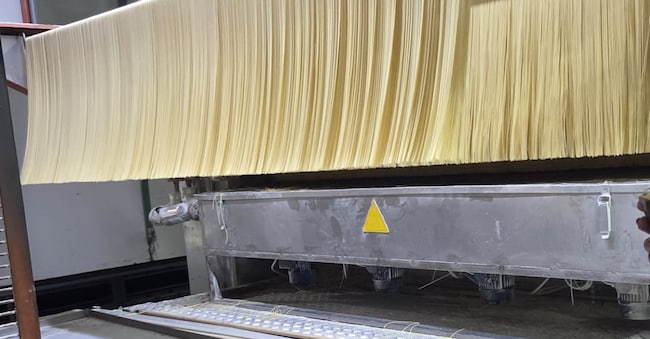
The two new production lines for long and short pasta at the Pasta Garofalo factory in Gragnano will begin operations by the end of the year. The new large automated warehouse will not be inaugurated until 2027. Both facilities were built with an investment of 80 million, partly funded under the National Recovery and Resilience Plan (PNRR).
Once fully operational, the expansion is expected to increase production by around 20 per cent, meeting the demand driven by growing demand, particularly in overseas markets (96 countries). Meanwhile, the automated warehouse is set to improve the efficiency of the production cycle, thanks to its capacity for 35,000 pallets.
In 2025, Pasta Garofalo, with 200 permanent employees, achieved a turnover of 247 million, up 4 per cent on the previous year. Growth is particularly strong abroad, the traditional market for the Gragnano district: Garofalo pasta, protected by the PGI designation, is seeing particularly strong growth in conflict zones such as the Middle East and Ukraine.
The expansion begins in 2024 and takes longer than expected due to a circumstance which, whilst initially appearing to be a setback, later turns out to be an opportunity that the company manages to capitalise on. Bulldozers set to work on the old warehouse, which is demolished. It is here that the first artefacts are unearthed: the Naples Archaeological Superintendency steps in to coordinate the excavations. It is the company (48 per cent owned by the Menna family and 52 per cent by the Spanish fund Ebro Foods) that bears the financial cost of the research. A Roman necropolis dating from the 6th century BC, containing no fewer than 86 tombs, is uncovered. Everything is sent to the National Archaeological Museum (MANN) in Naples. In return, the pasta company requests permission to keep a statue, the Siren, and to set up a small corporate museum. This permission is granted.
Meanwhile, although work has slowed down, it is nearing completion, and we have begun recruiting young people to join the production team, the research laboratory, and the marketing and export department.


