
Gas and Italia as a Mediterranean hub thanks to the reversal of north-south flows
Thanks to its geographical location on the Mediterranean, our country is well placed to become a hub for the transit of gas and green energy to Central Europe

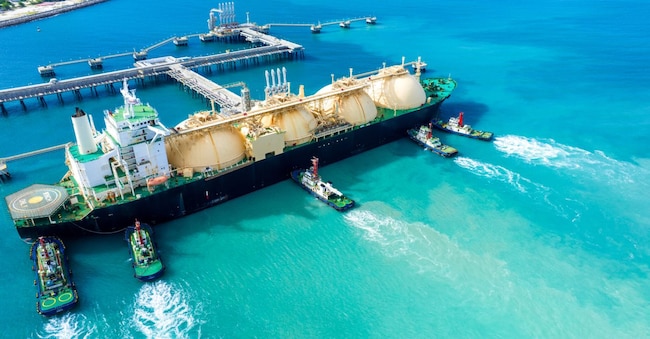
Over the past four years, Europe’s energy landscape has undergone a complete reversal. Whilst for decades the geopolitics of gas followed a linear and seemingly immutable path – from east to west, from the depths of Siberia to the industrial districts of Germany and the Po Valley – the scenario is now completely different. The Russian-Ukrainian war has led the European Union to a definitive break with Moscow, and the Mediterranean can now, with even greater justification, emerge as the new centre of gravity for the continent’s energy supplies. In this context, Italia, geographically oriented towards North Africa, no longer faces merely a national security challenge, but is presented with an unprecedented economic and strategic opportunity: to become the true ‘gateway’ and transit hub for gas and green molecules to Central Europe, capitalising on the physical reversal of flows along the North-South axis.
Italia and the reversal of migration flows: the surge in exports
The transition from a country that is primarily a consumer of energy – which, in Europe, still has the highest proportion of electricity generated by combined-cycle gas turbines (around 40% and up to 50% in winter) – to an export hub is not merely an aspiration, but can become a goal underpinned by a precise engineering and infrastructure framework. The redesign of the national network, overseen by Snam, has the strategic aim of eliminating internal bottlenecks to push gas northwards from the South. To achieve this, the completion of the first phase of the "Adriatic Line" – the new Apennine corridor also funded by PNRR funds – is essential. On the cross-border logistics front, the figures in Snam’s ten-year plan speak for themselves: reverse flow operations at the Malborghetto plant have already made it possible to increase export capacity to Austria via the Tarvisio interconnection point, but with the commissioning of the new electric compression units, the Tarvisio hub will become comparable to Passo Gries. This will consolidate a simultaneous export capacity from Northern Italia to Central European markets of up to a potential 14–15 billion cubic metres per year, establishing a genuine continental distribution network fed by Mediterranean routes. By 2025, exports, particularly to Austria, will have increased fivefold, reaching 2 billion cubic metres.
The new Italian gas portfolio
This export capacity is underpinned by a massive expansion of southern supply routes. Italia has diversified its import channels by securing the Algerian corridor, with the TransMed pipeline having transported over 20 billion cubic metres of gas to Mazara del Vallo in 2025, alongside the stabilising role provided by the TAP in Puglia (around 10 billion cubic metres) and the maintenance of the Libyan route via the GreenStream. At the same time, the national regasification infrastructure has achieved significant logistical flexibility. Snam has strengthened its presence by increasing its stake in Adriatic LNG (Cavarzere) to 30%, and the commissioning of the Piombino and Ravenna FSRU units has brought the country’s total regasification capacity to 28 billion cubic metres per year. A symbolic and substantial figure: it is exactly equivalent to the volumes of gas that Italia imported from Russia before the war, ensuring a structural surplus over domestic demand to be allocated specifically to the European market. This so-called “redundancy”, is increasingly important in a period such as the present, in which geopolitical shocks are rife, not least that triggered by the US-Iran conflict.
Italia therefore finds itself in a position of exceptional geographical and infrastructural advantage, although the battle for control of European energy flows will be decided by the speed with which projects are implemented and the strength of diplomatic relations. If the Snam network can ensure smooth transit logistics at competitive costs, and if the Mattei Plan consolidates the industrial partnership with the southern shore of the Mediterranean, Italia will play an increasingly important role in European energy security. This goal is drawing ever closer, thanks in part to the infrastructure investments made in recent years, which have also enabled the diversification of supplies (now from more than ten countries), reducing vulnerability to price volatility. “Never before have we been so close to becoming a true hub,” emphasised Proxigas Chairman Pier Lorenzo Dell’Orco, noting that gas exports from Italia have increased fivefold, reaching 2 billion cubic metres this year, mainly to Austria. “However, there is still a long way to go: we must continue to invest in infrastructure, regasification terminals, the pipeline network and storage facilities, to support the liquidity of our market and develop our export potential,” he concluded.


