
Gas plays a central role in European heavy industry
In theory, 70 per cent of industrial processes can be electrified, but for ‘hard-to-abate’ processes – which involve extremely high temperatures – the transition still faces significant limitations

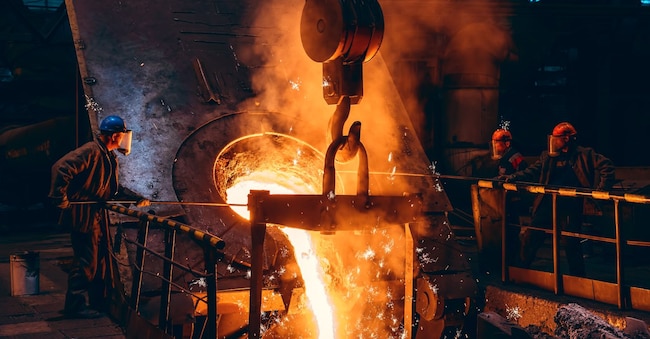
Gas continues to play a central role in European industry. This is confirmed by data from the latest monitoring reports by the European agency Acer – which stands for Agency for the Cooperation of Energy Regulators – according to which natural gas accounts for one third (33 per cent) of the continent’s total final energy consumption in industry. This percentage reflects a structural rigidity in demand and is directly linked to the thermal and chemical characteristics of manufacturing processes. Not only that: data collected in Acer’s Market Monitoring Reports indicate that industrial demand is not evenly distributed, given that over 40 per cent of total gas consumption is accounted for by three specific ‘hard-to-abate’ sectors. These are the chemical and petrochemical industries, where gas is used as a high-temperature thermal fuel and as a raw material for the synthesis of hydrogen and ammonia; the steel and metallurgy sectors, where the primary production of steel from ore and metal processing require constant temperatures to be maintained above 1,500 degrees; and non-metallic minerals (cement, glass, ceramics). And although analyses by sectoral associations such as Eurelectric indicate that approximately 70 per cent of all industrial processes could theoretically be electrified using existing technologies (concentrated mainly in light manufacturing and at temperatures below 500 degrees), the remaining 30 per cent presents temperature constraints and chemical requirements that limit the substitutability of gas with electrical energy carriers on a commercial scale. This does not mean that electrification and the green transition should not be the challenges we strive towards, but – it is noted – we cannot ignore an industrial context in which replacing gas is anything but straightforward.
The three key sectors
Looking specifically at these three key sectors, the chemical and petrochemical industry stands out in terms of absolute volumes , accounting for 22 per cent of the EU’s total industrial gas consumption on its own . In this sector, as mentioned, the gas serves a dual purpose: around half of the volume is not burnt to generate energy, but is used as a molecular feedstock. The remaining half of the gas is used as a thermal fuel in steam cracking furnaces, where stable operating temperatures of between 750 and 875 degrees are required to break down hydrocarbon chains. The second-largest sector in terms of intensity is the steel and metallurgy sector, which accounts for 10 per cent of total industrial gas consumption in the EU. Here, gas is used in various stages, including some involving extremely high temperatures, for example in traditional blast furnaces and coking plants, where it acts as an auxiliary fuel to maintain the smelting temperatures of iron ore, which are consistently above 1,500 degrees. Finally, there is the non-metallic minerals sector, which encompasses the cement, glass and ceramics industries, accounting for 6 per cent of European industrial gas consumption. In this case, natural gas is preferred to other solid or liquid fossil fuels due to its thermal stability and the absence of residual ash or combustion impurities.
System consumption and the renewable gas hub
Acer’s report also takes stock of three other key aspects of the European gas sector linked to the industrial sector. Firstly, there is an analysis of consumption, which highlights how the fall in demand recorded during the energy crisis of 2021–2023 did not develop into a long-term structural downward trend. After falling from 413 to 331 billion cubic metres due to plant shutdowns and forced production cuts, total gas consumption in the European Union rebounded to 340 billion cubic metres, representing a 2 per cent increase year-on-year. This demonstrates that the gas requirements of heavy industry tend to return to normal operating levels as soon as wholesale prices stabilise.
The second point of analysis concerns the European Union’s supply strategy. Here, Acer highlights and elaborates on a well-known trend: the gradual phasing out of Russian gas imports via pipeline has altered the European Union’s supply strategy, leading to an increase in the share of LNG. In particular, liquefied gas from the US accounts for 58 per cent of total European LNG imports, thereby exposing the industrial system to spot market price fluctuations and global logistical risks – as demonstrated in a concrete and tangible way by the closure of the Strait of Hormuz. Despite the decline from the peaks of 2022, wholesale prices on the European reference market remain consistently higher than previous historical averages and are up to three or four times higher than domestic prices in the United States. This disparity affects the fixed production costs of European manufacturers facing international competition. Finally, there is the issue of the development of renewable gases, for which – as Acer points out – the current availability of alternative solutions remains limited. In this regard, biomethane can be considered the most mature direct replacement technology for injection into existing transmission networks. However, total production in the European Union stands at 4.3 billion cubic metres, a figure representing 2 per cent of total injections into the European gas pipeline network. The remaining 98 per cent of the network’s requirements continues to be met by fossil-based natural gas. As for low-emission hydrogen, on the other hand, the sector is still in its infancy, hampered by high electrolysis costs and the lack of dedicated cross-border transport infrastructure.
Eurelectric’s analysis
To complete the picture, it is worth summarising the latest analytical reports and official positions of Eurelectric, the association representing the European electricity industry: its perspective incorporates data from Acer, analysing the situation from the perspective of energy supply and quantifying the potential for the electrification of Europe’s industrial sector.


