
Gas on the rise on Putin's words: time ran out for transit in Ukraine
The Russian president has stated that it is now impossible to renew Gazprom's current contract: a truism. But this does not mean that he has thrown in the towel. Alternative solutions are probably still being considered behind the scenes
4' min read
4' min read
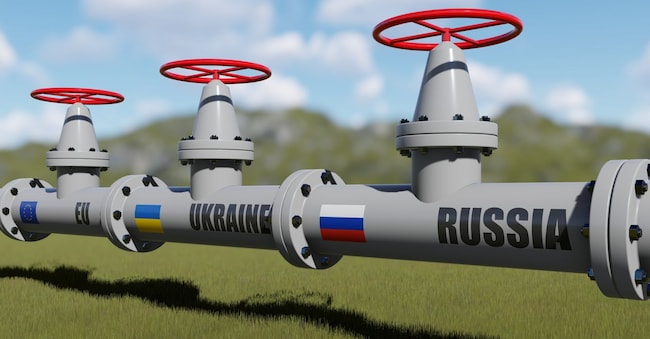
'No more time'. The gas market is back in turmoil after Vladimir Putin stated that there is now no hope for an extension of Gazprom's transit contract for supplies to Ukraine. The agreement expires on 31 December and a renewal 'is impossible to conclude in 3-4 days, there is no way', the Russian president said.
The price of gas - which had already been under tension for days - rose again, reaching 48 euro per megawatt hour at the Ttf on Friday 27th at the opening of trading. In the following hours, a volatile trend took over, mirroring the strong uncertainties still affecting operators, but the session nevertheless ended up by 4.3% at EUR 47.7.
Loading...
Putin stated the obvious: at this point, no one considers a renewal of the old contract with Kiev, signed at the end of 2019 with the mediation of the European Commission, to be viable. But other statements, made by the Russian president in the same televised address, are less obvious. And they do not completely close the door to alternative solutions, even if there is no shortage of difficulties, all the more so now that time is running out.
Some suggestions are a clear provocation. For example, that of restoring the flows (interrupted since 2022) in the Yamal-Europe gas pipeline, which passes through Poland, one of the countries most hostile to Moscow: "It would be enough to press a button to let the gas through, it was Poland that blocked this route," said Putin, who on other occasions had also made similar statements on Nord Stream. The gas pipeline linking Russia and Germany via the Baltic Sea was only partially put out of action by the sabotage in September 2022.
Provocations aside, Putin himself also pointed out how - problematic as it may be - the hypothesis of agreements with third parties, who could take delivery of Russian gas and transport it via Ukraine on behalf of Gazprom, has not yet left the scene. For this intermediary role the Russian Tass agency cites 'Turkish, Hungarian, Slovakian, Azerbaijani companies'.


Brand connect
Loading...
