Airports

Gatwick: runway closed for 50 minutes following the aborted take-off of a flight to New York

Cancellations and diversions to other airports across the country. The problem caused by the aborted take-off of a Norse Airways Boeing 787

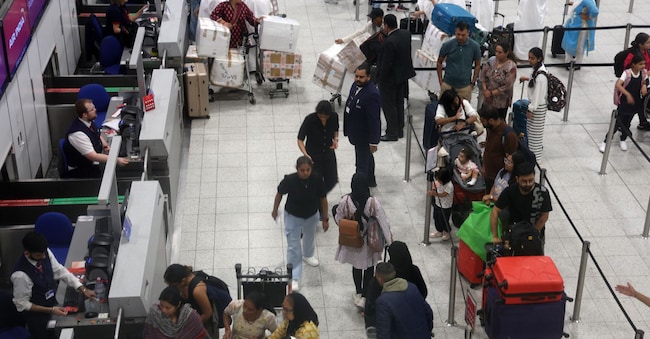
Gatwick.  EPA/ANDY RAIN EPA

2' min read

Translated by AI
Versione italiana

2' min read

Translated by AI
Versione italiana

There were cancellations and delays on the afternoon of Friday 4 September at London Gatwick Airport, where the runway remained closed for around 50 minutes due to a technical problem involving a departing aircraft.

The intervention by airport staff and the emergency services required the aircraft to be removed from the runway. The airport subsequently reopened once safety checks had been completed, but many flights were cancelled.

Loading...

“The runway was closed for 50 minutes this afternoon due to a technical issue with a departing aircraft,” said a Gatwick spokesperson. “The aircraft was towed off the runway, which was reopened shortly afterwards following a full safety inspection. “As always, safety and security are our number one priority.”

According to Flightradar24’s tracking data, the disruption was caused by a rejected take-off – that is, an aborted take-off – by a Norse Atlantic Airways flight bound for New York-JFK.

Flight Z0701, operated by a Boeing 787-9 Dreamliner, reportedly halted its take-off run on runway 26L and was temporarily unable to leave the runway.

The incident has had an impact on the airport’s operations, as it effectively has only one runway available for simultaneous use. Gatwick’s two runways are, in fact, too close together to allow for their simultaneous use.

The temporary closure of the runway has caused a knock-on effect on airport traffic. According to data from Flightradar24, over 330 flights have been affected by delays, with an average delay of around 57 minutes.

The disruption affected both departures and arrivals. Some aircraft bound for Gatwick were forced to change their destination and were diverted to other UK airports.

Stansted Airport, north of London, is also among the alternative destinations, a situation which has caused further disruption for passengers.

On social media, some travellers have voiced their frustration at the consequences of the diversions, complaining in particular about the waiting times on board the aircraft once they have landed at airports other than those originally scheduled.

Loading...

With the runway back in operation, the airport has begun gradually clearing the backlog of flights that built up during the closure. However, the knock-on effect on the flight schedule could last for several hours, leading to numerous cancellations, such as the easyJet flight to Zurich. Passengers have been accommodated at the airport hotel whilst they await their flight tomorrow morning.

Passengers departing from or arriving at Gatwick are therefore advised to check the status of their flight directly with their airline before travelling to the airport.

Although this incident was linked to a single technical fault, it once again highlights Gatwick’s particular operational vulnerability: the use of a single runway leaves the airport more exposed to knock-on effects when operations are disrupted.

Copyright reserved ©
Loading...

Brand connect

Loading...

Newsletter

Notizie e approfondimenti sugli avvenimenti politici, economici e finanziari.

Iscriviti