Pulse

Gaza: family reunifications blocked between Italia, Greece and Spain

Despite rulings and approved permits, hundreds of Palestinians remain separated from their children and families in the Gaza Strip

by Valentina Furlanetto (Il Sole 24 Ore), Kostas Zafeiropoulos (EfSyn, Greece) and Lola García-Ajofrín (El Confidencial, Spain)

 ANSA/ALESSANDRO DI MEO

6' min read

Translated by AI
Versione italiana

6' min read

Translated by AI
Versione italiana

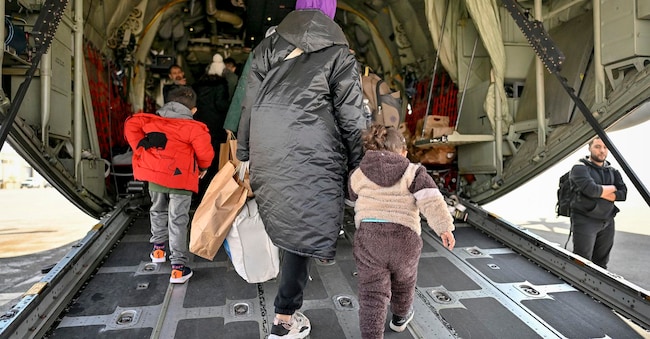
About a thousand Gazawis managed to get out of Gaza and reach Italia in the past year. The last official data provided by the Farnesina dates back to 13 August 2025 and spoke of over 900 people. On that date, the Foreign Ministry stated that humanitarian operations had brought over 900 Palestinian civilians from the Gaza Strip to Italia in eight months, including over 196 sick children and their families. The evacuations took place mainly via Guardia di Finanza flights from Amman, after passing through the Kerem Shalom crossing. Another 70 Gazawis arrived in Italia in early October. Farnesina has not provided data broken down by category, so it is not possible to know how many Palestinians have actually arrived in Italia so far for family reunification or with other permits.

In this context there remain many critical issues highlighted by the associations. In particular, Asgi (Association for Legal Studies on Immigration) claims that many Palestinians are waiting to be reunited with their families in Italia and are not able to do so, despite the fact that the Ordinary Court of Rome, with two decisions of 9 and 10 September 2025, ordered the Italian government to issue entry visas for family reasons in favour of citizens residing in the Gaza Strip. "To date, however, these decisions of the Court of Rome have not been implemented. The embassies are not issuing visas because they claim it is only possible when people are physically present in the consulate," explains lawyer Anna Brambilla of Asgi. "In the disputes we are conducting," explains the lawyer, "the Avvocatura dello Stato is telling us that these visas when issued only guarantee entry into Italia and not exit from Gaza, which depends on Israel and it is the Israeli authorities that often do not allow exit from the Strip. We have many Palestinians stranded. The people who have come out so far and whom we have assisted usually have serious health situations'.

Loading...

The decision of the Court of Rome is important because it does not only focus on family ties, but on the extreme gravity of the ongoing humanitarian crisis. The ruling concerned the case of two spouses, he a Palestinian citizen, she an Italian citizen, who applied for an entry visa for some of their family members residing in the Gaza Strip. The Court, noting the extreme urgency and objective situation in the Strip, granted the application, ordering the immediate issuance of the visa. According to the judges, their stay in the country of origin represented an existential danger.

The situation of Palestinian students with children is also dramatic. In May 2025, the IUPALS (Italian Universities for Palestinian Students) project was set up to facilitate Palestinian students' access to university courses in Italia. IUPALS offered around 150 scholarships for students living in the Palestinian territories, distributed among 41 universities. The grants, which amount to around 12,000 euros, are supposed to cover tuition fees, health insurance and accommodation. The problem is, however, that it is difficult to get students out of Gaza. To obtain a visa, they are in fact required to go to an office of the Italian Consulate located outside Gaza, in Ramallah, on the West Bank. The same applies to the authentication of academic qualifications. But no one can leave the Strip.

There is a further problem concerning students: if they have children, they cannot bring them with them, it is not provided for by law. In fact, current Italian law only provides for family reunification at a later date. This is why writer Widad Tamimi and life senator Liliana Segre have appealed to Foreign Minister Antonio Tajani for "young Palestinian parents about to arrive in Italy on scholarships to be able to bring their children with them immediately".

The Greek case: decisions approved but families blocked

A similar situation exists in Greece, where dozens of Palestinian refugees with positive family reunification decisions continue to remain separated from their children and spouses who have remained in the Strip.

For five months, Palestinian resident Santi Baraka did not know if his family was still alive. The house in Khan Younis was completely destroyed. His wife and six children have moved more than twenty times. One of the daughters suffers from chronic asthma, but there are no inhalers or treatment available. The father is confined to a broken wheelchair, in a tent exposed to the elements. Reunification for this family has been approved in Greece, but only on paper: in Gaza, the family cannot leave. "The only thing we ask of the Greek government -- says Baraka -- is to coordinate with the consulate in Cairo to get our families out of Gaza. They have no electricity. There are too many diseases. We love our land, but we want to live with dignity and security. There is no life there for us'.

The knot is similar to that in Italy: the families would have to physically present themselves at the Greek consulate in Cairo, but no one guarantees a safe exit from Gaza or transit to Egypt.

On the European level, in October 2025, the European Network of Ombudspersons for Children (ENOC) sent an open letter to the President of the European Parliament Roberta Metsola calling for urgent action for children stranded in the Strip despite positive reunification decisions issued by member states. The network emphasised that the failure to implement the decisions may constitute a violation of the fundamental rights enshrined in the UN Convention on the Rights of the Child and in European law, pointing out that the best interests of the child must be given priority. An initiative also supported by the pan-European organisation Eurochild, which reiterated that family unity is not a political choice but a legal obligation.

In December 2025, 21 MEPs from four political groups submitted a written question to the European Commission on the initiative of The Left Group Vice-President Kostas Arvanitis, asking why the reunification decisions for minors in Gaza are not being implemented. More than two months later, the Commission had still not provided an answer.

According to Eurostat data, in 2023 in the EU countries plus Norway, Iceland and Liechtenstein between 5,000 and 7,000 first residence authorisations for family reunification were issued to beneficiaries of international protection of Palestinian nationality; in 2024 the number would rise to between 7,000 and 10,000, with a significant increase after 7 October 2023. The countries with the highest numbers are Germany, Sweden, the Netherlands, Belgium and Italia. However, there is no European figure on the actual number of reunifications actually completed, i.e. with physical arrival of family members.

Spain and the Aman project

In Spain, around 800 Gazans are currently in the country within the international protection system. A significant part arrived through the AMAN project, a programme coordinated by the World Health Organisation together with the Spanish Ministries of Health and Inclusion, aimed at the medical evacuation of minors with serious oncological diseases or injuries that cannot be treated in Gaza. The project involves the exit of the children - together with their families - via Egypt or Jordan and their subsequent transfer to different Spanish autonomous communities. Once landed, the reception is managed by the ACCEM organisation, which is present in almost all regions.

"The first challenge for the families is to move on and build a life as stable as possible, but with their hearts and minds torn apart by what is happening in Palestine," explains Pedro de Santiago, ACCEM's communications manager. 'One day they may feel motivated to stay in Spain, the next day news from Gaza calls everything into question'.

According to ACCEM, many families were separated as soon as they left: the Israeli authorities allegedly authorised the passage of only some members, adding to the trauma. Initially, the arrival was planned for three months, but almost all the families then decided to seek international protection in Spain. 'It is a very difficult decision,' stresses de Santiago, 'because it means leaving behind relatives and, in fact, an entire life. But for children who need medical care or simply stability, Spain has become a refuge'.

The intervention does not only concern hospital care: ACCEM provides accommodation, language mediation, medical accompaniment and, above all, psychological support from day one, both to minors and to their families, who have to deal with the trauma of war and the uncertainty of a possible return.

*This article is part of the European collaborative journalism project "Pulse"

Copyright reserved ©
Loading...

Brand connect

Loading...

Newsletter

Notizie e approfondimenti sugli avvenimenti politici, economici e finanziari.

Iscriviti