
Gcap, on the sixth-generation fighter, Italy opens up to the collaboration of other countries. This is what it is
Foreign Minister Tajani: 'We are open to agreements with other counterparts'

2' min read
Key points
2' min read
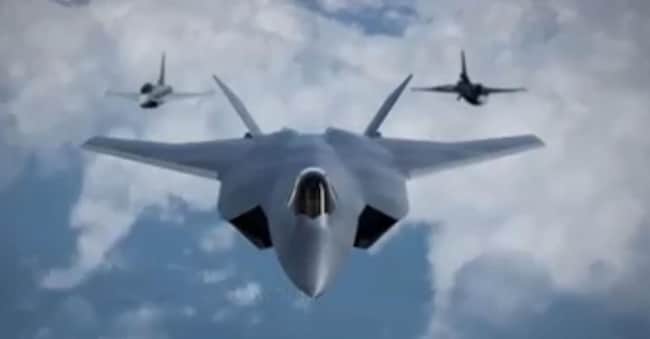
Italy is also open to accepting other partners in the Gcap programme, or Global Combat Air Program, for the realisation of the sixth-generation supersonic military fighter, which will replace the Eurofighter Typhoon. The indication came from Foreign Minister Antonio Tajani.
Tajani: on military aircraft project with Japan and UK open to other partners
Speaking at the B7 Summit, he took stock of the situation. "We have an agreement with Japan and United Kingdom on military aircraft, which is not just an industrial project but a political one," he recalled. It creates a strong link between three G7 countries. We are open to having agreements with other counterparts'. The new fighter aircraft will be called Tempest.
The International Collaboration Programme
.The Global Combat Air Programme (Gcap) is an international collaborative programme involving Italy, the UK and Japan with the shared ambition of developing a next-generation aircraft system by 2035. The goal is to realise the successor to the Eurofighter Typhoon. Leonardo is a strategic partner together with the UK's BAE Systems and Japan's Mitsubishi Heavy Industries.
The "system of systems"
.On Leonardo's website, the programme is described as one of the 'most challenging and futuristic for the aerospace industry'. The future combat aircraft system, defined as the 'system of systems', will operate in the five domains, air, land, sea, space and cyber, according to a star structure in which the new-generation fighter will be the 'core platform' connected with other peripheral 'systems', both piloted and unmanned.
The joint statement by the UK, Italy and Japan
.The programme was launched by the UK in July 2018, at the Farnborough aerospace show. It was joined first by Italy and then Japan. The joint statement of 9 December 2022 states that 'this programme will generate wide-ranging economic and industrial benefits, supporting employment in Italy, Japan and the UK. It will attract R&D investment in digital design and advanced manufacturing processes. It will provide opportunities for the next generation of highly skilled technicians and engineers. Working together in a spirit of equal partnership, we share the costs and benefits of this investment in our human resources and technologies'.


