
Ge Vernova (former General Electric): Italy must accelerate on renewables and batteries
The multinational company outlines a path for our country to meet the 2030 and 2050 decarbonisation targets: it also includes gas, nuclear and network development
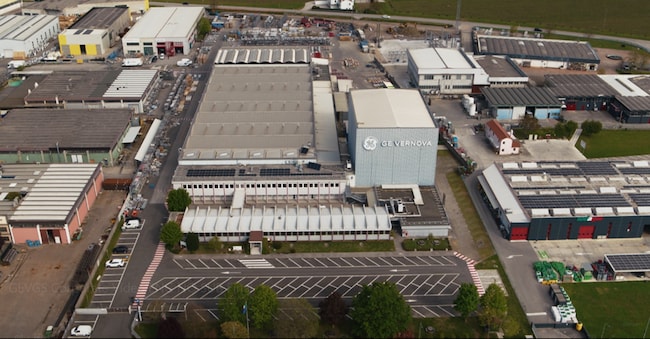
Key points
"Italy is a very important, strategic market: one of those leading markets in the energy transition, in Europe and perhaps even in the world,' says Joseph Anis, president and CEO of Ge Vernova Gas Power Business in the Emea area, explaining the decision of the company - founded last year in April as an energy spin-off of the historic multinational General Electric - to produce a white paper dedicated to our country, chosen as one of the nine pivots in the world. It is a study (Navigating the Energy Transition: Pathways to Net Zero in Italy) that, considering the electrification and decarbonisation targets for 2030 and 2050, outlines a concrete road to take.
Ge Vernova ha valutato per l’Italia un percorso che punta sulla renewable ambition e che richiede di portare la capacità eolica e solare nel nostro Paese a 100 GW entro il 2030, ed espanderla a oltre 200 GW entro il 2050. Prevede inoltre almeno 40 GW di sistemi di accumulo a batteria, 14–17 GW di capacità da turbine a gas a ciclo combinato con cattura della CO₂ (uno dei primi progetti commerciali, il NetZero Teesside Power, è in costruzione nel Regno Unito e vede il coinvolgimento proprio di Ge Vernova), 8 GW di Smr (small modular reactors) nucleari e il completamento dei progetti di potenziamento della rete di trasmissione, senza i quali l’Italia rischierebbe di sprecare 82 TWh di energia rinnovabile entro il 2050, circa il 16% della domanda nazionale stimata. La combinazione tecnologica, insieme ad altri fattori abilitanti in materia di autorizzazioni e regolamentazione, permetterebbe al Paese di raggiungere gli obiettivi climatici del 2030 e del net zero al 2050. In bilico i primi,
Focus on Italy
"The study gives a perspective, a roadmap: it indicates a portfolio of technologies that we can develop in the Italian market to help the transition. Italy is already active on several fronts: solar, wind, it is a gas hub. We can support these technologies, improve connectivity between North and South, increase flexibility for the grid, to maximise all sources,' Anis explains: 'We see strong activity on the electrification front throughout Europe, but in Italy in particular it is encouraging what is being done, with the increase in installed capacity and the continuity with which projects are brought to market. You want to be where things are happening and Italy is the country where they are happening.
"Italy is relevant," reiterates Roberta Galli, Ge Vernova's strategic growth leader in Italy: "For size, for geographic location, for tools such as Macse, Fer X, capacity market. We are suppliers of operators that have participated in these auctions. In Italy, as a historian, we have an installed capacity of around 27 GW that generates 24% of Italian electricity. We see that there is a maturity on decarbonisation technologies, but a development at a rate that would not allow the 2030 targets to be reached. In a technology neutral approach, we therefore propose what is the best mix, and that includes thermoelectric, nuclear and grid development.
Nucleare
As far as nuclear power is concerned, 'of course we support it when a country is ready,' emphasises Anis, while Galli specifies: 'In the dedicated supply chain, Italy has retained its expertise in components: for the Smr that we are building in Canada, some components come from here.


