
Mourning in the defence world: General Graziano, chairman of Fincantieri, dies
General Claudio Graziano, former Chief of Defence Staff and President of Fincantieri, died suddenly

3' min read
3' min read
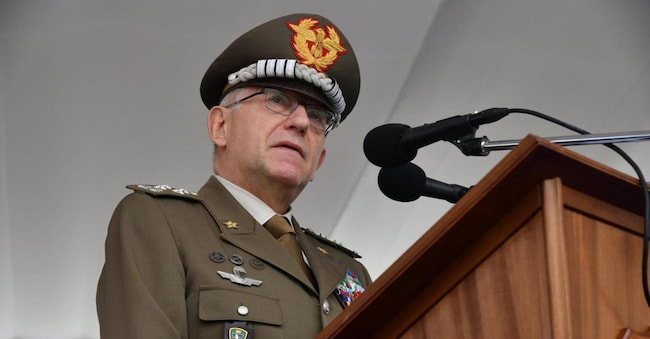
General Claudio Graziano, president of Fincantieri, has died . He was born in Turin in 1953. Former Chief of Defence Staff and Chairman of the Military Committee of the European Union, he had headed Fincantieri since 2022.
Graziano, who had recently lost his wife, was reportedly found dead this morning. There is much speculation as to the cause, including that of suicide.
In the note found reference to missing spouse: without my wife "I lost my way"
According to the Radiocor news agency, a note was found. 'After Marisa's death I lost my way': this is the content of the short note found next to General Graziano's body. The prevailing hypothesis is that he took his own life. In the note found in his Roman home, there is a clear reference to his wife, Marisa Lanucara, who died in the spring of 2023 at the end of an illness. Those who knew Graziano report how much mourning had marked him over the past year, but also the commitment, rigour, and good humour that he conveyed to the outside world, even in his final weeks. Graziano, born in Turin, would have been 71 years old in November.
His commitment to Fincantieri: safety at sea and remedying European shortcomings
In favour of a defence sector that heals European shortcomings and the safety of the sea by protecting what lies beneath, such as submarine cables. These were some of the cornerstones of the Fincantieri presidency entrusted to General Graziano. On several occasions, Graziano had applauded 'the path taken by the EU on defence', insisting on the need to 'work on interoperability and interchangeability', as he had done in Brussels last March, speaking at the Italian States General in Bozar.
A vision that took into account two aspects: the Armed Forces' employment policies and the Defence industrial sector. With regard more specifically to security, Graziano spoke of the sea as a set of 'roads' that join together: putting them at risk therefore means interrupting the main communication route. In this context, he repeatedly stressed the need to protect the cables and pipelines that run in the depths of the Mediterranean Sea. Depths where, he has repeatedly warned, there is a presence of Russian submarines. His attitude towards the conflict between Russia and Ukraine, i.e. in favour of delivering arms to Kiev, has also always been clear.

