
Generation Z? Half green: 70% say they are environmentally aware, only 30% feel really informed
Young people show a strong focus on environmental issues, but awareness does not always translate into solid knowledge and fully informed behaviour. Sustainability affects the daily choices of more than two out of three young people. But gaps remain on waste management and the circular economy. School is crucial for proper environmental education
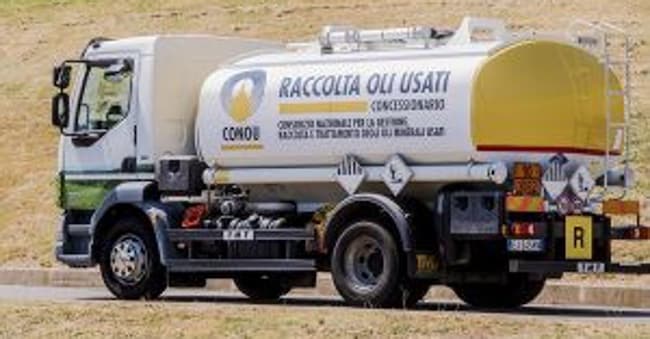
Sensitive to the environment, attentive to their daily choices, but not always really informed. This is the picture of Generation Z that emerges from the survey conducted by Skuola.net in collaboration with CONOU - National Consortium of Used Mineral Oils - on a sample of 1,500 young people aged between 14 and 24, with the aim of analysing the relationship of the new generations with environmental issues, waste management and knowledge of the most critical materials for the ecosystem.
Although, in fact, there is no longer any talk of eco-anxiety and Greta Thunberg has diverted her attention to issues other than environmental ones, the legacy of Fridays for Future remains alive in the new generations: for 70% of those interviewed, concern for climate change has a great deal (32%) or a fair amount (38%) of influence on their purchasing habits and daily behaviour.
More reuse than recycle
The circular economy applied to the daily life of Generation Zeta focuses mainly on reuse instead of recycling. 36%, to say the least, focus their efforts on reusing products that still work, turning the second hand from a portfolio choice into a heartfelt decision. Twenty per cent then made repairing or reusing items otherwise destined for landfill a guiding star.
Differently, 27% maximise their efforts mainly on reducing energy or raw material consumption. Finally, only 17% give priority to creating new materials by recycling end-of-life products.
Inadequate information
Perhaps this is also why only 30% of the sample analysed felt fully informed about how to manage waste correctly - from separate collection to disposal - while 19% admitted to feeling 'little or not at all' informed.
The importance of not lowering the bar when it comes to education, starting at school and university - 39% of those surveyed admitted that it is mainly in the classroom that they have formed an environmental conscience - and ending in the world of information, derives from this observation.
The role of training
More in detail, 22% of the respondents were educated mainly through specialised digital media - social pages, creators and sites dedicated to such topics - which outnumbered traditional sources such as TV, radio and newspapers, which stopped at 10%. Surpassed, the latter, also by generalist digital media (social, news sites, etc.) and family and friends, paired with 12% of the votes.
Sector consortia
And this is why the various supply chain consortia operating in Italy, such as CONOU - which deals with the used lubricant oil supply chain - carry out information and education activities as part of their constitutive mission, with excellent results. Thus, although there is much more talk - and rightly so - about the dangers of plastics and microplastics, 72% are aware that used oil is an extremely dangerous waste and 66% know that dispersing it in ecosystems creates immediate and long-term damage.
However, the majority of those interviewed - almost 9 out of 10 - said they were surprised to learn that 98% of the oil that is recovered by CONOU is transformed into a new lubricating base.
"The survey data," emphasises Riccardo Piunti, President of CONOU, "confirm that the new generations have a strong environmental awareness, but still need concrete tools to transform this attention into knowledge and conscious behaviour. In this sense, the role of environmental education and awareness is central for us. The circular economy can only function fully if it is understood and shared: knowing the value of recovering a hazardous waste such as used lubricating oil and knowing that there are organised structures that guarantee its proper and responsible management means strengthening the participation of citizens, young and old, in the ecological transition'.
Brand connect


Newsletter Scuola+
La newsletter premium dedicata al mondo della scuola con approfondimenti normativi, analisi e guide operative
Abbonati