At the fair

Generation change at Art Brussels: exhibitors down, good sales

They average between EUR 5,000 and 30,000

by Silvia Anna Barrilà

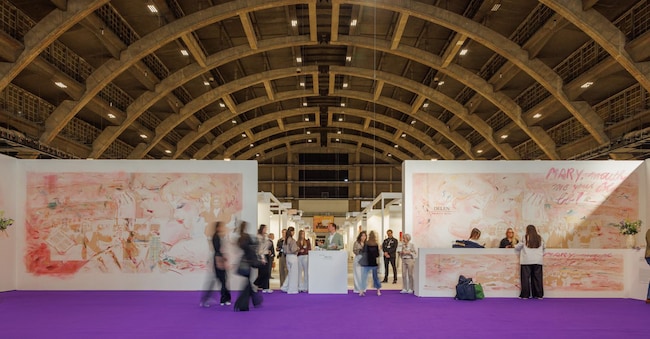
L’ingresso di Art Brussels 2026, fotografia di Martin Pilette per Bureau Rouge. Courtesy Art Brussels

6' min read

Translated by AI
Versione italiana

6' min read

Translated by AI
Versione italiana

Among the oldest modern and contemporary art fairs in Europe, Art Brussels, founded in 1968, celebrated its 42nd edition these days (23-26 April). For years the fair has been able to count on a very solid, long-standing collection. But today we are faced with a generational change whereby the old guard of collectors is gradually disappearing and it is not certain that there will be new collectors to replace them.
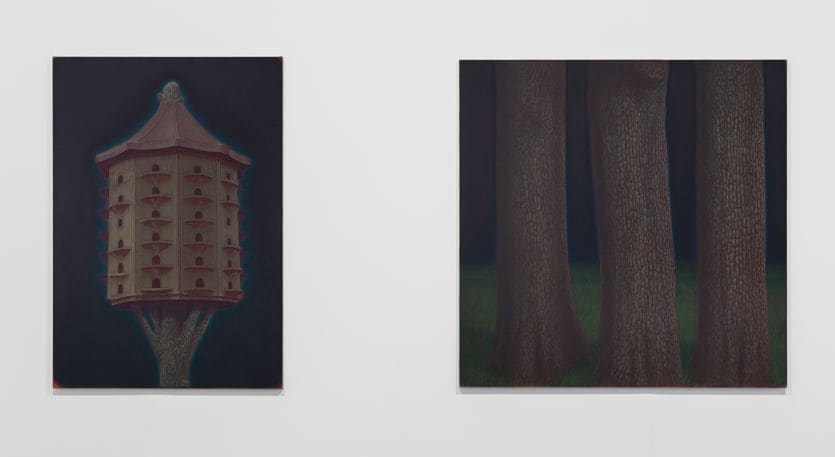
Le opere di Michiel Deneckere allo stand della Edji Gallery ad Art Brussels 2026, courtesy Edji Gallery

"International uncertainty has an effect on the art market," said fair director Nele Verhaeren, who also heads the sister fair Art Antwerp in December. "In recent years the contraction has been felt, and the costs for galleries have also increased, so they think twice before attending a fair. Collectors in the past were very dedicated, so it was normal for them to buy several works by the same artist and to travel to see his exhibitions. Today, the new generations approach the purchase of art as if it were any luxury good, so they buy a work like they buy a handbag or a car or a trip. Fairs and galleries must strive to attract this highly segmented audience by creating experiences and events, such as dinners, DJ sets, outdoor street food. It is no longer enough to target a small group of dedicated collectors, but a much wider audience must be attracted'.

Loading...

One can read in this sense the introduction this year at the fair of a free art advisory service, with a dedicated stand and professionals, to whom one can turn for any kind of information about buying art, from the more practical ones concerning VAT and transport, to the more artistic ones.
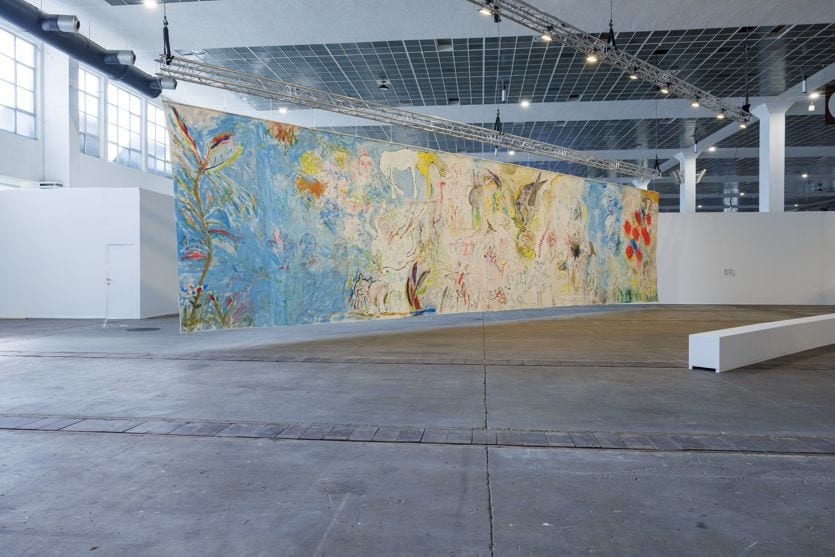
Oswald Oberhuber, Paradiesgarten (Paradise Garden), 1983, presentata da Galerie nächst St. Stephan Rosemarie Schwarzwälder in collaborazione con Galerie Krinzinger nella nuova sezione Horizons di Art Brussels 2026, fotografia di Martin Pilette per Bureau Rouge, courtesy Art Brussels

The number of galleries

Brussels also manages, however, to attract international collections, especially from the Netherlands, France and Germany. Moreover, it is a city that is itself deeply international thanks to its institutions.

The works of some 500-600 artists offered at the fair range from as little as EUR 400 at the Kickcancer stand - an initiative to raise funds for research against childhood cancer through the 'blind' sale of works by established and emerging artists - up to around EUR 500,000. But most transactions at the fair take place between EUR 5,000 and EUR 30,000.
Compared to last year, Art Brussels experienced a drop in the number of exhibitors from 165 to 139. The decrease was in the main section, where the number of galleries fell from 108 to 83, although 82% were galleries returning from last year. This decrease is certainly due to a market slowdown, but also to the fair's desire to keep quality high. "When I arrived there were 190 galleries," said Director Verhaeren. "Since then they have decreased in order to keep the quality high. It is not a question of filling spaces."

All the galleries have therefore been concentrated in one hall, while the other empty hall has been given over to a new section for large-scale works, a bit like Unlimited, called 'Horizons', with seven works, both historical and contemporary, mainly by women, presented by eight galleries and curated by Devrim Bayer, senior curator at Kanal-Centre Pompidou, which will reopen in November in the new location.

Some of the absent galleries joined the alternative fair Parloir, but others returned, such as the Austrian Galerie nächst St. Stephan and Krinzinger, the latter after an eight-year absence. It used to be regularly present and had built up quite a group of collectors, but then gave up participation because the fair overlapped with other events in New York, where demand is now focused on current trends in queer or black art, so the gallery returned to Brussels to meet the new generation of collectors.

Belgian tradition

Another novelty: the section 'Not Everything Is For Sale', with 16 local galleries that have been open for more than 25 years, exhibiting work that they would never sell, thus showing their identity and telling the tradition and history of the art market in Belgium. For example, Xavier Hufkens exhibited a work on paper by Walter Swennen that the artist gave him as a birthday present, Rodolphe Janssen the first painting by Marcel Maeyer that he bought, Almine Rech an ink on silk by her ancestor Mai-Thu, Daniel Templon a Portrait of Leo Castelli by Andy Warhol, testifying to his relationship with the historic art dealer.

Templon itself recorded an excellent opening day with the sale of ten works, including a sculpture by Jeanne Vicerial (€28,000), one by Chiharu Shiota (€60,000) and paintings by Philippe Cognée (€45,000) and François Rouan (€70,000). The Sorry We Are Closed gallery, another Belgian market institution founded by Rodolphe Janssen's brother Sébastien Janssen, created a scenographic stand with a dialogue between paintings and ceramics by almost all the gallery's artists. Among them, also the Italian Alessandro Teoldi, based in New York, a new addition to the gallery's programme. "The market has its ups and downs," commented David Crisci of the gallery, "it is not stable, but it is not going downhill either. Today we had the impression that people were not afraid to spend money'. Prices on the stand ranged from 2,500 to 85,000 euro.

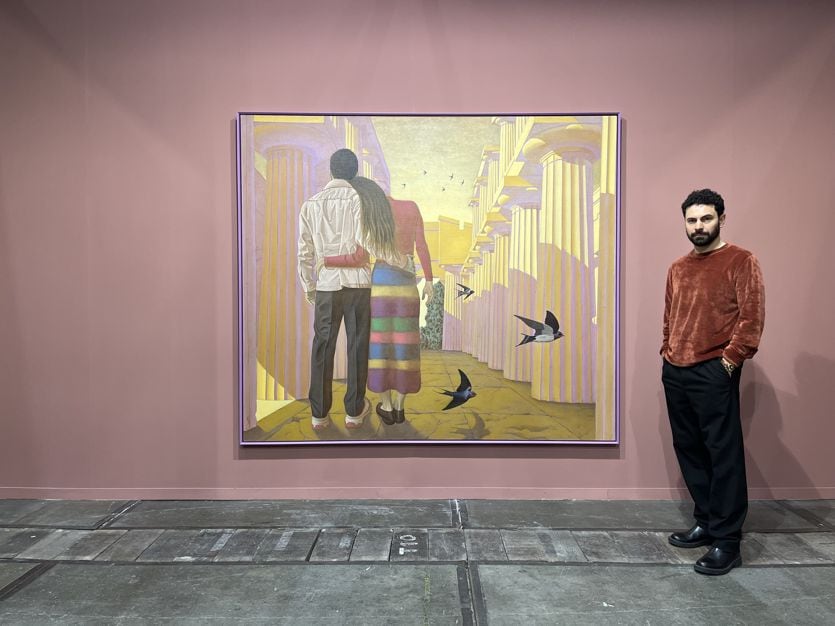
An Italian artist was also represented by Rodolphe Janssen, who presented a focus on Patrizio di Massimo, with three new paintings linked to each other and to the artist's life, between Italia and Great Britain and feelings of connection and disconnection, intimacy and consolation.

Patrizio di Massimo accanto ad una delle sue opere allo stand di Rodolphe Janssen ad Art Brussels 2026

Italian Art

But there were also several Italian presences on other stands, such as Guglielmo Castelli from Mendes Wood, while Repetto of Lugano dedicated one part of the stand to Optical art and another to artists such as Boetti, Salvo, Calzolari, but also Alessandro Piangiamore, who is very popular here (the total price range of the works on the stand ranged from 10,000 to 180,000 euro). 'This is the twelfth time I have participated,' commented Carlo Repetto, 'the first years were a positive escalation, until three years ago, when there was a slowdown. I also noticed that over time the offer shifted more and more towards the contemporary'.

Italian artists already historicised also by Studio G7 of Bologna, present for the first time in the '68 section, dedicated to movements that have influenced the present, with a dialogue between Giulio Paolini, Franco Guerzoni and David Tremlett. Among the emerging artists, success in the Discoveries section for the Rome-based Sicilian artist Marco Emmanuele, to whom the 22.48m² gallery (this is the name) dedicated a personal stand with paintings and sculptures that sold well in the first few hours (prices EUR 1,200-6,200).
In the same section, Rome's Materia and Monitor with a dialogue between oil paintings of cats by Thomas Braida (EUR 5,500 to 4,000) and small paintings by the Portuguese Francisca Valador (EUR 1,500 to 3,000).
In addition, the Italian Rossella Biscotti, who has been living in Brussels for some time, won the Belgian Art Prize 2027 from a shortlist of more than 60 artists, for which she will have an exhibition at the Bozar next year (April-June 2027). In May, he also opens a solo exhibition at Mor Charpentier in Paris.

The Discoveries

The Discoveries section of the fair is not so much about the age of the artist or gallery, but about the discovery factor for the region. It welcomed 38 galleries, in line with last year's, half of which were already present in 2025 and the other half new. On display were 55 artists, 45% of whom were women. Among the young Belgians to be seen was the Flemish painter Michiel Deneckere, 23 years old, presented by the Edji Gallery in Brussels, which has been open for three years, with a new series of works produced following his move from Ghent to Brussels, influenced by Flemish primitivism, as well as the films of David Lynch. On the first day it sold nine of the 13 available works (prices between EUR 1,500 and EUR 5,700).

For the award dedicated to this section, sponsored by Moleskine, three more artists were honoured: the Belgian Kasper De Vos, born in 1988, from Pizza Gallery in Antwerp and Ghent, who explores local folklore and history with a poetic approach; the German Lena Marie Emrich, born in 1991, from Office Impart in Berlin, who creates minimalist sculptures with industrial finishes that explore interaction with human beings; and Colombian Alejandra Caicedo, born in 1996, from Tom Reichstein in Hamburg, who talks about her Colombian origins and her migration to Germany. Their works will be exhibited at the Ixelles Museum next year, another institution reopening after eight years of closure.

Copyright reserved ©

Brand connect

Loading...

Newsletter

Notizie e approfondimenti sugli avvenimenti politici, economici e finanziari.

Iscriviti