
Generative Bionics, the start-up that has signed agreements with Eni and Fincantieri in less than a year
A four-year programme is currently underway with the naval group to develop a humanoid welder, for which the company is designing a specialised hand. The agreement with Eni was announced a few days ago

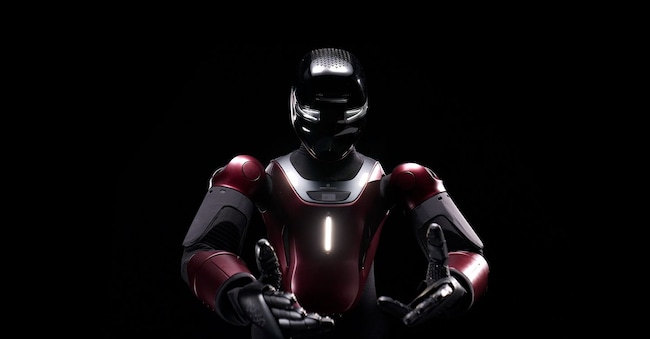
The Lamborghini Urus and the Audi Q8 share the same platform. Generative Bionics has applied the same principle to humanoids. The start-up was founded by the Italian Institute of Technology following some twenty years of research into robotics and physical artificial intelligence. On 4 December 2025, it closed a €70 million funding round led by CDP Venture Capital, with participation from Eni Next, amongst others, and has been operational since 7 January. In July, it unveiled its robot, Gene.01.
Customisation
It is a single platform that is then customised according to the task at hand. Because ‘a robot that does everything does everything badly’, explains CEO Daniele Pucci. The company claims to have been the first to launch this strategy, back in February, and now sees others following suit. The approach blends two worlds. The standard chassis, which can be customised, comes from the automotive sector, whilst the idea of a platform on which others can also develop software comes from the world of smartphones.
This has given rise to two product lines. The first is a robot with basic functions, such as walking and manipulating objects, on which integrators build their own applications. The second is a ready-to-use robot, featuring artificial intelligence models and software developed by the company for a specific task.
Customisation takes place on three levels. The first is the artificial intelligence model, because a welding robot does not think in the same way as one working in a hospital. The second is the external design, which, where necessary, can withstand heat and dust, for example. The third is the hands and feet, which are also the focus of part of the agreement with Eni. Tactile skin is used only where it is useful: it is essential in logistics and healthcare, and is limited to certain parts in the case of Fincantieri.
A helping hand for Fincantieri...
A four-year programme is currently underway with the naval group to develop a humanoid welder, for which the company is designing a specialised hand. The first deployment is scheduled for early 2027. Other areas of application include security, logistics and healthcare, where memoranda of understanding have been signed with several major Italian hospitals. Energy has now been added to the list.

