
Genoa Airport: the Port Authority values it at between 15 and 16 million
The PwC valuation has been submitted to the organisation, which is the majority shareholder. Another valuation has been commissioned by the Chamber of Commerce, a minority shareholder.

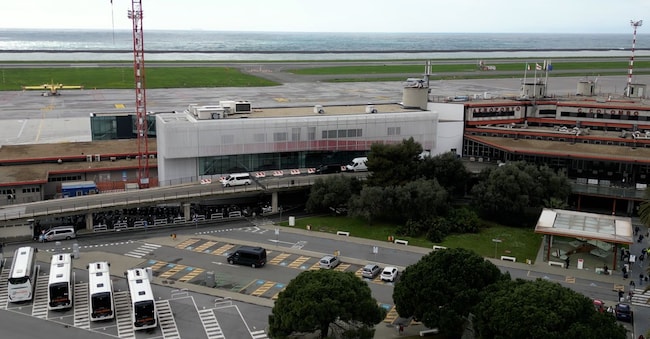
Genoa Airport, the public limited company that manages Cristoforo Colombo Airport, is valued at between 14.9 and 15.9 million, with a range of variation, as can be seen, of around one million. This was clarified by Matteo Paroli, chairman of the Western Ligurian Sea Port System Authority, which holds a 60 per cent stake, whilst the remaining 40 per cent is held by the Genoa Chamber of Commerce.
The value was determined by PwC (PricewaterhouseCoopers), which was commissioned by the Port System Management Authority (ADSP) to carry out a comprehensive valuation of the asset, with a view to opening up the shareholding structure through a call for tenders to an industrial partner, who would hold a majority stake. Minority stakes will also be held by the Liguria Region and the Municipality of Genoa, which have expressed an interest in joining the port management company.
This assessment, Paroli continued, “is the figure we can use as a starting point, whilst we await the Chamber of Commerce to inform us of the outcome of the assessment it has separately commissioned from the University of Genoa. The call for applications has already been drawn up; the aim is to publish it by autumn, or by the end of November at the latest. That is why we have asked the Chamber of Commerce to provide us with its assessment as soon as possible.’
Paroli emphasises that the need to act stems from the fact that ‘the Genoa Airport concession will expire in 2029 and ENAC will launch a tender for the airport’s assets; having a strong, experienced industrial partner in place by then will give the management company greater strength to tackle a market that is highly competitive. Entering the tender without this strengthening of the ownership structure is a risk I do not wish to take; the current concessionaire could be left with no assets at all if the tender were won by someone else’.
In the agreement signed in February 2026, cited by Paroli, the Adsp and the Chamber of Commerce had already expressed their willingness to reduce their stakes to a minimum of 5 per cent and 15 per cent respectively, precisely to make room for new shareholders. The agreement also, and above all, stipulated that the majority of the shares must go to the private industrial partner, who will be selected following the tender process. If PwC’s valuation were to differ from that commissioned by the Chamber of Commerce, Paroli concludes, ‘we will assess the discrepancy’. Nor has he ruled out the possibility that there might first be a tender based on the highest value and, should this fail to result in an award, a new tender (in the near future) based on the lower value.


