
Genoa Dam: arrests over illegal labour recruitment
Eight people have been jailed following an operation launched after complaints from Pakistani and Indian workers. A company based in Brescia is also under investigation

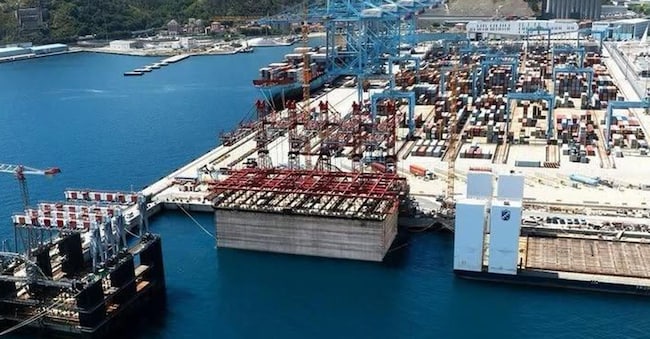
Eight people were arrested today as part of a large-scale operation, codenamed ‘Punjabi’, carried out in the provinces of Barletta-Andria-Trani, Bergamo, Brescia, Ferrara, Genoa and Messina. The pre-trial detention order was issued by the investigating magistrate at the Court of Savona at the request of the Public Prosecutor’s Office, following a lengthy and complex investigation coordinated and conducted by the Investigative Unit of the Savona Provincial Carabinieri Command, with the support of the NIL (Carabinieri Labour Inspectorate Unit) in Genoa and Brescia. At the same time, judicial supervision was imposed on two companies, one based in Brescia and one in Genoa, and a preventive seizure, with a view to confiscation, of 277,000 euros was ordered against the Brescia-based company.
The investigation stemmed from an operation carried out in May 2025 by a Savona Carabinieri patrol at the construction site located in the port of Vado Ligure (Savona), where work is currently under way on the reinforced concrete caissons intended for the construction of the new breakwater at the port of Genoa. The project, worth 1.56 billion, forms part of the extraordinary investment programme for the recovery and development of the Port of Genoa and its transport links to the city. It is managed by the Commissioner’s Office for the Reconstruction of Genoa, which reports to the Governor of Liguria, Marco Bucci.
It was a number of Indian workers, recruited by the Brescia-based company Jh Costruzioni to work on the Vado building site, who approached the Carabinieri, who subsequently launched Operation Punjabi. The workers had been removed from their workplace, expelled from the construction site and locked out of the accommodation they were occupying after they refused to hand over part of their wages to representatives of the two companies that had recruited them; these representatives, amongst other things, were also demanding a share of the cost of personal protective equipment and the rent for the accommodation registered in the company’s name.
Following these statements, a further 42 workers of Pakistani and Indian origin came forward. They all explained that the representatives of the Brescia-based company – who were themselves of Indian and Pakistani origin – had recruited workers from among their compatriots, none of whom were able to speak or understand Italian. The statements gathered revealed that the company’s owners had rented flats near the construction site where they were supplying labour as subcontractors, in order to cram the workers into them – up to 30 people per flat – in unsanitary conditions. The workers had received no training and, in many cases, were provided with false training certificates relating to the safety of high-risk workers, reportedly issued by certain complicit companies in the Brescia area.
Some workers confirmed that, although they were officially employed and paid, they were required to hand over between 40 and 60 per cent of their wages in cash to the ‘gangmasters’, who paid them a maximum of 5 or 7 euros an hour, for 140–250 hours of work per month. If they refused, they risked being sacked, as well as being evicted from their accommodation and left stranded in the area. Added to this was the fear of possible reprisals against their family members in India.


