
Genoa, pilot project to recover waste from electrical equipment
It is estimated that 300,000 households in the city keep more than one million small WEEE in their homes. Amiu launches a campaign to reuse them

3' min read
Key points
3' min read
Genoa is at the forefront of urban mining, which aims to manage and use city waste as a source of raw materials. It is estimated that, in the Ligurian capital, around 300,000 households keep more than one million small WEEE (waste electrical and electronic equipment) in their homes. And Amiu, the municipality's urban hygiene company, is launching a project, which will start after the summer, precisely to recover this type of waste "which is often forgotten and instead," explains Roberto Spera, Amiu's general manager, "represents a treasure; because these objects contain rare earths and critical materials that can be reused.
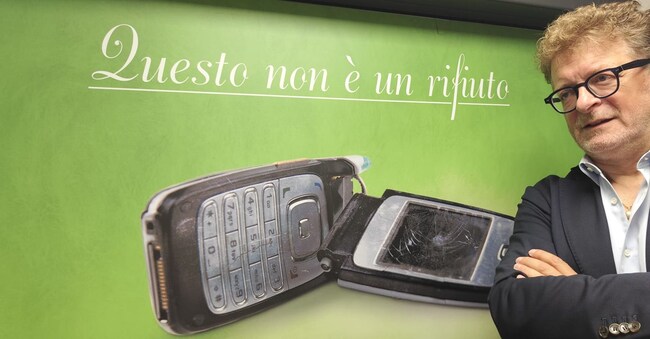
The million small WEEE from households in Genoa corresponds, the manager continues, to "old mobile phones, chargers and other unused accessories. To intercept and valorise this hidden heritage, Amiu is launching the first pilot project in Italy dedicated exclusively to the collection and recovery of small household WEEE. An experimental initiative, the only one of its kind, which aims to build a model that can be replicated nationwide".
Dg Spera: 'We will mine rare earths and precious metals'
.The plan, he adds, 'envisages a widespread awareness campaign, aimed at citizens, and the activation of a reward circuit: those who participate in the return of unused devices will receive concrete incentives. The waste collected will then be sent to specialised treatment for the recovery of critical raw materials, such as rare earths, precious metals, and other materials essential for the technology industry, with a view to the circular economy'.
After the summer, therefore, in Genoa 'a communication campaign will be launched with new operational activities: reuse centres, Ecovan trucks on duty in the squares, 'Grande Raeecolta' Sundays in the neighbourhoods, to get closer and closer to home. In cooperation with Genoa's technical schools, an outlet for small household appliances will be created, where digital and electronic equipment repaired by young students can be exchanged. The skills of the University of Genoa can support this project, creating new container models and new interception networks within the University and open to the city'.
A recent study by The European House - Ambrosetti, commissioned by Erion, recalls Spera, "highlights the strategic importance of this issue. If Italy were able to reach the European target of 65% of WEEE collection (compared to the current 37%), by 2030 an additional 312 thousand tonnes of electronic waste could be recovered, from which about 17 thousand tonnes of critical raw materials could be extracted. This is an amount equal to 25% of Chinese imports in 2021, with an estimated saving of 2.5 million tonnes of CO2 and EUR 487 million in environmental and social benefits. In addition, the direct savings on imports would amount to approximately EUR 31 million'.


