
Geodis Italia unveils a €50 million plan to boost turnover, expand its fleet and increase staff numbers
Manager Bortolan’s plan aims to achieve revenues of 500 million, manage 200 lorries and employ 2,000 people, including both direct and indirect staff
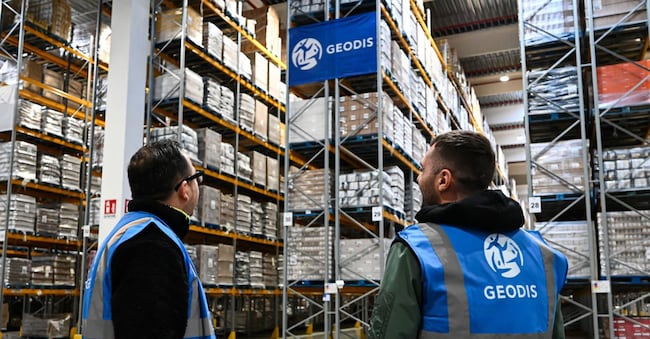
To increase turnover by 120 million over four years, double the number of direct and indirect employees, significantly expand the vehicle fleet and increase covered warehouse space. This is the plan that Geodis Italia, the Italian division of the French logistics group of the same name (which, in turn, is part of SNCF), has put in place, following the arrival of country manager Maurizio Bortolan at the helm last October. He himself explains how the company intends to operate across the country, focusing on the ‘One Face’ policy , namely an integrated approach that brings together the business lines operating in Italia (freight forwarding, road transport and contract logistics) to offer customers a single point of contact.
“For Italia,” explains the manager, “we have set very clear growth targets for 2030. By that year, the company aims to increase its turnover from the current €380 million to €500 million, as well as expanding its network of warehouses from 600,000 to 700,000 square metres: an additional 100,000 square metres, which we will lease. At an operational level, we also plan to increase our fleet of directly managed trucks, which will rise from 130 today to 200. All this will involve investments exceeding €50 million.”
“The business lines that Geodis Italia operates at a national level,” continues Bortolan, “are three: freight forwarding, which focuses on transport by ship, plane and train; European road transport, which involves the intermodal transport of goods using heavy goods vehicles; and contract logistics, which concerns warehouse management. Within these sectors, we have a range of specialisations: chemicals & gas, with end-to-end supply chain management right through to final delivery; high tech (refrigerators, televisions, stereo systems and so on, ed.), with Italia’s largest electronics hub, near Piacenza, in a 200,000-square-metre warehouse; defence & aerospace, with transport services for the military sector; and pharma & luxury, which is the vertical line where our presence is still fairly limited to air freight, whilst we also wish to develop the capacity to transport these products by road’.
“With the One Face strategy,” he adds, “which we have decided to pursue globally, we plan to bring the three business lines much closer together, so that we can present them to our customers as an integrated whole. At a time when the geopolitical situation has altered the flow of goods through the Suez and Hormuz Straits, customers are increasingly less concerned with freight rates or whether the logistics involve warehousing, air or rail transport; instead, they need an operator that can provide them with a complete, end-to-end solution.”
Bortolan goes on to explain that the growth forecast for Italia will not be ‘merely quantitative: we are aiming for qualitative expansion that integrates artificial intelligence and automation, with a focus on sustainability—both from an economic perspective and in terms of the transition towards green logistics. In this regard, we have some very challenging targets: we want to reduce emissions by 42% by 2030. This means using fuels other than polluting ones, but it also means shifting freight from road to rail; otherwise, we will not be able to achieve this goal’.


