Geographies of well-being: relaxing in the heat, in the midst of nature
Titanium capsules, floating oases, wooden spirals: the new saunas are inspired by Japanese onsen, are custom-designed and their exclusivity also depends on their total integration into the landscape.
Mirrored cabins that reflect the landscape, pavilions that float against the backdrop of a skyscraper skyline. "They are spaces of good design, elemental beauty and culture," says Christopher Selman, co-founder of Out of the Valley (Ootv), a Devon-based British studio specialising in outdoor, handcrafted and luxury saunas.
From the forests of Lapland to the coasts of California, from Alpine lakes to barges in Tasmania, these micro-architectures are increasingly social spaces, where a different idea of well-being is experienced: collective, analogical, essential. "For a long time, saunas were relegated to the darkest corners of spas and gyms. Ours, on the other hand, are small works of art, protagonists of the landscape,' he adds. For Selman, it all stems from childhood memories. Growing up with a Finnish aunt, he remembers the after-dinner sessions when he would visit her in Helsinki with his family: "It was a space where we could talk about the world or just be together in silence. Going to Finland in the winter also changed the way I experienced the cold: those icy runs seemed more bearable, knowing that I could warm up in the warmth of the sauna'. His career began in the fast-paced world of finance in Sydney, Australia, but underneath, there was a passion: 'I have always been fascinated by the sociology of space, communities and nature. The sauna brings it all together: architecture, ritual, landscape and human connection'. The turning point came in Tasmania, during a stay at the Floating Sauna on Lake Derby. "I was sitting there with friends and we were talking about my return to the UK: after thirteen years abroad, I was wondering what I was going to do. At that moment, it was 2020, I realised I wanted to spend more time in nature and bring my skills together in a personal project.
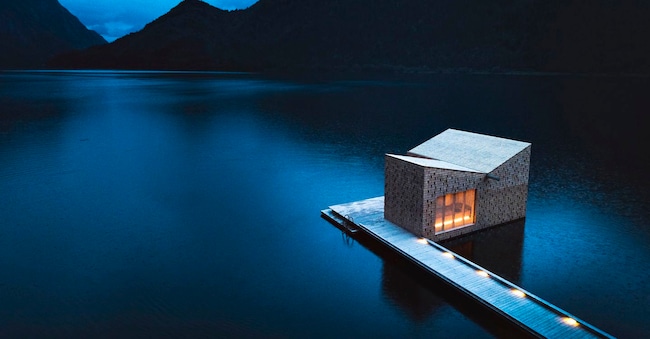
To do so, he embarked on a veritable pilgrimage visiting over a hundred saunas around the world, from Japanese onsen to the banya of Eastern Europe. Out of this journey came an atlas, Ridiculously Good-Looking Saunas, just published by German Gestalten. The book collects thirty-six projects, some classic, some decidedly surprising, of outdoor saunas in Europe, North America, Japan and Oceania. Among the most scenic is Soria Moria, in Norway. Built on a pile-dwelling on the shores of Lake Bandak, its shape echoes the surrounding mountain slopes and reflects them on the water.
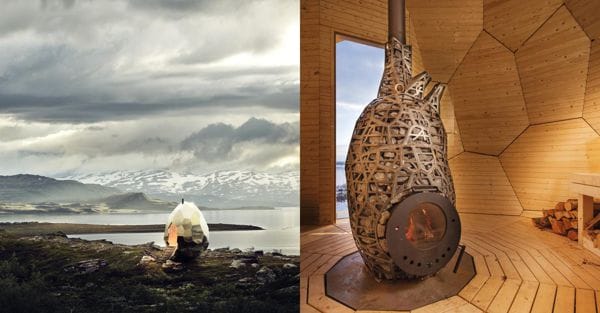
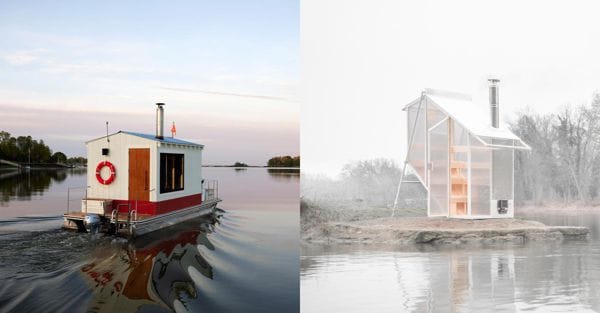
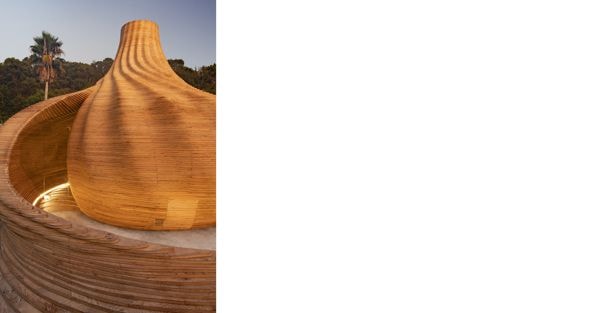
In Seattle, however, on Lake Union, the GO'C studio has reinterpreted it as a boat that sails on water: it is called wa_sauna, it is wood-fuelled, and it floats where the wild beauty of the Pacific meets the Washington State city in the background. Two opposing visions coexist in Japan: Cycl by YŪ Momoeda Architects, geometric and public, is spread over three floors at the foot of Mount Fuji, while Kengo Kuma's Sazae, on the island of Naoshima, is a wooden spiral built with 150 layers of plywood, inspired by the shape of a seashell. In California, a former industrial barge in Sausalito has found a second life as Fjord, a floating sauna open to the public with a view of the Golden Gate. But the most surprising project is in Kiruna, Sweden's northernmost city: Solar Egg, a five-metre high egg clad in stainless steel and gold-plated titanium, conceived as a symbol of rebirth for an area devastated by mining. Welfare that becomes a political act. "They are places of deep stillness, suspended between meditation and prayer. And at their centre there is always a community,' Selman points out. It is precisely this interweaving of place, matter and sociality that led him to found his studio. The decisive meeting took place in Cornwall, in a sauna designed by Rupert McKelvie, a master carpenter with a past as a builder of classic boats. "I wrote to him to thank him: it was among the three best saunas I had visited". Twelve months later, the two started a new phase of the company, which now makes custom-made saunas with natural materials and advanced thermal technology. "Although we come from different paths, we share the same vision and meticulous attention to detail," he says. Like, for example, the hidden internal ventilation system that wards off condensation or the remote app-based switching of some models. The goal is to create healthy, breathable buildings with non-toxic materials - from formaldehyde-free sheets and insulation to paints and finishes - that sit on the ground with minimal impact.
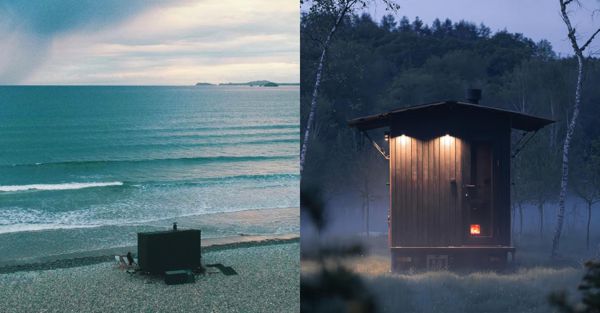
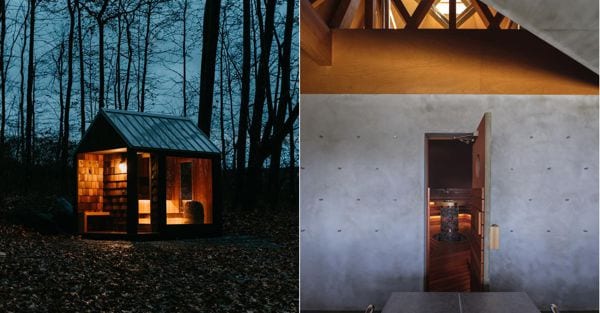
The Ootv range reflects this philosophy: ranging from the Tyto, a compact, panoramic model designed for private gardens, to the softly contoured Falco, with a Corten steel cover that develops a rusty patina on the surface and over time blends into the landscape, to the Merula, with a full-width window, and the Calluna, with changing room and outdoor shower, which can accommodate up to twelve people. For those who want to take their sauna everywhere, there is the Aquila model, mounted on a twin-axle trailer, clad in black larch and completely off-grid (i.e., energy independent), thanks to a solar panel on the roof. Prices for the standard models start at around 33,000 euro and go up to 73,000, while for the Aquila they start at 83,000. 'From concept to manufacture to installation, ours is an integrated, design-led approach,' Selman explains. Everything takes place under one roof, with great attention paid to proportions, materials and fitting into the context. Even the foundations follow this logic: steel screw piles instead of concrete, reversible in case of displacement, because an Ootv sauna must blend into the landscape without leaving marks. The impact must be as light on the ground as it is intense on the body.