
Geothermal energy, Hera invests 50 million to double the Ferrara power plant
The plant increases from 16 to 32 thermal MW: the aim is to decarbonise the supply of the city's district heating system

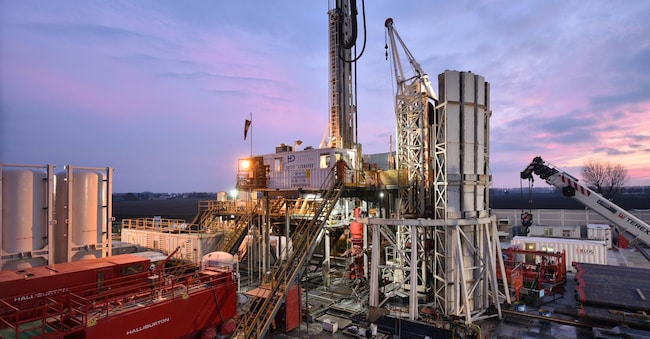
Hera is doubling the geothermal power plant in Casaglia (Ferrara), the main source of power for local district heating. The project, with a total investment of 50 million euro, 22.9 of which financed by Pnrr funds, will increase the plant's thermal power from the current 16 MW to about 32 MW. It also envisages the expansion of the city's network.
"The situation prior to the upgrading saw 39% of the heat in the production mix coming from recovery from the Ferrara waste-to-energy plant, 17% from gas-fired boilers, and 44% from geothermal energy," explains Simone Rossi, Hera Group district heating manager: "After completion of the works," he continues, "which, being linked to Pnrr funds, will have to be completed by August 2026, 70% of the heat will be produced by geothermal energy, 26% by recovery from the waste-to-energy plant, and the remainder by fossil fuels, for flexibility reasons. A configuration that makes Ferrara unique at a European level'.
The operation represents a concrete decarbonisation action that, Hera has calculated, will guarantee a primary fossil energy saving of more than 6,500 tonnes of oil equivalent per year (80% less than the current configuration) and a reduction in CO2 emissions of 15,000 tonnes per year, equivalent to the energy impact of 5,600 flats fuelled by natural gas.
The system could evolve further, to the point of becoming zero-emission: in fact, there is a project to use geothermal energy to capture CO2 from the fumes of the Ferrara waste-to-energy plant itself, and then transport it to the storage hub that Eni and Snam are developing offshore Ravenna. Hera is working on this front with Saipem, and the project has been selected to receive funding from the Eu Innovation Fund amounting to almost 24 million euro.
Meanwhile, today in Casaglia, where the existing geothermal wells are located, work is in full swing to set up the new two: an extraction well in addition to the two existing ones, and a reinjection well next to the one already in place. "It is a closed-cycle system, where the extracted geothermal fluid releases heat to the district heating network and is then reinjected back into the system. It is also characterised by medium enthalpy, with a temperature of the fluid itself around 100 °C,' Rossi further explains.


