
German firm Isar launches Europe’s first commercial satellite rocket into orbit
The Spectrum launch vehicle took off from the Andøya Spaceport in Norway and placed its payload into low Earth orbit

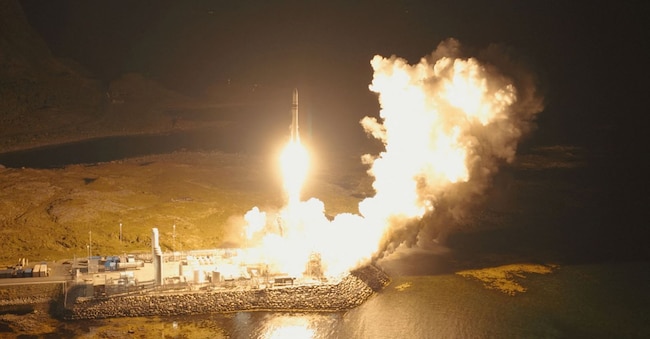
For the first time, a private European space company has succeeded in reaching orbit. The feat was achieved by the German firm Isar Aerospace, using its own Spectrum rocket. This is just the first step towards improving Europe’s launch capabilities. Isar’s effort forms part of the European Space Agency’s (ESA) ‘Desafío Europeo de Lanzadores’ – European Launchers Challenge – programme, which aims to fund organisations working towards the commercial development of space and to break away from dependence on American companies.
From failure to Europe’s first commercial flight
Spectrum’s journey has not been an easy one. In 2025, the rocket’s maiden flight ended in disaster. The launch vehicle had remained aloft for just 30 seconds before crashing into the sea and exploding due to a technical fault. The flight on Saturday 5 September, which took off from the Andøya spaceport in Norway, had a very different outcome. This time, the 28-metre-tall rocket lifted off from the launch pad without any problems. All ten engines functioned normally, propelling Spectrum through all phases of flight and delivering its payload into low Earth orbit. On board the spacecraft were six commercial and educational payloads, including several CubeSats and an experiment designed to test new technologies in space and provide practical experience for European students.
The Spectrum rocket is designed for small and medium-sized payloads, not exceeding 1,000 kilograms. According to Isar Aerospace, the launch was intended both as a ‘vehicle qualification mission’ and as its ‘first flight with a payload’. Following this launch, Europe is moving closer to being able to offer space flights from its own territory. The company has already begun manufacturing five rockets for future launches and states on its website that the construction of a new factory will increase production capacity to ‘40 launch vehicles per year’. The company has already received orders stretching until 2028. Spectrum can carry both military and civilian satellites.
The European independent launch vehicle project

