German art between modern and contemporary at Art Dusseldorf
It was the largest edition ever with 119 exhibitors, including 32 new galleries

Key points
The German city of Dusseldorf has a significant history in terms of modern art history. A generation of the most important conceptual artists of the second half of the 20th century, Gerhard Richter, Joseph Beuys, Anselm Kiefer, Andreas Gursky, Thomas Struth, Sigmar Polke, Katharina Fritsch, Rosemarie Trockel and the Achenbach brothers, trained at the Dusseldorf Kunstakademie. A tradition of the German public art academies that never ceases to attract students from different countries and offer high-level training that becomes added value for young artists when looking for a gallery to represent them.
And Art Dusseldorf is intrinsically part of this story, a German fair as essence, where galleries in a large percentage chose to present their German artists, with a good balance between modern and contemporary. This year's fair opened from 17 to 19 April its largest ever edition with 119 exhibitors, 32 new galleries, of which 10 chose the Main section with a total of 65 exhibitors. "The galleries believed in our fair project, Dusseldorf is more and more a relevant city in terms of contemporary art," reports Walter Gehlen, fair director since the beginning.
The proposed works of German artists
On the large stand of RUTTKOWSKI; 68 (Dusseldorf, Cologne, Bochum, Paris, New York) there was a lot of attention for the works of Stefan Strumbel (1979), a self-taught artist who lives in the Black Forest and works with the natural elements of the land, both in the medium of sculpture and painting. The price range goes from EUR 10,000 for small works up to EUR 500,000 for large-scale installation sculptures.
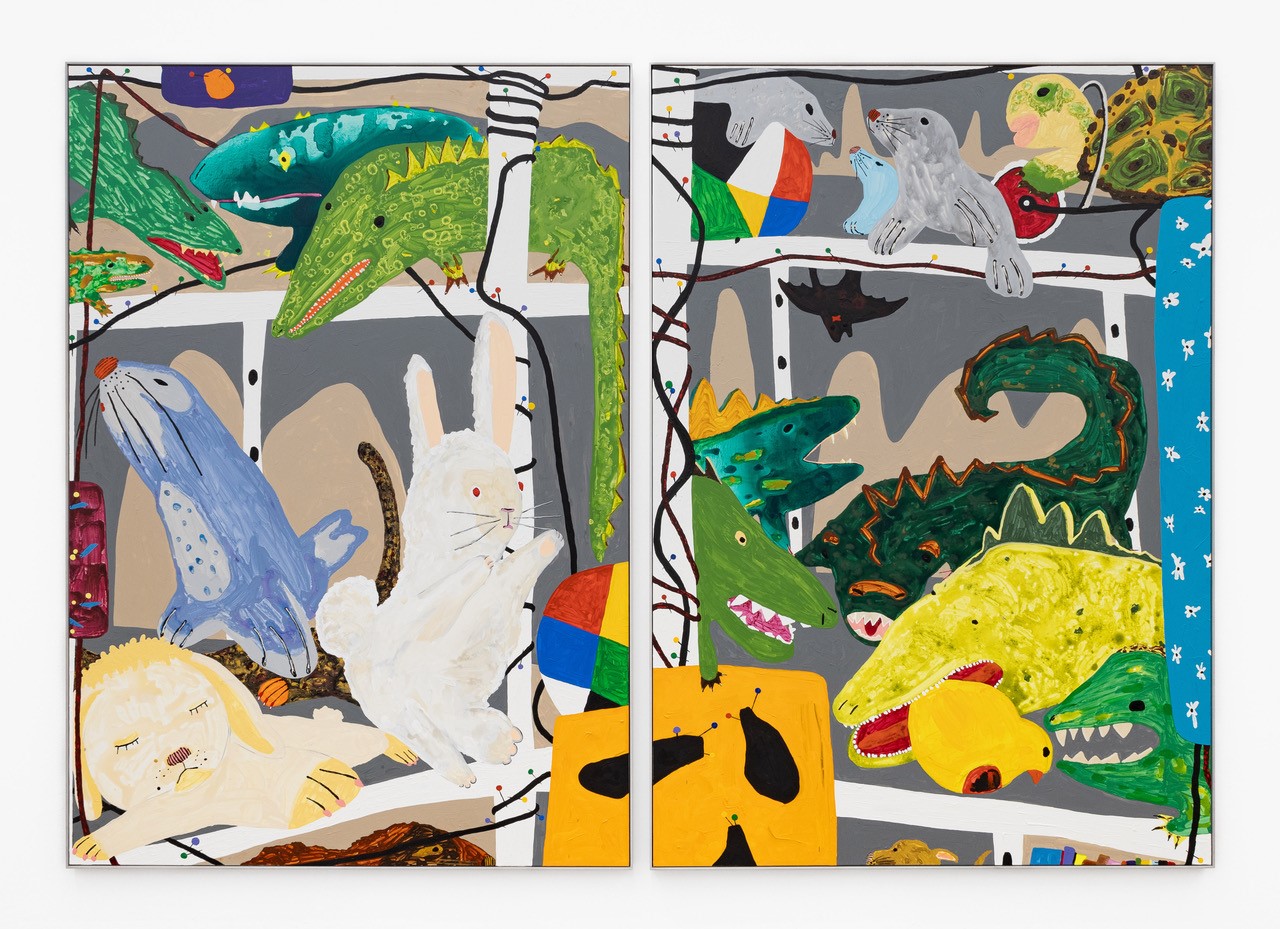
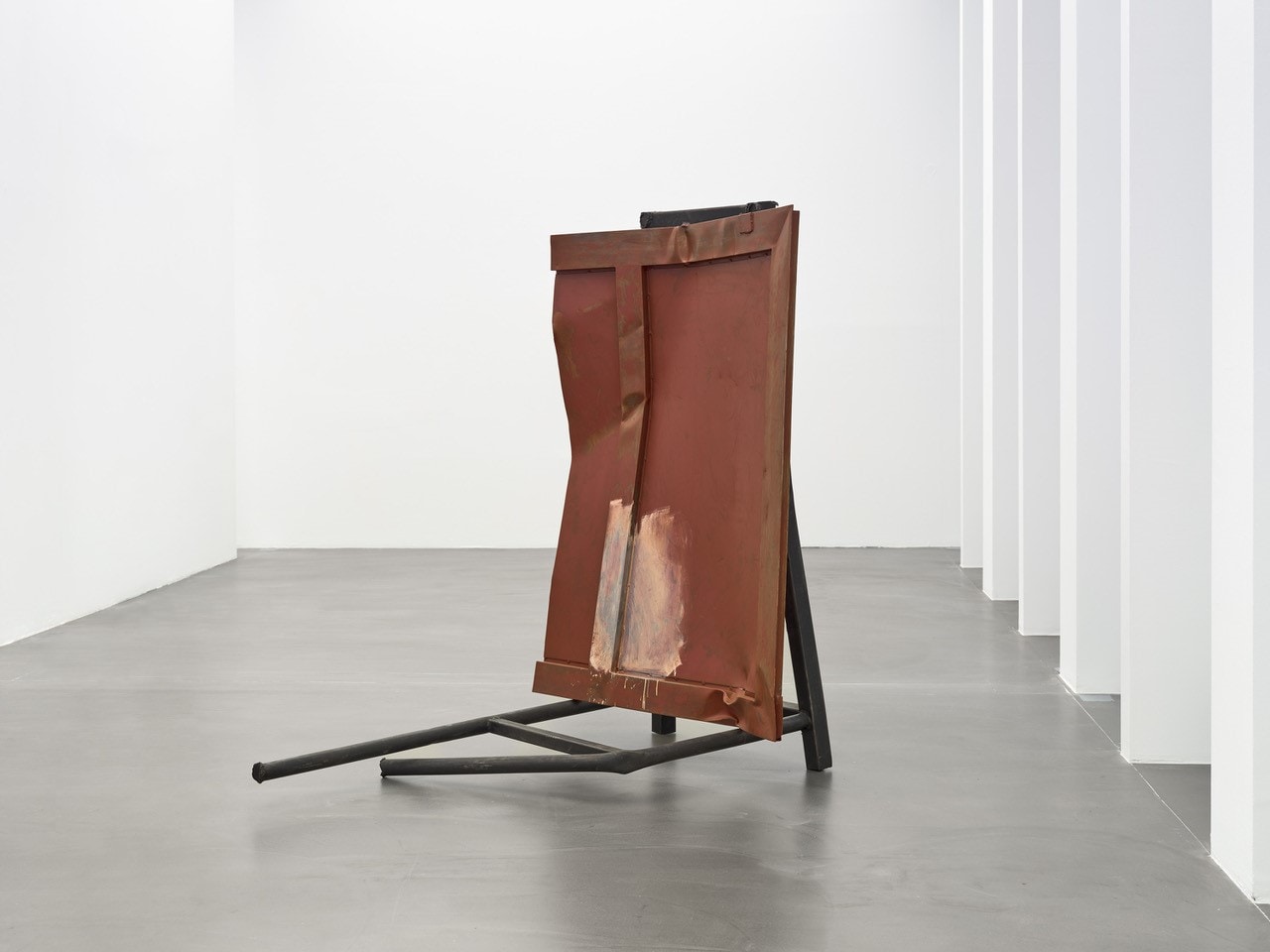
The same goes for Philip Emde (1976), an artist who collects soft toys of all kinds with a particular interest in used ones, so that they carry with them a lived and human experience of the person who owned them. The puppets and their stories thus become the subject of his canvases, the price of which ranges from one thousand euros for small works to 50 thousand for larger ones. The interest in the works of Meuser almost goes without saying. Born in Essen in 1947, the artist had studied at the Kunstakademie in the 1970s where he was a pupil of Joseph Beuys. His works are often created with a view to revisiting the material waste left behind by industrialisation, particularly in the industrial area of northern Germany. Prices on request.
Nosbaum Reding based in Luxembourg and Brussels proposed the wooden sculptures of Stephan Balkenhol (1957), with a price range from 25,000 euros. Confirmed interest in the abstract paintings in coloured resin by the mid-career artist Peter Zimmerman (1956): prices ranged from EUR 10,000 for small canvases up to EUR 25,000. Peter Zimmerman's canvases are part of the Unicredit Art Collection. The gallery also emphasises the interest in canvases by the young German artist of Portuguese origin Melanie Loureiro (1994), who trained at the Kunstakademie in Dusseldorf.