
Germany and UK reopen incentive season for electrics
Full electric car registrations dropped by 6 per cent in Europe in 2024, EU wants to reach 8 million charging stations by 2030

2' min read
2' min read
Last year, the number of full electric cars sold in Europe dropped by 6.1 per cent compared to 2023, with 1.45 million new Bev (battery electric) cars compared to 1.550 thousand the year before. This was mainly due to the stop of incentives in the main European market, Germany, which in fact decided to reintroduce an incentive system focused on company cars, which in the country have an important weight on registrations.
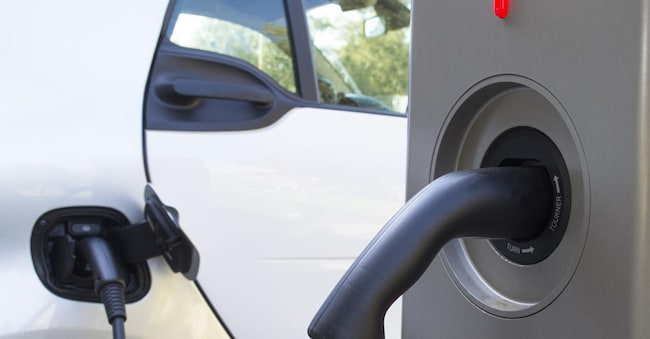
On the recharging systems front, the European Union has set itself the goal of having 8.8 million public recharging points by 2030, with currently 880,000 active columns. To reach the goal, the infrastructure would have to be multiplied by ten in five years.
Market trends and EU targets on recharging infrastructure show, if proof were needed, that a European plan is needed to support a segment that is struggling to grow. In the meantime, countries are going a little bit in random order. Starting with Great Britain, followed by France, Germany and Spain, while in September it should be Italy's turn. They range from systems based on individual bonuses, as France is doing for example - in 2025 a bonus of up to 4,000 euro for low-income families, reduced to 2-3,000 euro for the others, with a focus on European production - to the case of Germany, which is moving towards a model that does not envisage direct contributions, but concessions on depreciation and VAT for recharging systems as well. At the heart of the proposal is an accelerated depreciation scheme for companies purchasing electric vehicles between July 2025 and December 2027. In the UK, a new scheme has been active since last month, based on a system of manufacturer-guaranteed rebates on individual electric models, with bonuses of up to £3,750 for the purchase of new cars with a maximum price of £37,000. In Norway, around 90 per cent of new company car sales are zero-emission, thanks to a mix of tax exemptions and reductions for both purchases and infrastructure, toll incentives and other privileges such as preferential parking and fast lanes.
The resourcefulness of the various governments, however, has borne its first fruits, since in the first half of the year (ACEA data) full-electric engines made up ground in Europe, growing by 19% in the EU area, 24% if we also consider the EFTA area, which includes the UK and Norway. Over the period, therefore, the market share rose to 17.5%, but the problem remains. So much so that Acea, the umbrella organisation for European manufacturers, emphasises that Europe has a problem with the demand for zero-emission vehicles. "Battery-electric models only account for about 15 per cent of car registrations in the first half of 2025. In the same period, the share is only 8.5 per cent for vans and 3.5 per cent for trucks. Business registrations, Acea explains, account for about 60 per cent of the EU car market and almost 100 per cent in the case of commercial vehicles. Targeted and intelligent measures, tailored to the different vehicle segments, are therefore needed'.


