
Germany dodges recession, but the economy stands still
Zero growth in Q3 2025, after shrinking by 0.2 % in the previous three months

Key points
Germany dodges technical recession by a whisker, but can hardly be content with its economy stagnating in the third quarter of 2025.
After contracting by 0.2 % in the April-June period (upwardly adjusted from the initially estimated -0.3 %), the German GDP stopped at the waterline in the preliminary reading of the statistical institute Destatis (30 October). Barring corrections when the final estimate arrives, the figure makes it possible to ward off a relapse into technical recession (downturn for two consecutive quarters).
Private sector investment, especially in equipment, supported economic activity, while exports declined.
Recovery can wait
On the one hand, there will need to be a more decisive brightening up of international trade, or at least a stabilisation and adaptation of companies to the new environment. On the other hand, the driving effect of the spending policies decided by Friedrich Merz's government will only start to be felt in the coming months, more likely from 2026 onwards. "The German government's tax package is not expected to boost the economy before next year," reiterated Jörg Krämer, chief economist at Commerzbank, who said that the growth impulse will in any case "not be sustainable due to the lack of structural reforms".
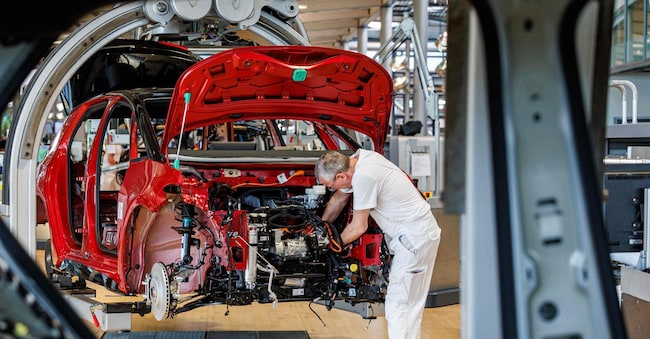
Moreover, the third quarter GDP was lower than expected by the main German economic institutes, which in their joint analysis had indicated a growth of 0.2%. And the latter part of the year could be affected by the recent difficulties caused to the industry, especially the already crisis-ridden automotive industry, by the shortage of chips, following the tightening decided by China on the export of rare earths.


