Locomotive in crisis

Germany, US-EU tariffs agreement weighs on the confidence of investors and financial analysts

Zew index drops 18 points in August: experts disappointed by the tariffs agreement reached by the European Union
by Gianluca Di Donfrancesco

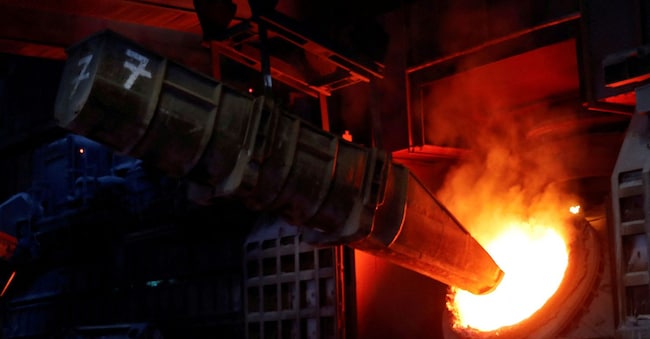
Una acciaieria tedesca del conglomerato industriale ThyssenKrupp (REUTERS)

3' min read

3' min read

The confidence of financial analysts in Germany collapsed beyond the already grey forecasts: the Zew index, on the economic outlook for the next six months, dropped 18 points in August to 34.7 (it was 52.7 in July). The drop interrupts a rise that lasted just three months and is in line with other indicators that in recent weeks have confirmed the difficulties of the Eurozone's leading economy.

The assessment of the current economic situation also deteriorated: the indicator here dropped by 9.1 points to -68.6. In particular, the outlook for the chemical and pharmaceutical industries is worsening, but the decline in confidence also affected mechanical engineering, metal production and the automotive sector.

Loading...

The weight of the EU-US agreement

.

The indices published on 12 August are compiled by the Mannheim Centre for European Economic Research, based on a survey of 182 institutional investors and financial analysts. According to Achim Wambach, the president of the institute, the trade agreement reached between the US and the EU at the end of July, which 'disappointed the experts', weighed heavily.

The agreement averted the threat of generalised tariffs at 30%, but still sets 15% levies, which represent a significant deterioration in the treatment of goods imported from Europe. And while it is true that tariffs are paid by importers, unless exporters decide to sacrifice profit margins to defend market share, it is equally true that the competitiveness of the good affected by the tariff is reduced.

In the first six months of 2025, German exports to the US, which remains the largest market, fell by 3.1 per cent year-on-year (according to data from the federal statistics office Destatis). In June alone, the decline was 8.4 per cent year-on-year and was the third consecutive, lowest absolute value since February 2022.

After months of early purchases, to avoid running into the tariffs that later arrived, the slowdown in US demand contributed to Germany's GDP decline in the second quarter of 2025 (-0.1%, according to preliminary estimates). Already in 2023 and 2024, the Eurozone's largest economy lost ground, causing the trailing effect on its partners (Italy in the lead) to disappear. And for 2025, one can at best hope for a zero growth year, according to many analysts, including those of the German Central Bank.

Industrial production down

.

In June, industrial production fell by 1.9 per cent month-on-month, according to preliminary data from Destatis, and dropped to its lowest level since May 2020, when the economy was crippled by the Covid-19 pandemic. Even the less volatile quarterly comparison showed a contraction of 1 per cent, to levels reached in the first half of 2020. If energy and construction are excluded, the decline in industrial production becomes even more pronounced: -2.8% compared to May 2025, which becomes -4.7% year-on-year.

For Franziska Palmas of Capital Economics, the figure indicates that 'the medium-term outlook for German industry remains weak, as sluggish growth in both Europe and China and competition from Chinese companies are likely to weigh heavily on demand for German industrial goods'.

A confirmation comes from orders to factories, which fell for the second month in a row in June.

Looking for investments

In the next six months, however, says Deutsche Bank's Marc Schattenberg, 'the German economy should recover, also thanks to public incentives on investments'. The strongest card in the hands of the government led by the conservative, Friedrich Merz, remains the massive infrastructure and defence investment plan, unblocked in March with the debt brake reform. On the ability to ground the hundreds of billions available will depend the resilience of the German economy and of the chancellor's consensus, which has sunk to 30% after just 100 days in office.

Copyright reserved ©
Loading...

Brand connect

Loading...

Newsletter

Notizie e approfondimenti sugli avvenimenti politici, economici e finanziari.

Iscriviti