
Germany is thinking of a satellite system similar to Starlink. Italy in the front row on the 'Mercury' project
Italy, which will host the next ESA Ministerial Council in 2028, has also initiated dialogues with Germany and France to assess possible synergies in the realisation of a constellation of low-orbit telecommunications satellites to ensure defence and institutional communications services

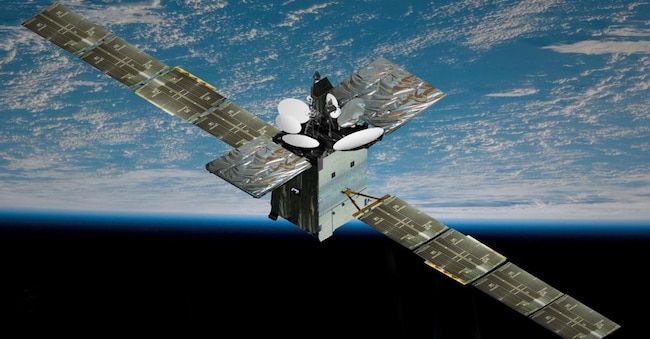
The German company Rheinmetall is reportedly considering a cooperation with the Bremen-based satellite manufacturer Ohb to equip Germany with a communications satellite system similar to Starlink. The news was reported by the business daily Handelsblatt. It would be a real 'Starlink for the Bundeswehr', i.e. the German Armed Forces. The military satellite network project is part of a broader geopolitical framework: with the new investments, Germany is set to become the world's third largest investor in space, after the United States and China. A clear signal of Europe's desire to build autonomous technological capabilities in a domain - space - that is increasingly central to security and defence.
The EU Alternative Project
As far as Europe is concerned, the main EU project alternative to Starlink is IRIS² (Infrastructure for Resilience, Interconnectivity and Security by Satellite). With an estimated cost of more than EUR 12 billion, it is a constellation of some 290 satellites designed to ensure Europe's strategic independence and digital sovereignty in telecommunications. Unlike Starlink, which is entirely private, IRIS² is a public-private partnership. The system is expected to become fully operational in 2030.
Italy's moves
Italy has also made a move. Project Mercury is the name of the future satellite constellation designed to operate in low Earth orbit (LEO) for dual (civil and military) purposes. Presented in 2025 as an alternative or strategic complement to private systems such as Starlink and the future European constellation IRIS², the project is currently at an advanced development stage. Coordinated by the Interministerial Committee for Space and Aerospace Policies (COMINT), it sees the industrial involvement of Leonardo and its joint ventures (such as Telespazio and Thales Alenia Space). After the feasibility study concluded in 2025, the project entered 'Phase 2' for the definition of industrial contracts. Full operation is estimated not before 2031.
Italy, which will host the next ESA Ministerial Council in 2028, has also initiated dialogues with Germany and France to assess possible synergies in the creation of a constellation of low-orbit telecommunication satellites for the purpose of guaranteeing defence and institutional communications services (see also Il Sole 24 Ore of 28 November). Although none directly evokes it, the ambition is to prepare a European alternative to Elon Musk's Starlink. 'We have already entrusted a feasibility study to the Italian Space Agency for a project of this type,' explained the Minister for Enterprise and Made in Italy Adolfo Urso in the past, 'and in the meetings I have had with the ministers of Germany and France I have outlined the possibility of doing it together, with intergovernmental agreements if each state is to build its own constellation, each with its own major companies, or through a single joint project. The future of initiatives in this field, in any case, seems to be linked to the evolution that the European programmes Ers and Iris² will have, the latter in particular being in great difficulty compared to its initial ambitions and timetable.
The aerospace cooperation between Italy and Germany
Last week, Urso received Germany's Federal Minister for Economics and Energy, Katherina Reiche, and the Federal Minister for Research, Technology and Space, Dorothee Bär, at Mimit. Aerospace cooperation was the focus of the second bilateral. With Bär, Urso shared a joint statement aimed at extending collaboration between Italy and Germany. "The agreement represents an important first step towards developing, in harmony with other European countries, starting with Germany, satellite programmes aimed at strengthening the continent's technological sovereignty," said Urso. "Germany and Italy together strengthen the European space continent," said Bär.


