
Giacomo Matteotti portrayed 'alive'
Polesine, studies, travels, politics recounted in an exhibition being held in Rovigo at Palazzo Roncale

4' min read
4' min read
'Body type: slender. Nose: long. Mouth: fair. Gait: martial. Physiognomic expression: gay. Special features: has the upper first molar made of yellow metal. Character: lively. Intelligence: a lot. Attitude towards the authorities: indifferent and contemptuous': these and many other details can be read in the file on 'Giacomo Matteotti subversive' included in the political record of the Rovigo police headquarters, one of the many documents (dated 31 May 1919) on display in the exhibition Una storia di tutti (A history of everyone), currently underway in Rovigo at Palazzo Roncale.
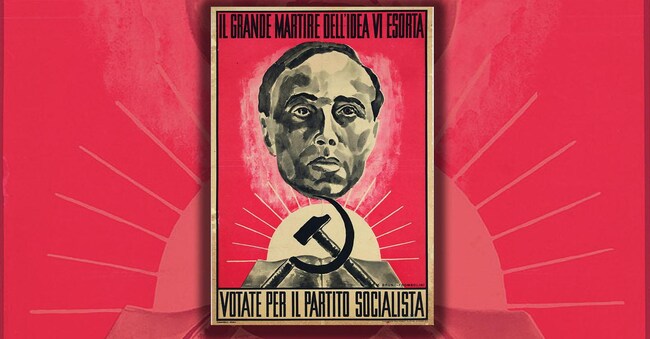
An exhibition that allows us to get to know the reformist socialist starting from the context in which his political conscience was formed and rooted, Polesine - where he 'propagandised in Fratta and the villages of the province with good profit, being an individual capable of drawing in the masses' (the document goes on to say) - until the tragic end in 1924. The black and white photos, papers, pamphlets, posters and volumes take us across two centuries, and following in the protagonist's footsteps we retrace Italy's political and social trajectory, with the watershed of the Great War, the socialist split in 1921 and the birth of the PCI, the march on Rome, and the murder of Giacomo Matteotti. And, shortly afterwards, the fascist laws.
The primary objective of the exhibition, promoted by the director of the Rovigo State Archives Maria Volpato, curated by Stefano Caretti and realised thanks to the support of the Cassa di Risparmio di Padova e Rovigo, is to tell the story of the 'living' Matteotti, not just the hero brutally eliminated on 10 June one hundred years ago. It therefore starts from the territory, from the straw huts of Polesine, from the peasants exhausted by fatigue, from the women bent over in the fields, with the impending floods that took everything away in a few hours: here, in Fratta (about ten kilometres from Rovigo), on 22 May 1885, Giacomo was born into a family of wealthy landowners. The frank smile of a young man with dark eyes and a full beard protrudes from a picture: it is Matteo, the older brother who had so much influence on the future socialist leader's political formation (he already enrolled in the party's youth at the age of 13), with a more serious boy at his side, Silvio, the family's third son. The class register of the Celio high school in Rovigo shows the excellent results of student Giacomo: a few sevens, many eights and a few nines (in French, a language he mastered on a par with English and German). His degree in Law in Bologna (1907), with a thesis in criminal law on recidivism (later published by the publisher Bocca in Turin), did not prevent him from cultivating his lifelong interests - from reading to theatre and music - that he shared with Velia, whom he met on the Abetone: they married by civil rite only, as he wished, and had three children, Giancarlo, Matteo and Isabella.
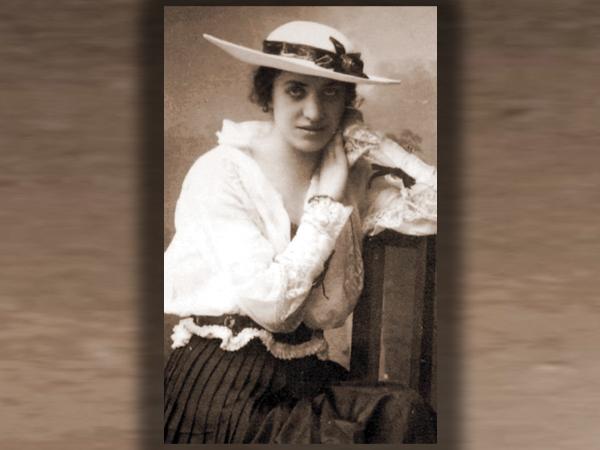
During his university years, Matteotti travelled around Europe, observed other economic and social realities, researched the legal context and prison structures, and perfected his knowledge of languages. An international dimension that strengthens his preparation and broadens his horizons.
Political commitment, on the other hand, is concentrated in his land, fuelled by the conviction that the population can and must emancipate itself from its condition of misery and subalternity. His action as a public administrator in the municipalities of Polesine (starting with his own Fratta) took concrete form not only in the revision of budgets, but also in the creation of nurseries and libraries, hospitals and infrastructure.


