
Giorgetti and Urso: 'Recession risk if Hormuz remains closed'. Salvini: 'Stop the stability pact'
Economy and enterprise ministers worried if the situation continues like this on the energy and fuel oil front. Deputy PM Salvini: 'If the EU does not change the stability pact we will go it alone'.

Key points
- Government insists on suspension of pact
- The unknown of Italia's exit from the excessive deficit procedure
- Urso: recession risk in Europe if Hormuz closed
- Salvini: EU changes Stability Pact or we'll do it ourselves
- Descalations: for jet fuel situation more critical
- Cattaneo, risk electricity shortage if we do not invest in increased generation
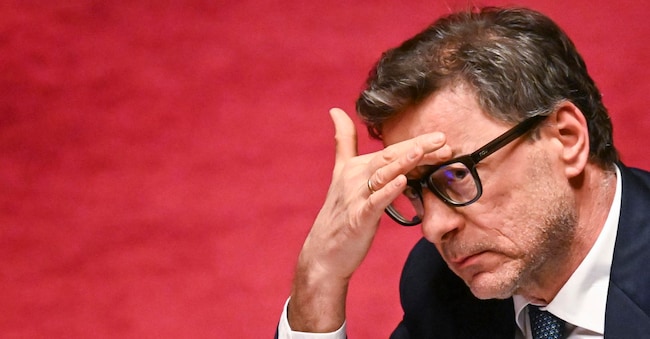
The Minister of the Economy, Giancarlo Giorgetti, fears a recessionary situation. On Saturday 11 April, during an appointment in Castellanza (Como), the head of the Mef at the microphones of Tg3 Lombardia explained, with regard to the stability pact, that 'the response of the European Commission we know it, we know it very well: only in the presence of severe recession'. "I am afraid that if the situation continues like this on the energy and fuel oil front, the recession will come. I am afraid."
Urso: recession risk in Europe if Hormuz closed
Enterprise Minister Adolfo Urso took the same line. "Should the blockade of the Strait of Hormuz continue or extend to a naval blockade in the entire area, you all understand that the consequences for the global economy, for the European economy and therefore the Italian economy could be more serious than expected and could even lead to a recession on our continent," he said on the sidelines of the opening of Vinitaly in Verona on Sunday 12 April.
Government insists on Pact suspension
Premier Giorgia Meloni and the Minister of the Economy, not by chance, have been sounding the alarm in Brussels for days now, calling for a 'suspension of the Stability Pact'. Which would give margin, especially to countries with little fiscal space like Italia, to put in place emergency measures to protect businesses and especially families from waves of price increases. The subject is a hot one, not least because Rome must also find a strategy to maintain its commitments to NATO by increasing defence spending. Arms is a complicated subject to be digested by public opinion, and one on which the League has already begun to express its doubts.
Salvini: the EU will change the Stability Pact or we will do it ourselves
The issue was also relaunched by Matteo Salvini. "The priority is to unblock the European regulations that prevent us from helping Italians in difficulty, everything else comes later,' said the deputy prime minister speaking at a Lega Nord gazebo in Milan. 'The absurd thing is that even today, with the current crisis, Brussels allows states to spend billions on arms, but prevents Italia from spending as much money to help those who cannot make it. Either they change the stability pact or, if they continue not to hear us, we will go it alone'.
The unknown of Italia's exit from the excessive deficit procedure
The government had already begun to address the issue in recent weeks. Giorgetti himself had made a 'report' to his colleagues and the Prime Minister in an ad hoc meeting to begin designing the new Public Finance Document, which is being prepared with the other unknown factor of Italy's exit, or not, from the infringement procedure for excessive deficit. Eurostat will have the last word on 22 April, and only after that, in all likelihood, will the government approve the document, which will have to go through the Chambers of Parliament as with the old Def. With GDP slowing down, the Pnrr coming to an end, and price increases that despite efforts cannot be stopped, there are many thorny dossiers that Meloni has on the table.

