
Giorgina Siviero: 'At almost 80 years old, I have rediscovered the freedom to sell the brands I love'
6' min read
6' min read
There was a time when those who worked in fashion - creating it, producing it, selling it - had three polar stars: product, service and the use for which each garment or accessory was intended. Space for protagonism, (pseudo)philosophical reflections and interference of marketing typical of consumer products - at that time - there was little. From the 1980s onwards, the changes began, without any real direction, but which in little less than a decade overturned the fashion industry in every link of the long chain that makes it up, from the creative spark to distribution, from production to communication.
Fashion designers (a word invented in Italy, in French it has always been called, more simply, créateur) have become well-known faces and personalities, fashion brands have made their way into many consumers' dreams of glory and status, and companies have grown in size and know-how. From the 1990s to the present day, there have been so many disruptive changes (and perhaps more are on the horizon) that the current scenario is almost unrecognisable to those who began working in fashion back in the 1960s and 1970s, such as Giorgina Siviero, now a splendid octogenarian, a kind of cheerful priestess of womenswear.
After an apprenticeship in architect Piero Verbinstack's studio in Turin (without a degree in architecture, but with the task of choosing, as a self-taught student, the materials for the various projects) and a year spent in Paris ("during the day I worked in a travel agency for students, in the evening I studied at the Alliance Française"), Giorgina returned to Turin, convinced that she would return to work for Verbinstack, but the harmony with the architect and his collaborators seemed to have faded. 'Perhaps they had not forgiven my flight to Paris, which I had done because I knew I was looking for my own dimension, even though at the time I had no idea it could be fashion,' she recalls without a shadow of regret or, worse, resentment.
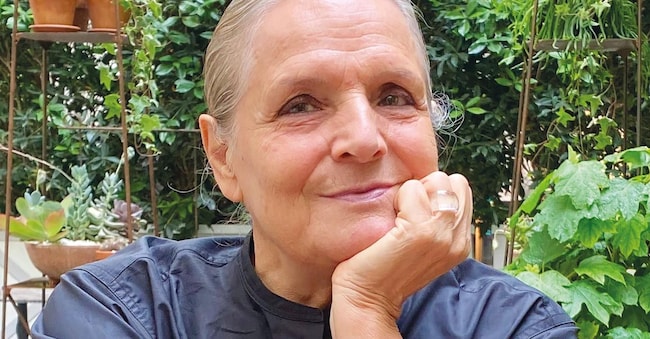
With her white hair tied back in a little ponytail, vexed as she is, Giorgina resembles another extraordinary woman, Jane Goodall, the most important living primatologist. What they have in common, apart from the signs of gentle, natural and harmonious ageing, is their passion for the life they have chosen for themselves, as well as their curiosity and inability to be afraid of change. Perhaps this is the fulfilment, awareness and self-confidence that women could aspire to achieve. Another characteristic of Giorgina Siviero - typical of many people who witnessed the birth and then the growth of the fashion industry in Italy and around the world - is that her name and her role would have remained unknown to the 'uninitiated' had it not been for Covid.
'I was born into a very normal family and it was taken for granted that when you came of age you had to choose between studying or working. Less normal, when I think about it now, that my parents, and my mother in particular, allowed me to build a life and a future of independent thinking and economic independence, which did not necessarily involve marriage. Even if I later married, to a man I loved deeply and who is the father of my two children', recalls Giorgina Siviero, who in 1965 took over, with the financial support of her mother, the Simonetta shop, where she had started working as manager the year before ('the salary was 50,000 lire a month').


