
Gitlin (Capital Group): 'Private markets for retail? Yes, but not at all costs'
A choice to be considered calmly and prudently, considering a weight of less than 10% in the portfolio. Financial education is essential and there is also room for hybrid solutions that also look to the public markets.
3' min read
Key points
3' min read
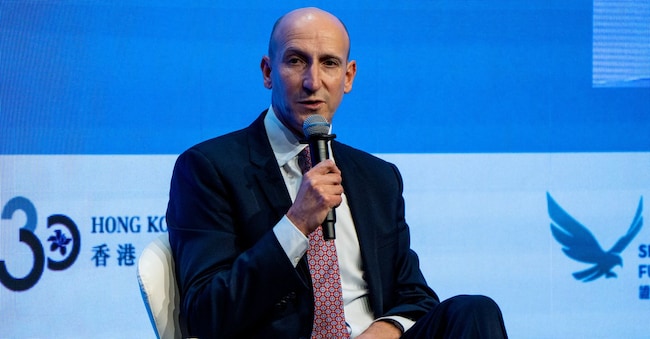
"Allowing individual investors access to private markets is certainly a good thing, but it must be done calmly and above all by considering very carefully the weight that the illiquid component can have in a portfolio". Mike Gitlin certainly cannot deny that trend now in vogue in the investment world called 'democratisation' towards assets such as private equity, infrastructure or alternative credit once the exclusive realm of institutional players and pension funds. This approach should not, however, take place "at all costs", but rather gradually and prudently: characteristics that have always distinguished the investment approach of the Capital Group, the investment giant that manages assets worth $3.2 trillion worldwide and of which he has been chairman and CEO for the past two years.
The (excellent) performance of the stock exchange
.His reasoning starts from the simple observation that public markets are certainly not to be neglected, all the more so when one considers their extraordinary long-term performance. "The S&P 500 index, with dividends reinvested, has returned an average of more than 10% per annum over the last thirty years, while the overall market capitalisation of the United States has grown thirteenfold," emphasises Gitlin, interviewed by Il Sole 24 Ore in Milan in recent days: figures "not to be forgotten" because they demonstrate that listed assets "remain very efficient, liquid and transparent, as well as cheaper".
At the same time, diversification in the private markets is a must, as nowadays many companies remain outside the stock market for longer, because investment in infrastructure can offer stable flows over time and many sectors that allow for opportunities are not yet available on the stock exchange. Everything, however, has to be done with measure, according to Gitlin, when it comes to individual investors who 'should not end up with too high costs and insufficient liquidity to handle their needs'. And if a zero exposure to private markets "may be too little, an excessive one can be just as risky," adds the manager, who sets the ideal bar at a share that is in any case "less than 10%" of the entire household wealth.
The hybrid solution
.Pivotal to Capital Group's strategy in this area is the partnership signed on a global scale with Kkr to create a hybrid investment vehicle with 60% in public markets and 40% in private markets. A solution capable of ensuring greater liquidity and lower costs than traditional alternative instruments and thus making the approach more sustainable also for retail savers. The product is already available in the United States, not yet in Europe, where two main obstacles remain to be overcome: more complex regulation, which slows down the authorisation and distribution of innovative products such as hybrid solutions, and the lack of necessary financial education among investors.
Gitlin particularly insists on the latter, arguing that it is 'important to teach clients about the risks and opportunities present in private markets and to educate them, rather than just thinking about selling them products'. For this reason too, on the introduction of the public-private solution developed with Kkr in the Old Continent (and in Italy) Capital Group is taking its time, for the necessary adaptations to the regulatory context and to bridge the knowledge gap on alternative investments.


